

Fabulous dives under Triton Bay coconut trees

 EN
EN"Above all, don't stay under the coconut trees", I'm told when I arrive at Triton Bay. Yes, the biggest danger here is getting hit on the head by a coconut!
A long trip (again)

Here is the island of Aiduma and the resort Triton Bay Diverswhere I landed on March 8, 2016, at midday, after a 40-hour journey from Rennes, in Brittany... Yes, some people think I'm a bit crazy to make such a journey, just to photograph fish and possibly get coconuts on my head... 😂
Triton Bay (Teluk Triton) is located in the extreme east of the Indonesian archipelago, in the province of West Papua. From Europe, it is the end of the world. It is here (zoom in / out the Google Map to see better) :
The flight schedule went off without a hitch or any notable delays: Paris - Istanbul - Jakarta for the first international leg to Indonesia (on Turkish Airlines).
Then Jakarta - Ambon - Fak-Fak - Kaimana, on Lion Air and its subsidiaries (Batik Air and Wings Air) for domestic flights. From Jakarta, it couldn't be simpler or more direct...
Updated: April 2017. The national company Garuda Airlines now serves Kaimana airport, with flights from Ambon, six days a week.

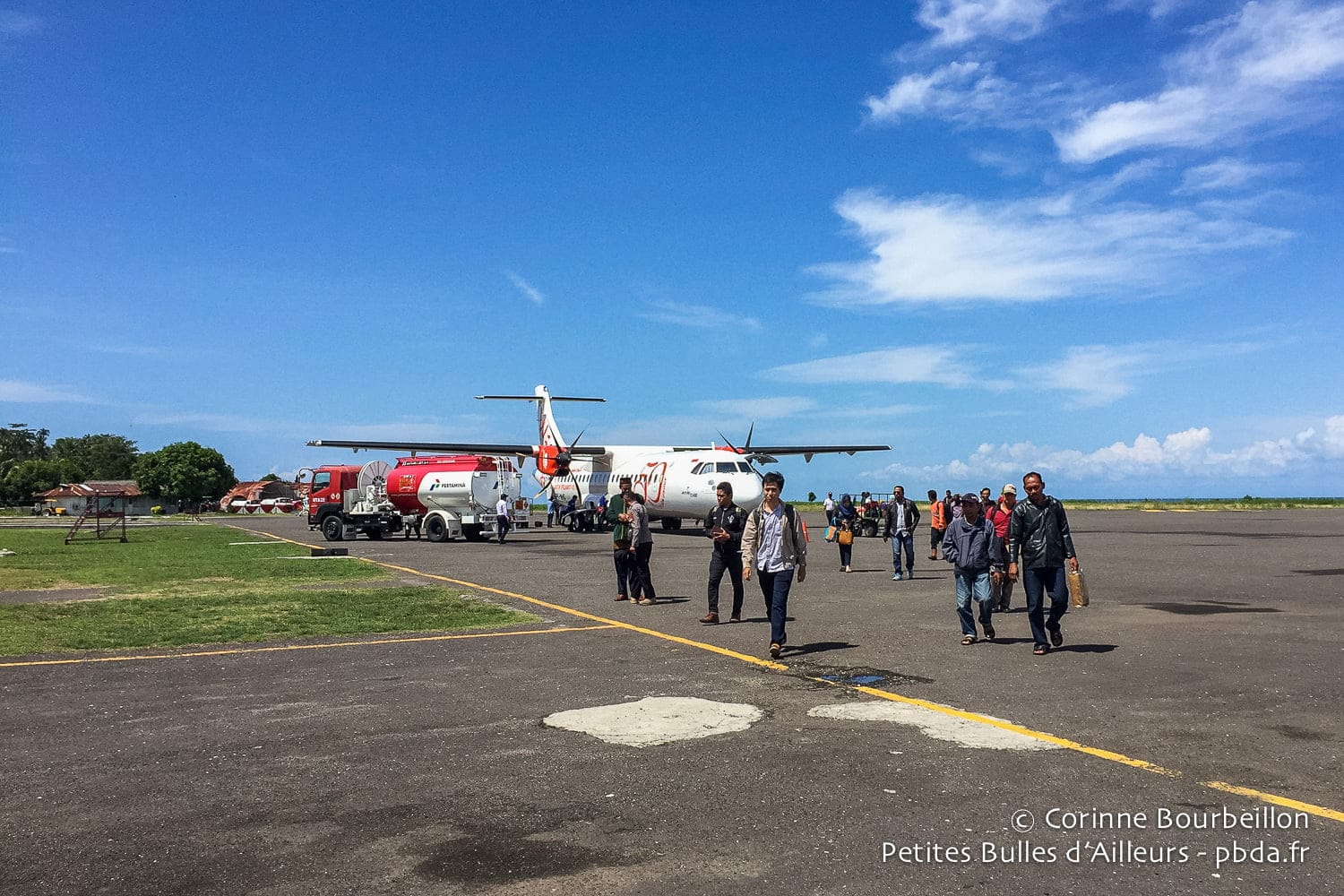


After landing in Kaimana, the "capital" of the region, I only have an hour and a half of boat ride to reach Aiduma Island and its coconut trees, in the Triton Bay... Phew!
Welcome to Triton Bay
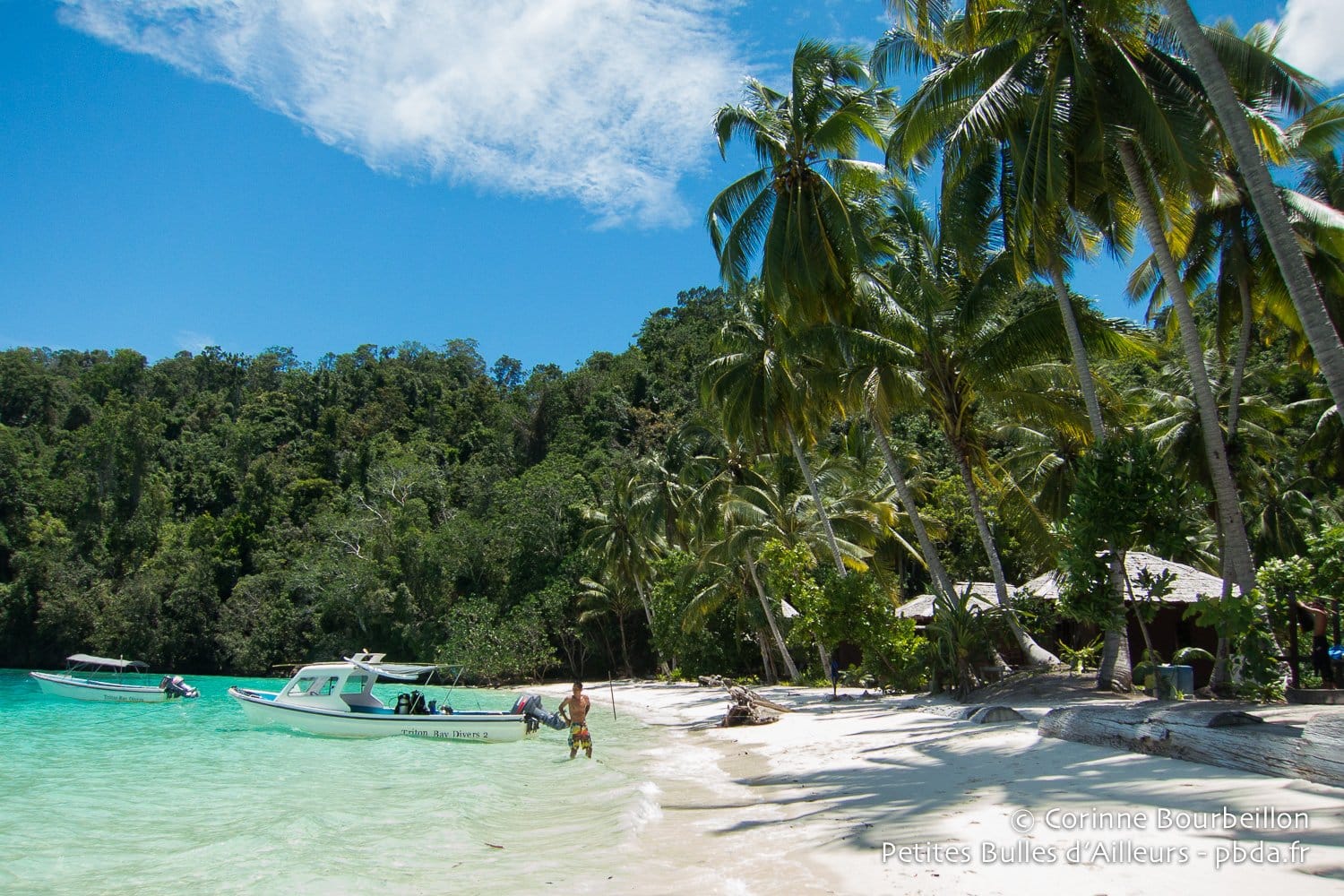
Naturally, I'm delighted to arrive at last. And to discover my new "home" for a dozen days... I tread the sand, soft underfoot, dazzled by the beauty of this little cove nestling under coconut palms.
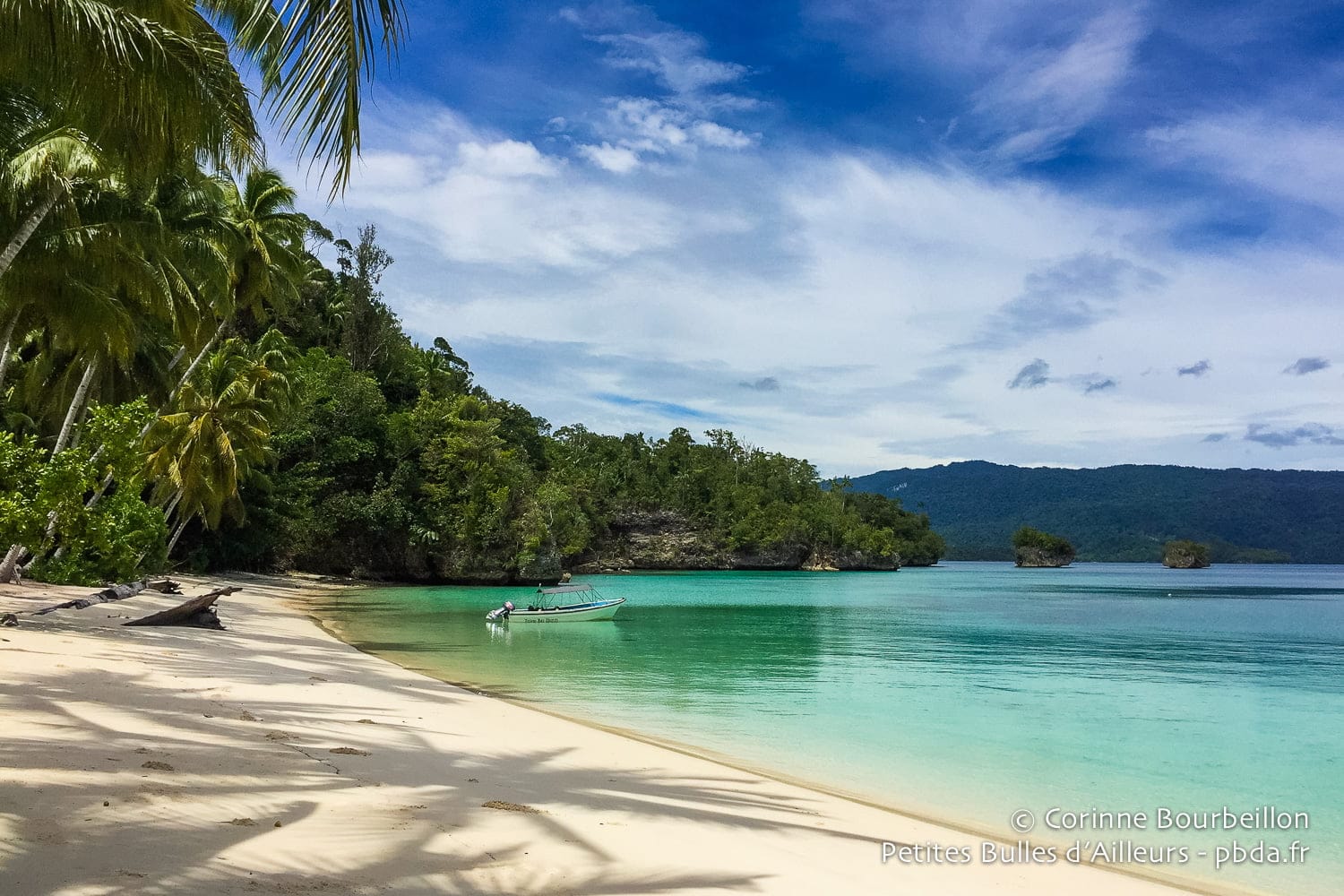
But I'm already being warned, with benevolent insistence: don't hang around in the shade of the flippers! It's dangerous. "We regularly remove coconuts from the trees near the beach, explains Jimmy, from the resort Triton Bay Divers. But there's always more. So don't stay just below it..."
This is no joke. Throughout my stay, the sound of a coconut landing on the ground without warning will startle me many a time. Coconuts are big and heavy. And when it falls, it can hurt a lot...
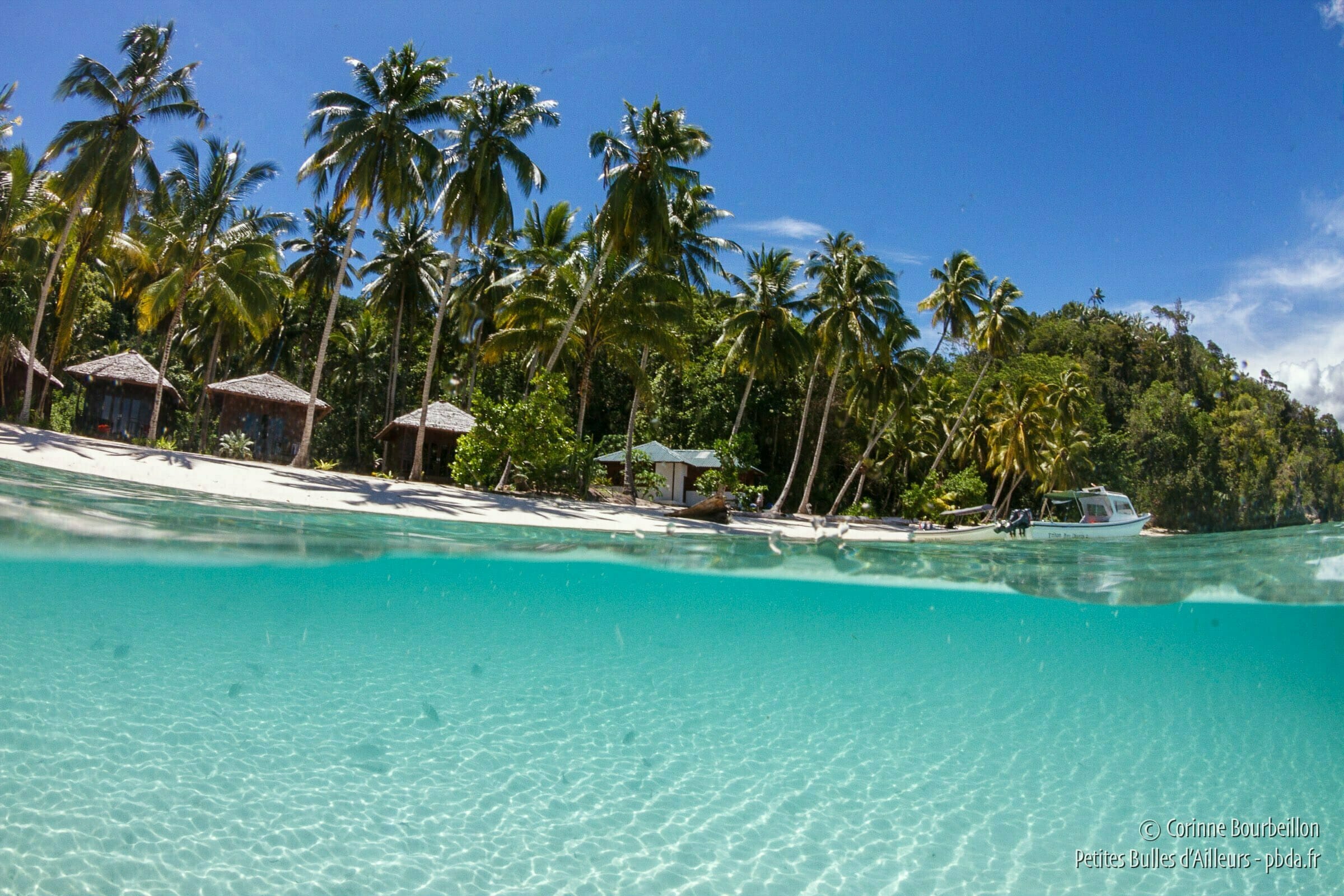
But after such a long journey, this Papuan island feels like a well-deserved paradise. A lovely beach of fine white sand. A few wooden bungalows facing out to sea. A dense jungle-covered hill behind. The sea and coral in front... It's magnificent!


Outstanding Biodiversity
I wanted to immerse myself in nature, away from it all, and I've got it! There's no mobile network here. As for the Internet, well... I might as well forget about it.
Lobo, the nearest village, is on the coast of Papua, three quarters of an hour by boat from the island of Aiduma. The coast is wild, with spectacular karst cliffs. Here and there, a few fishermen's "camps". Here I am, "forced" to disconnect.

At dawn and dusk, I learn to tame the thousand strange noises - cries, whistles and crackles - coming from the surrounding vegetation. It's a paradise for insects and birds (toucans and white cockatoos being the most visible). Early one morning, I even catch a glimpse of the tail of a couscous on top of a potentially killer coconut tree.
But it's for nature underwater that I've come this far. Like Raja AmpatFurther north, Triton Bay is considered a "hot spot" of biodiversity in the world.
Far from the tourist itineraries and still little known, this bay was explored by marine biologists from the organization Conservation International in 2006. Here, they have observed the astonishing walking shark, endemic to the region, and recorded numerous rare or new species of fish, crustaceans and coral. A veritable "cash factorythey say, about the waters that give rise to so many new forms of life.
In 2014, the scientists of the Lengguru expedition returned to explore the region. Arte is broadcasting a documentary about their adventure in these months of June and July 2016:
→ Papua, in the heart of a lost world
In 2008, the Kaimana region established a 6,000 square kilometer marine protected area in the waters of Triton Bay. To dive there, you must pay an entry fee of 500,000 Rp (around €40). As in Raja Ampat, in exchange you'll be given a badge to hang on your stab (stabilizing vest).



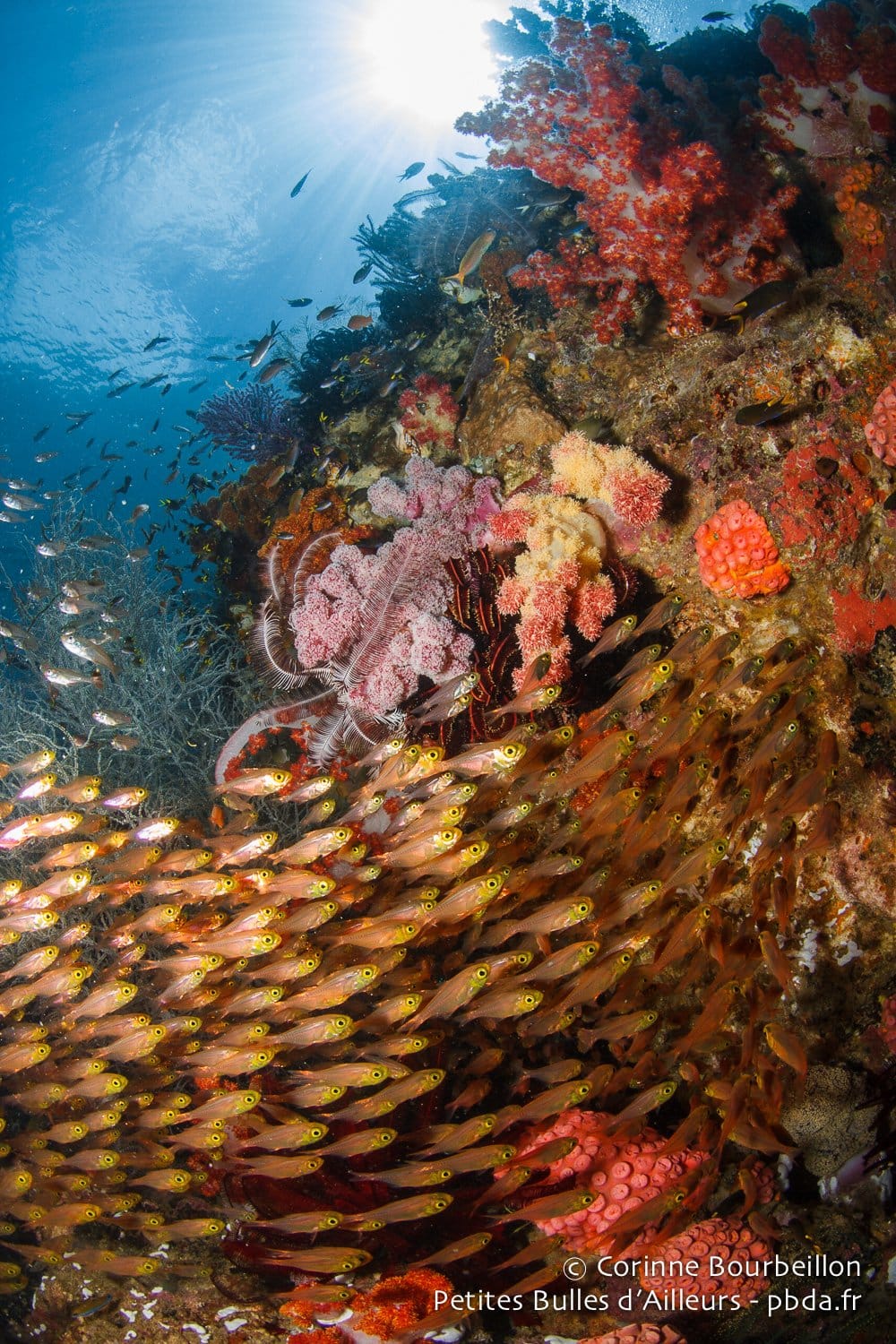

Diving at Triton Bay
Triton Bay lived up to my expectations: on the diving side, exceptional, incredibly rich and well-preserved seabeds; on the ambience side, a very peaceful, very relaxing vacation, far from the tourist crowds and the madness of the world...
But to be honest, I don't think it's a destination for all divers. At Triton Bay, the waters are laden with nutrients, resulting in a spectacular profusion of underwater biodiversity. The downside is extremely variable visibility, in water that's often more green than blue: from mediocre (5m) to decent (15m) for inland sites, from good (20m) to excellent (25m and more) for sites further out towards the open sea. And it's always changing with the weather, which is also highly variable, even on the same day...

As a result, every day we have to adapt our choice of dive sites and type of dive, depending on the sea, sky and tide conditions... And my daily dilemma as a photographer, at breakfast time, is to decide which lens to fix on the bottom of the boat. my device fisheye or macro?
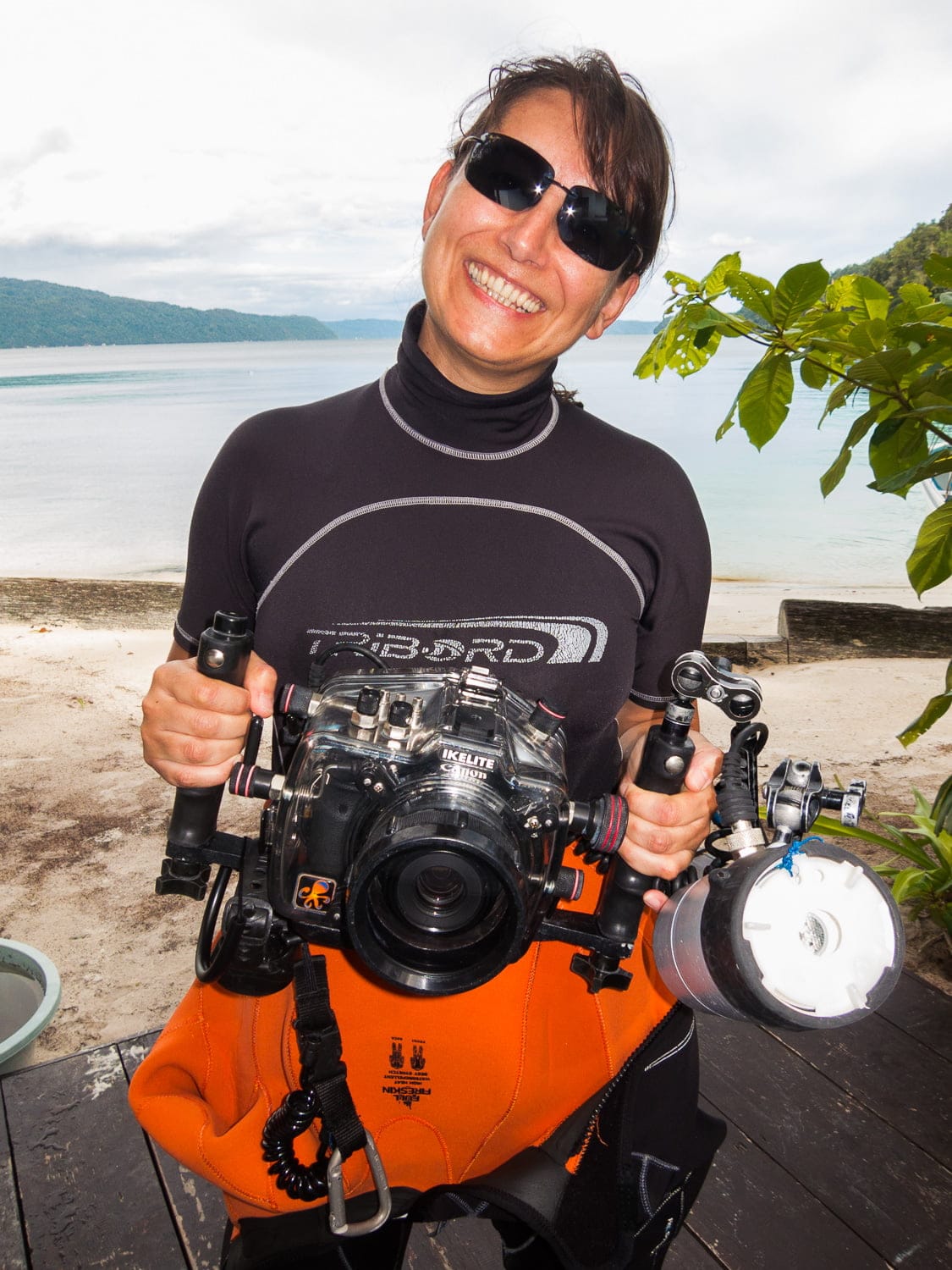
(Yes, it's hard to make such serious decisions on vacation).
You also need to be aware that, apart from diving, swimming and a trip to the nearby villages, there's not much to do in the area. So it's best to be in a contemplative mood, preferably with a passion for underwater photography and a childlike sense of wonder at nature's treasures, to fully appreciate Triton Bay.
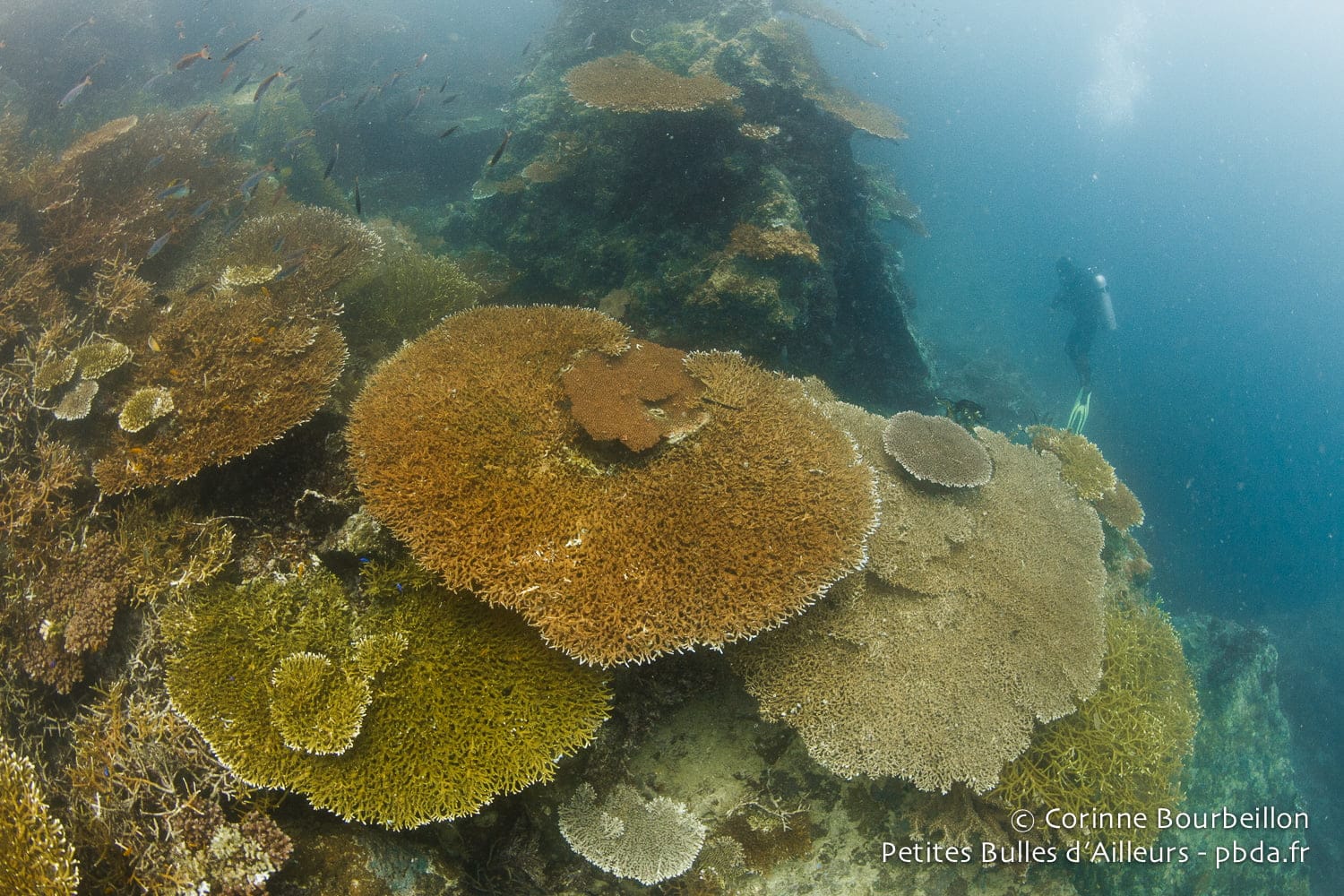
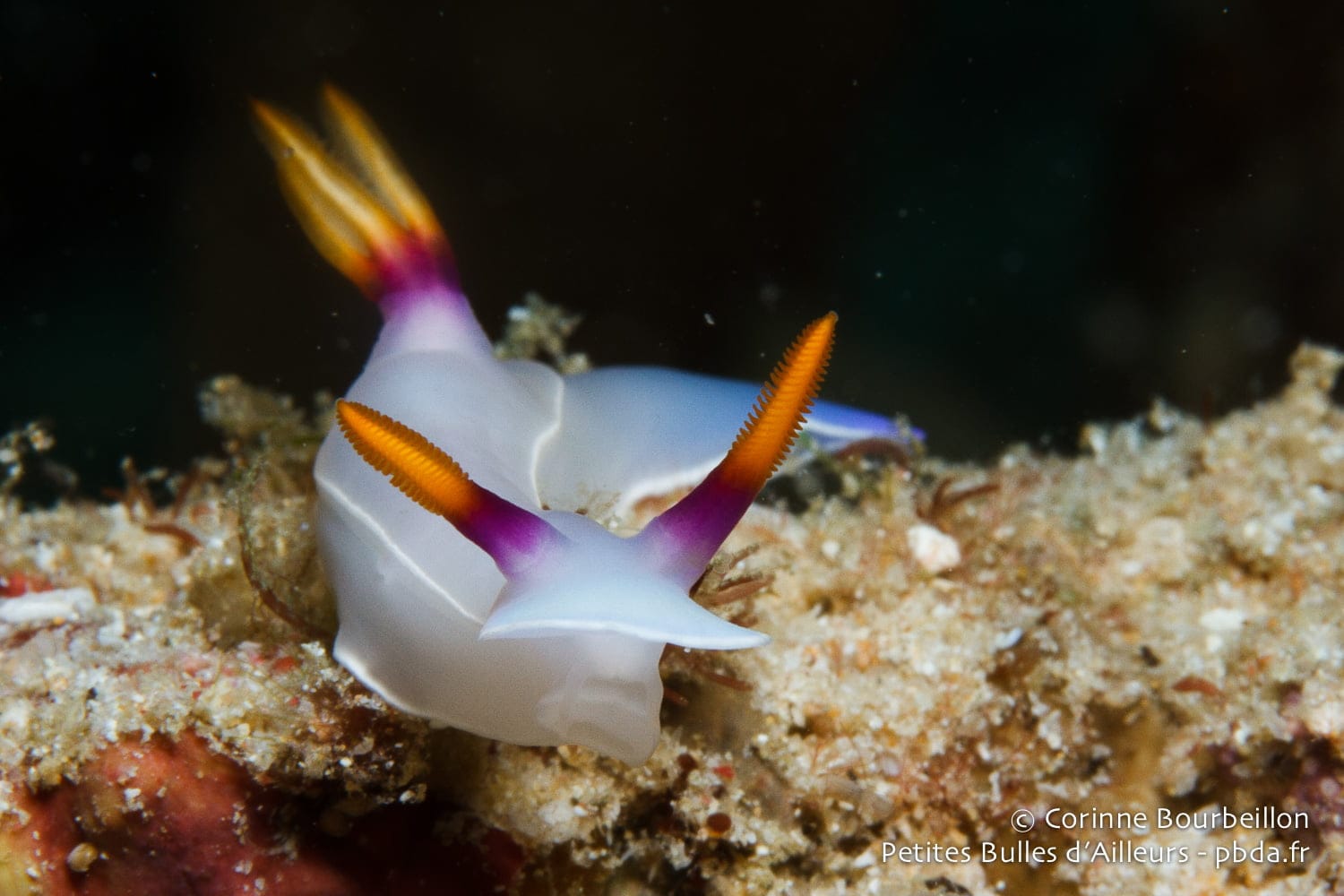
I enjoyed the downy forests of black coral, the explosion of bright colors in the soft corals, the huge tables of hard coral, the hunting jacks, the giant whirlpools of fusiliers and surgeons, the gaterins, carpet sharks (wobbegongs), swarms of glass fish, seahorses-pygmies galoreThe list goes on and on... and there are dolphins often spotted from the boat, and even whales (once)...
It's also worth noting that diving at Triton Bay should not be considered during our summer. This is the season of the eastern monsoon (which runs roughly from mid-June to mid-September). The region is then very exposed to the winds, and sea conditions are not suitable for diving. Visit Triton Bay Divers Resort closed during the summer months.


My only regret is that there was no bagans during my stay. These mobile fishing platforms, which haul in nets overflowing with anchovies or other small fish for bait, attract whale sharks, which come to feed around the catch (as at Cenderawasih Bay, another well-known destination for divers in West Papua).
You can then immerse yourself alongside these gentle giants of the sea (as I had done in Mexico) and admire them very closely. I won't have the opportunity to do it this time... Too bad.
Away from it all
The little resort Triton Bay Divers where I spent a dozen days is brand new, having opened in February 2015. It's the first and (for now) only diving facility in the Kaimana region, where tourism is still virtually non-existent.


Since I discovered Raja Ampatin 2012, I am particularly interested in diving in West Papua, located in the heart of the mythical Coral Triangle. The remote Triton Bay was a dream of mine, and for a long time seemed inaccessible. Until 2014, there was only the option of diving cruises (which were few and far between, and most of them in the very high-end category). So when I heard about this resort project, I jumped at the chance. their Facebook pageeven before they opened. As the months went by, I followed the construction and landscaping of the site, the purchase of the boats, the arrival of the first customers... all the while keeping in the back of my mind the idea of visiting one day soon!
Behind this crazy project to open a diving resort in such a remote location are Lisa, an Englishwoman who grew up in Hong Kong, and Jimmy, a Canadian of Chinese origin who lived in Taiwan. Both diving professionals, they dreamed of one day opening their own center and joined forces.
Addition. I put you below a video shot in 2017 by the videographer and underwater photographer Karsten Heinrichwhere Lisa explains what makes Triton Bay different from Raja Ampat, for example:
The motto of the resort Triton Bay Diversis "remote but worth it". In short: it's super far from everything, but it's worth it! I can confirm that. I've come back delighted.
Especially as I (again) enjoyed conditions worthy of a princess, under those dreaded coconut palms at the end of the world... Yes, during my stay, I was the only diving guest. Who then blissfully enjoyed the boat and TWO dive guides (eagle-eyed Indonesians from North Sulawesi, who have worked in Lembeh among other places) all to herself, eh, who???? 😊
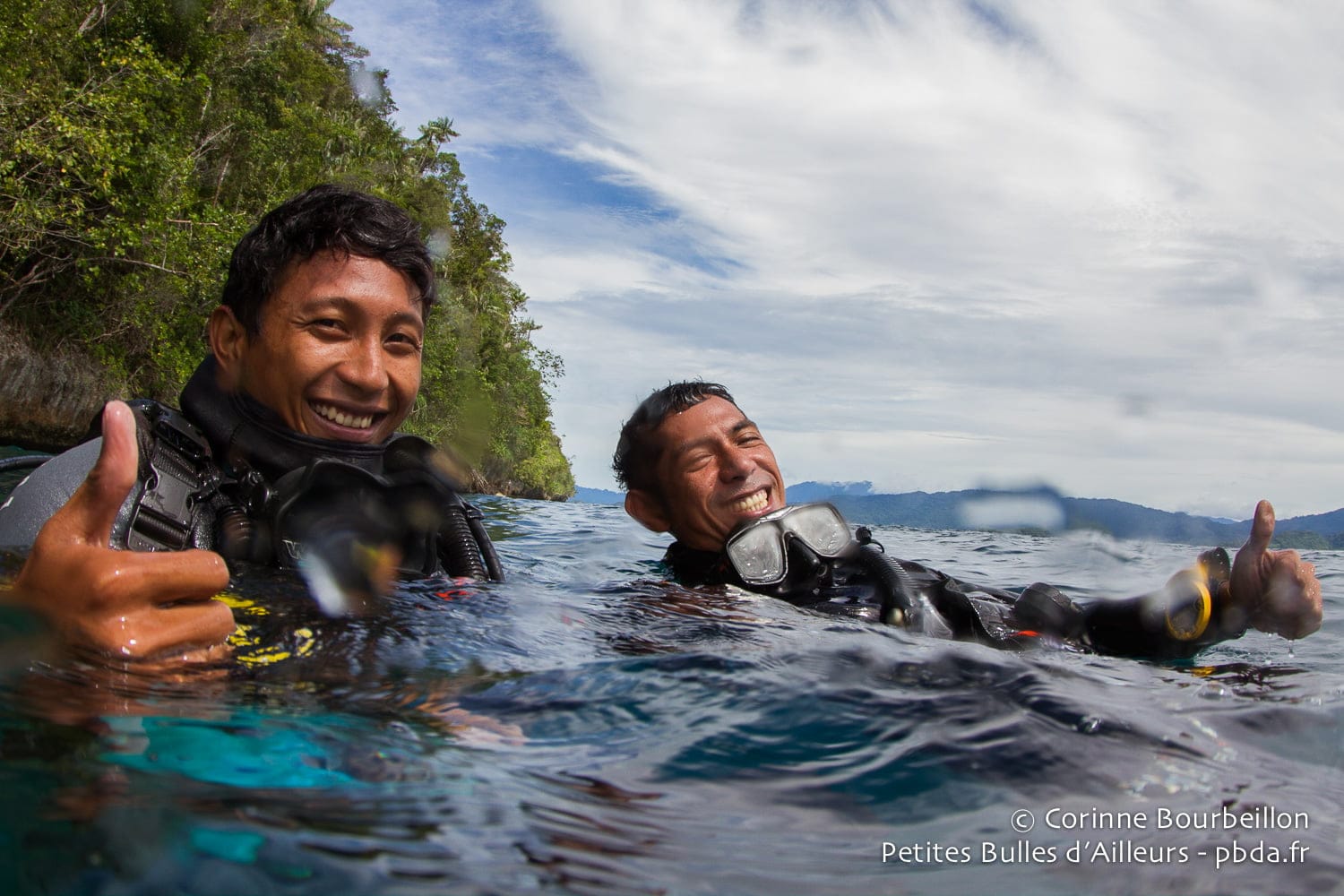

I'm really lucky, as I often am when I travel solo. Not only did I escape the killer coconut palms (phew!), but I was able to indulge in an orgy of underwater photography without having to worry about a cumbersome boat... Bliss.
👌 😎


On such a sad day, what a joy it is to see your photos and dream. with open eyes. I dream of a trip like that, maybe one day! Bravo again for these photos. I've just come back from the Maldives to Ari Atol, but what a difference in the color of the coral! Keep on making us dream
@Of the garden : yes, that's what fascinates me so much about Indonesia and the surrounding countries that form the "coral triangle": the profusion and richness of coral. I've been to the Maldives and Polynesia too, and while both destinations are fantastic for the "big guy", you can't find the same colors or the same abundance of coral life...
Change of scenery and enchantment !!!
Delighted to have transported you... (including underwater) 😉
Another remarkable article from you.
This destination seems like the dream of every underwater photographer.
@Feulvarch: Thank you! Yes, it's a fantastic destination for sub photographers. I'll devote future posts to my underwater encounters. Not to mention that I was lucky enough to enjoy dream conditions (alone with two guides)... 🙄
More magnificent photos and dreamy landscapes. Thank you Corinne for making us dream! It's always a great time spent in front of my computer, contemplating your extraordinary photos and experiences. Thank you
My dream is just the Ile de Beauté? but who knows, maybe one day! 🙄
@Sophie: I'm delighted to be able to make you dream through the screen. As for the Isle of Beauty, I don't even know it... Another dream to turn into reality one day soon. The advantage is that it's not so far away... 8)
hello Corrine,
as usual, your photos and comments make you dream. Having already dived (cruise on the Shakti) in R4, I'm very interested in Triton Bay, and I'd like to know what type of stay is most appropriate, resort or cruise? Do you know when the bagans are there?
Thanks again for this blog.
Gerard
@ Gerard: I generally prefer to be in a resort whenever possible, for the usual reasons:
- comfort (I prefer to be ashore, however comfortable the boat) and often more flexibility for "à la carte" diving
- guides who know the sites inside out (and know where to look for pygmy seahorses, or what time to dive at a particular spot, or where to dive depending on the current...).
- possibility to repeat several times the same site
For Triton Bay, I think it would be a bit frustrating for me, as a photographer, to do only a few dives here and there in the bay, when conditions are so changeable from one day to the next. Bo's Rainbow, for example, which I first photographed in macro mode on a bad day, I photographed again later, in more favorable conditions, in wide-angle, and it was extraordinary... One of my favorite sites (which wouldn't have become so if I hadn't gone back).
After that, cruises to Triton Bay are often combined with other things, so you can discover more things, and that's great too... But overall, I'm still a bit "frustrated" with cruises.
The Aranui passed through Triton Bay at the end of my stay. The cruise leader came to see us, to say hello and catch up on the sites. I doubt the divers on board saw as much as I did, and enjoyed their dives as much, in the only two-three days they spent in the bay...
Finally, for the bagans (and whale sharks) at Triton Bay, it's very variable and very random it seems. Lisa, from the resort, told me she couldn't quite understand why they weren't around at the moment. There don't seem to be any "rules". It depends on the abundance of fish, the tide, the season, the age of the captain, etc. etc.
Hello Corinne and thank you for this mouth-watering article... And the color of the water... Just the dream in this late winter.
I see we have diving, photography and Indonesia in common. However, I don't like diving in currents (bad experience in Komodo that left me with a few after-effects...). Hence the following question: would you say that Triton Bay's dive sites are subject to strong currents?
It looks like a really nice place, both on land and underwater. Thanks again for making us dream,
cordially, Nathalie.
@Natalie: Yes, there can be a lot of current at certain sites, at certain times of the tide, at Triton Bay. But of all the dives I did over a ten-day period, at a rate of three a day, there was only one where we were confronted with a bit of current that forced us to change our plans during the dive. Two or three times, too, we switched to another site with less juice, given the conditions, when we got there...
But most of the time, knowing that I was carrying a bulky camera case, my guide Andi chose the most favorable sites to avoid the current. I didn't make a single dive where I had to get out the hook, as can be the case in Komodo or Raja Ampat... With a guide who knows the area, these are generally quiet dives. (Unless you insist on doing drift dives and diving in the current, in which case that can be done too...).
🙂
Bravo again for this magnificent article and its sublime images, both above and below the water! It's worth coming all this way for a little piece of paradise... We're leaving next Saturday for 15 days in Panama, on the other side of the world. Planned dives in Bocas del Toro, where our 2nd son, who has just turned 10, will take his OWD and join his eldest son and my wife, who were certified last summer in Koh Tao. Then a few more dives at Isla Coïba. Let's hope we see some good stuff too... 8)
@Thomas: thank you for this little note, it's very nice. Bon voyage and happy bubbles, then!!! Enjoy, it should be beautiful! 🙄
Hello Corrine,
I'm delighted to discover both your blog and this article. Congratulations, it's very well told and your photos are splendid. It inevitably makes you want to dive again! In fact, this summer I'm off to Bali to dive with the mantas and mola-molas. I'm going to explore your blog, it'll keep me waiting!
@Karl: thank you for your nice little word. For mola-molas, memories here:
https://petitesbullesdailleurs.fr/mola-mola/
🙄
Good preparations and good bubbles !!!
Whaouh I took full eyes, the setting is top!!!!
Hello Corinne,
Can you tell me the differences with Raja Ampat? By the way, on the way to the R4, in 2016 there was no longer a badge to hang on your stab. I had to make do with 2015.
Is it worth taking a trip to Triton Bay even if you know R4? In any case, the owner of the resort where I stayed seemed to be saying that Triton would be the next R4.
Great photos in passing!
@ Remi: The differences between Raja Ampat and Triton Bay are numerous:
1 - In Raja Ampat (northern archipelago, not Misool), you can dive all year round, but not in Triton Bay, which, being further south, is too exposed to the winds during the period that corresponds roughly to our summer (June-September).
2 - At Triton Bay, we're... in a bay. With all that this implies in terms of visibility: heavier, often green water, with variations depending on the weather, currents and tides. This less-than-ideal visibility will disappoint divers looking for consistently transparent water and easy, "pretty" dives.
3 - Triton Bay is a bay. Not an archipelago like Raja Ampat. So it doesn't have the same scenery of islets scattered all over the place as Raja Ampat, although it may resemble it in places in terms of karst cliffs crowned with jungle.
4 - Triton Bay is not at all easy to get to and not at all developed in terms of tourism, unlike Raja Ampat, which has seen exponential popularity and development in recent years. So to date (May 2016) there isn't much choice in terms of flights, accommodation and diving opportunities in and around Kaimana. But this should change rapidly, as it did with Raja Ampat, and that's why Triton Bay is considered the next R4...
5 - At Triton Bay, there's a chance of seeing whale sharks that come close to the mobile fishing platforms called "bagans" (as at Cenderawasih Bay). In Raja Ampat, however, they are more likely to be seen.
6 - In terms of underwater fauna, Triton Bay seemed just as rich as Raja Ampat, with coral in very good health too. The difference lies in the conditions in which we can observe things. Despite not always top visibility, I saw jacks, big humphead parrotfish, wobbegongs, barracudas, gaterins and all the tropical fauna usual in these parts... I didn't see any manta rays. But I have read the account of a diver who saw one on a diving cruise in the area. For the little one, visi is not a problem, so for macro fans, all the sites in Triton Bay are fabulous... With a special mention for the pygmy seahorses, I'm talking about them here:
https://petitesbullesdailleurs.fr/pygmy-seahorse-triton-bay-20160508/
Finally, on the sites accessible from Triton Bay a little further offshore, visibility is much better, with impressive shoals of surgeonfish and trevally. The spectacle is often grandiose, but the sites are less "easy" due to waves and currents. You need the right conditions to go there.
8)
Thank you for your super complete answer!
Wow! These photos are gorgeous! Makes me want to go there now!
I discovered your site while looking for sites, especially for my 2 sons (aged 19 & 16), who dive mostly in Asia during our travels.
Sublime photos, but above all - and this is much rarer in the French-speaking blogosphere - fluid, high-quality text, without the slightest spelling or grammatical error! A real treat.
@Olivier : thank you very much, I'm delighted that my site can be a source of inspiration for your two sons!
As for the rest, it's basically what I do for a living... I started out as a proofreader and copy preparer for publishing houses, I've also been an English-French literary translator and entered journalism as an editorial secretary... 😉 Nowadays, some colleagues call me "mistress" when they need advice on past participle agreement and others call me a "syntax Nazi"... But like everyone else, I still sometimes let typos slip. I'm sure if you look hard enough you can find them... 😀