

Among manta rays in Komodo

 EN
ENIn Komodo (Indonesia), it's hard to miss the majestic manta rays. Whether diving underwater or snorkeling from the surface, it's a sumptuous spectacle!
Manta Point on video
I bring you back to July 2016, in Indonesia, in the heart of the National Park of Komodo. Besides his famous dragonsThe archipelago is also the ideal place to observe the graceful and harmless manta rays.
The footage from this underwater video had been sleeping at the bottom of my hard drive for many months... It was about time I put a little montage online! 😉
I filmed these beautiful giants at the site of Karang Makassarlogically called "Manta Point" by divers. Not a misnomer at all. It's Komodo's best-known and most popular manta spot.
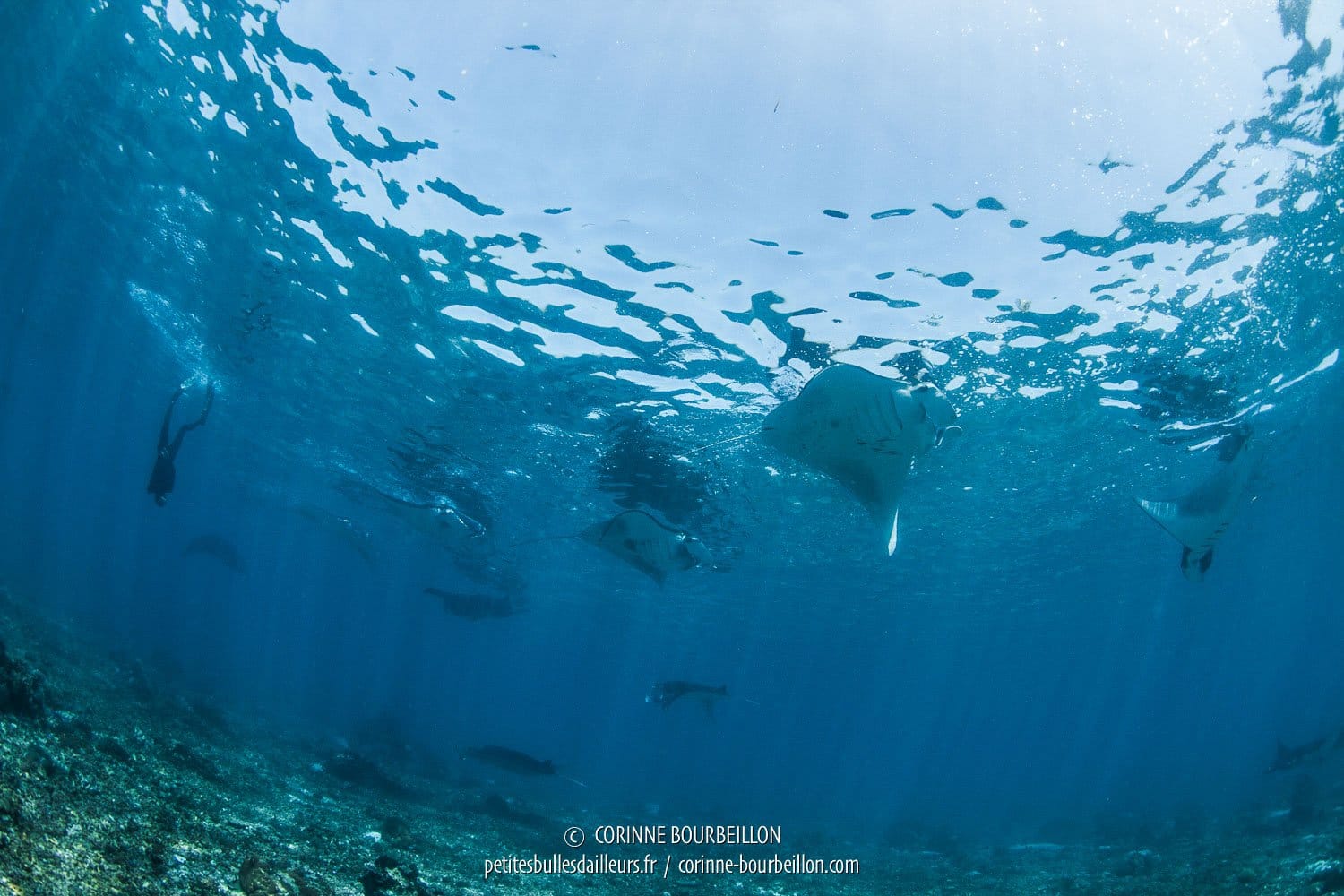
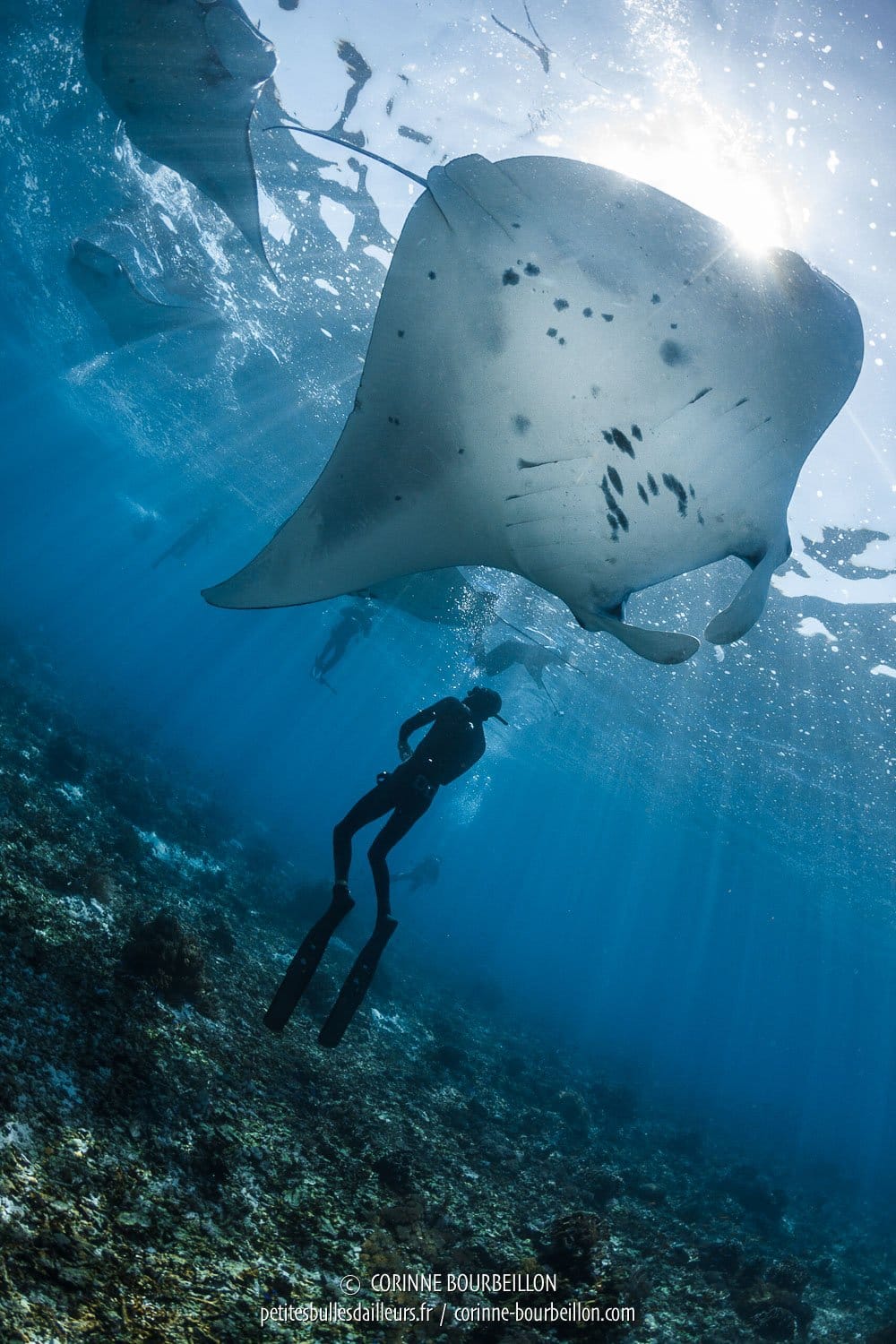
It's relatively safe and accessible to all. Whether you're a scuba diver, freediver or simply a swimmer with fins, mask and snorkel (known as PMT or snorkeling), it is quite easy to observe the huge manta rays (in the 3-4 meters of scale), which adore to walk in the sector between girlfriends.
Are manta rays harmless? Yes, they are! I specify it, because I am often asked the question: these enormous rays do not have a stinger, unlike these small treacherous stingrays... On this subject I let you (re)discover my painful misadventure of July 2009, in Sangalakianother "Manta Point", located in the Derawan archipelago near Borneo).
Five years later my first dive cruise in Komodo in 2011In Karang Makassar, I'm delighted to see that the mantas are still there in numbers. In Karang Makassar, there's no need to go deep or look for them for very long.
On a dive, all you have to do is position yourself at a strategic spot on the seabed, which rarely exceeds 10-15 meters in depth, in the area, and wait. After a few minutes, you'll see them arriving in small groups, swimming effortlessly up the often furious current that sweeps across the substrate of coral debris.
Depending on the tides and phases of the moon, this site can be transformed into a veritable aquatic expressway!
You don't realize it in my video, everything looks very calm, very peaceful, but in reality, to be able to film without being swept away by the current, I'm lashed to a rock with my hook and I sometimes have a hard time holding on to the "juice" with it. my imposing box I have neither the power nor the elegance of these enormous fish.
Of course, when snorkeling on the surface or diving underwater, it's pointless trying to follow them, as they swim so fast and the current can be so strong in Komodo. It's they who decide whether or not to approach us, whether or not to accept our presence, whether or not to come and meet us.
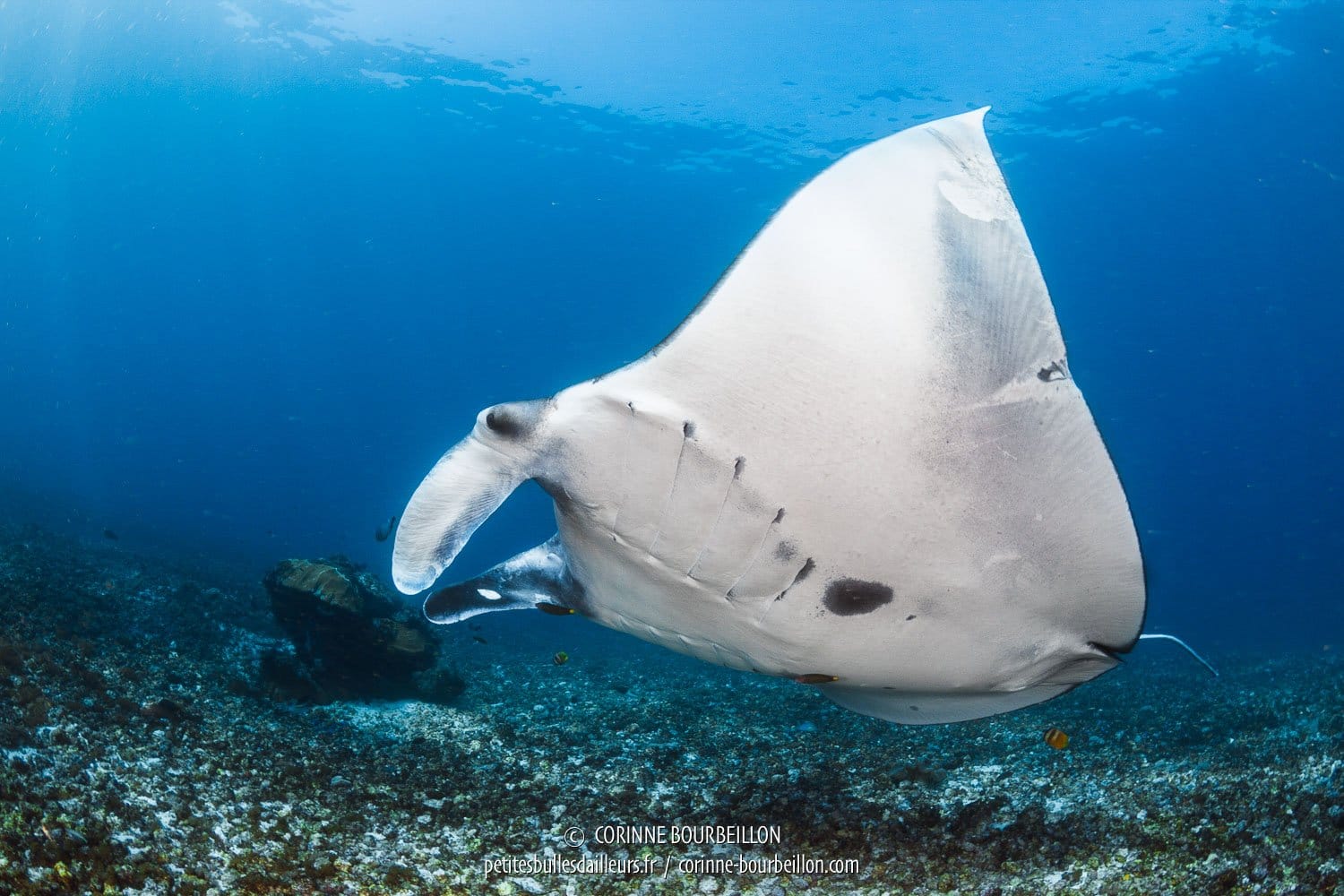


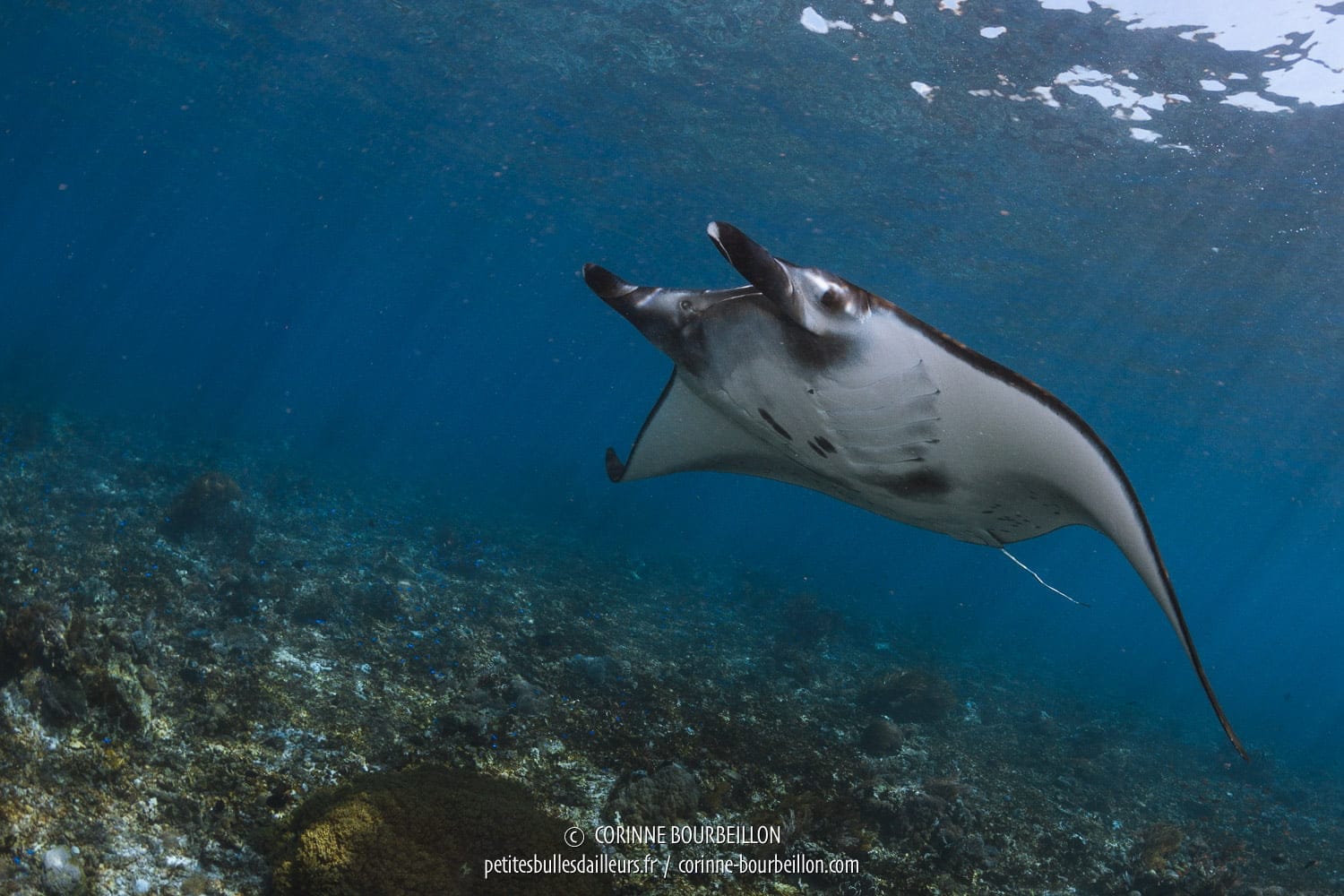
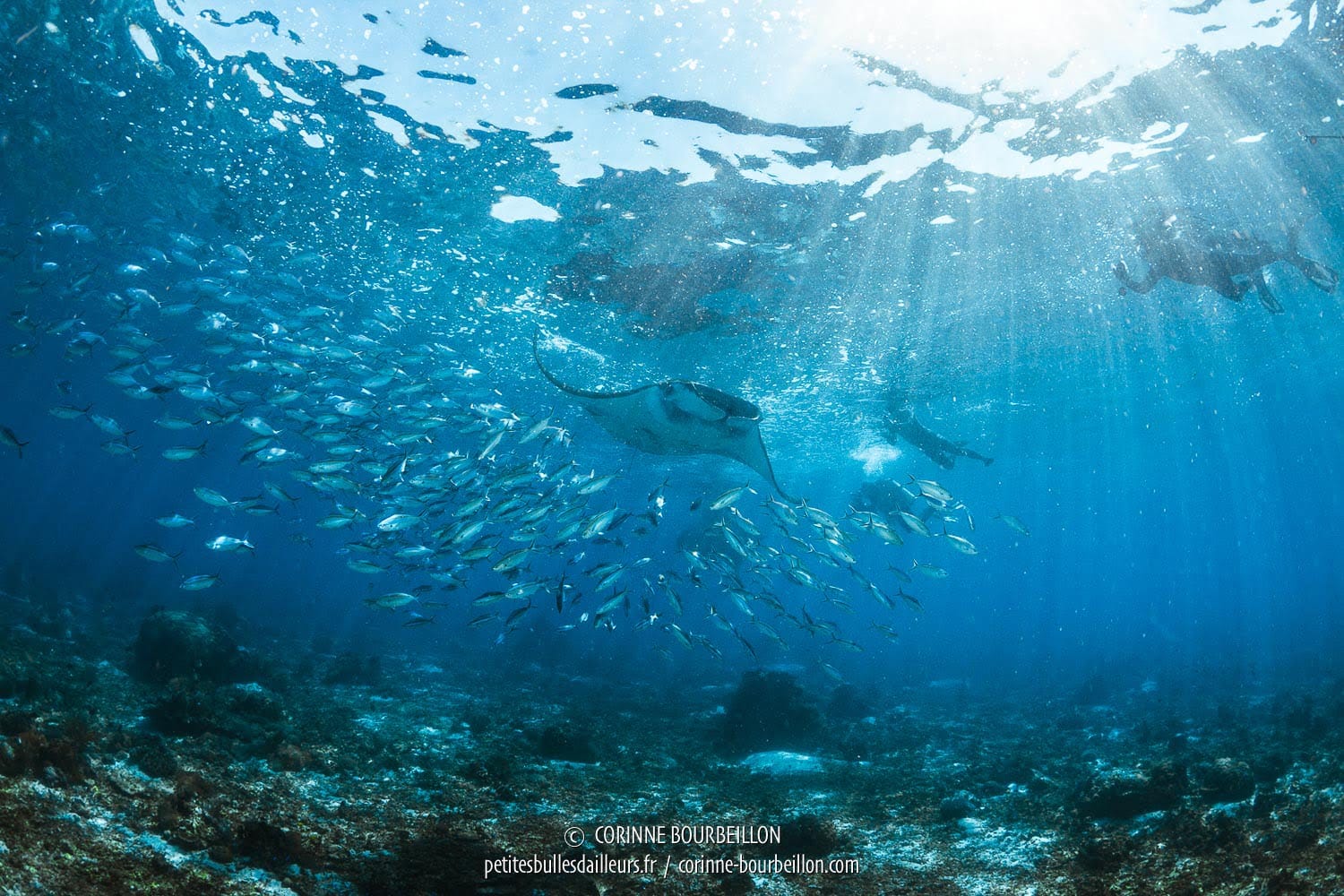
Komodo is a national park, inscribed on the Unesco World Heritage List and Biosphere Reserves. And Karang Makassar, in the heart of the park, is really an exceptional site to observe the behavior of the rays in various situations: when they feed on the surface of zooplankton, filtering the water, mouth open; when they swim between two waters, going down or up the current (to gulp down a lot of plankton in the process); or even when they queue up cleaning stations which dot the bottom ...
Yes, the mantas are queuing up in front of these coral patties, where little cleaning fish live to rid them of their parasites! 😲 Positioned just a few meters from one of these "cleaning stations", I can see them arriving in squadrons, lined up one behind the other, quietly waiting their turn!
Fascinated, I stay in the same place, without moving, during about thirty minutes, without being able to detach my eyes from the spectacle, which starts again, without ending...
The most curious ones sometimes come to glide and take a look at the small strange creature which releases glittering bubbles a few meters away from them. Not at all frightened by my presence, several will even come to position themselves just above my head...
I had already observed this behavior, five years earlier. At that time, I posted this video, where we can see a manta ray coming to examine me more closely and deploying one of its cephalic fins while approaching, as if to greet me. I had named this sequence "The cuckoo manta ray...
I give it to you below, just for fun:
The manta is a mobula. A brief scientific aside: in all taxonomic rigor, you should no longer say "manta" but "mobula". A genetic study published in June 2017 has made it possible to group these two ray genera into a single one, so that the "manta" classification no longer exists for biologists. (I refer you to this article that sums it all up). The scientific name for the reef manta ray is no longer Manta alfredi but Mobula alfredi. The giant manta ray is no more Manta birostrisbut Mobula birostris. But never mind, in everyday language, we can continue to call them "manta" (as in "mante", "mantille" or "manteau")... It suits them so well!
The dive cruise has fun
To admire Komodo's manta rays in July 2016, I opted for a diving cruise, as I did in 2011. After a lot of research on divers' internet forums, my choice fell on the Duyung Baru. This pretty little pinisi (traditional Indonesian boat) seems to correspond perfectly to my expectations: six divers maximum on board (divided in three cabins) and "photographer friendly" atmosphere. Luckily, there is availability on the dates I like.
See also on the blog → Komodo seen from above, it is even more beautiful
The boat belongs to Vovo and Yani, a lovely German-Indonesian couple. They know the area and the Komodo Park very well, where Vovo has been sailing and diving for about 15 years.
With them, we feel like a family during the cruise! Yani gets up before dawn to prepare a copious breakfast for the divers and cooks us good food all day long. Vovo manages the logistics of the dives. Next to them, three Indonesian crewmen and an Australian guide instructor, Matt.


As for the clients, I was lucky: nice and interesting people, always in a good mood, with whom I got along very well. This cruise was really a good choice!
There is a young Finnish couple (Ville and Henna), another German couple (Chris and Michi), all expats in Asia (Jakarta and Singapore) and an Indonesian, Will, an underwater photographer like me. I invite you to visit his Instagram (@_william_susantoo_)It makes wonderful pictures (and not only underwater)!
To the lottery diving pairsSo I've really fallen in love with it! Will and I form an ideal duo underwater, with our respective big photographic boxes.


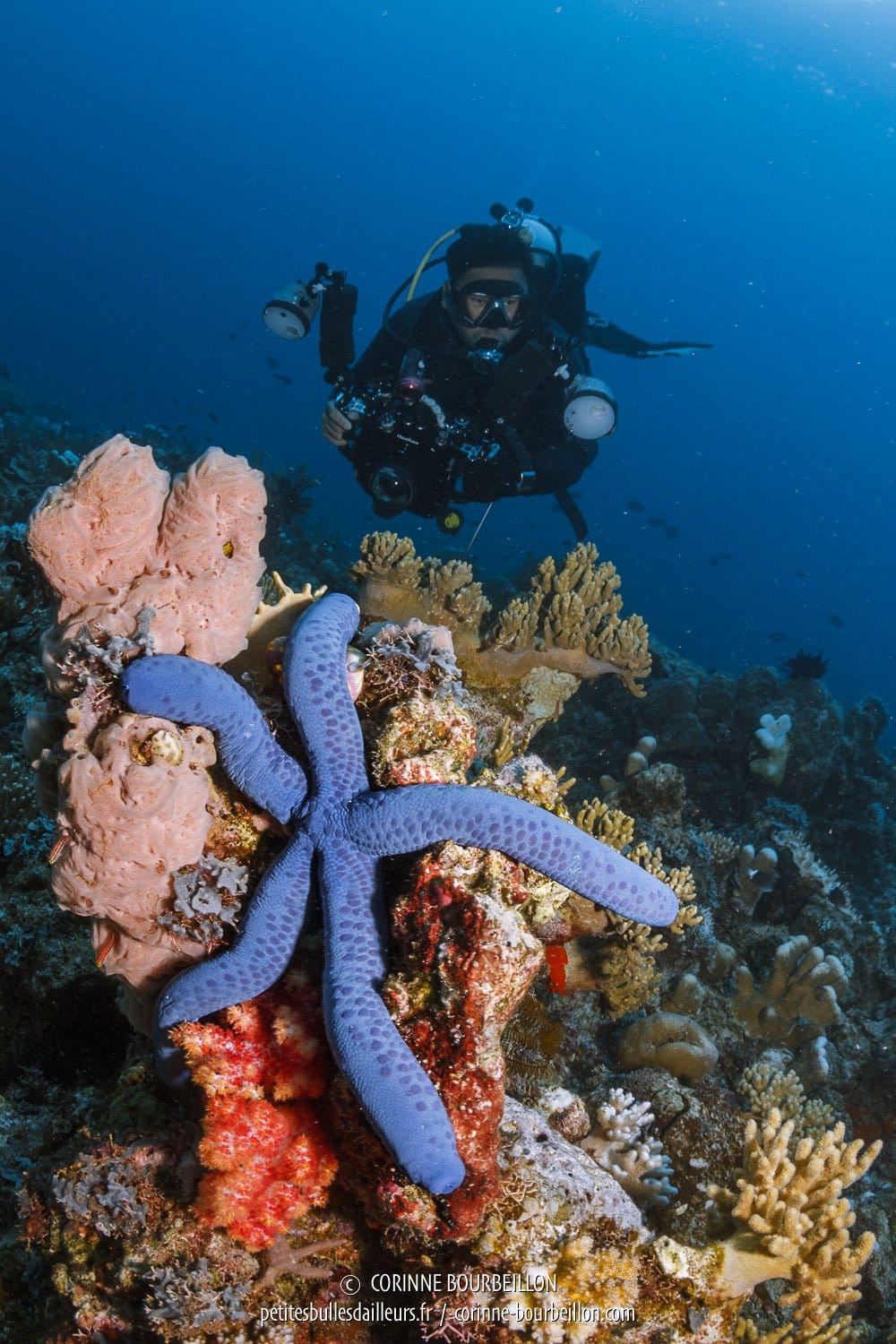

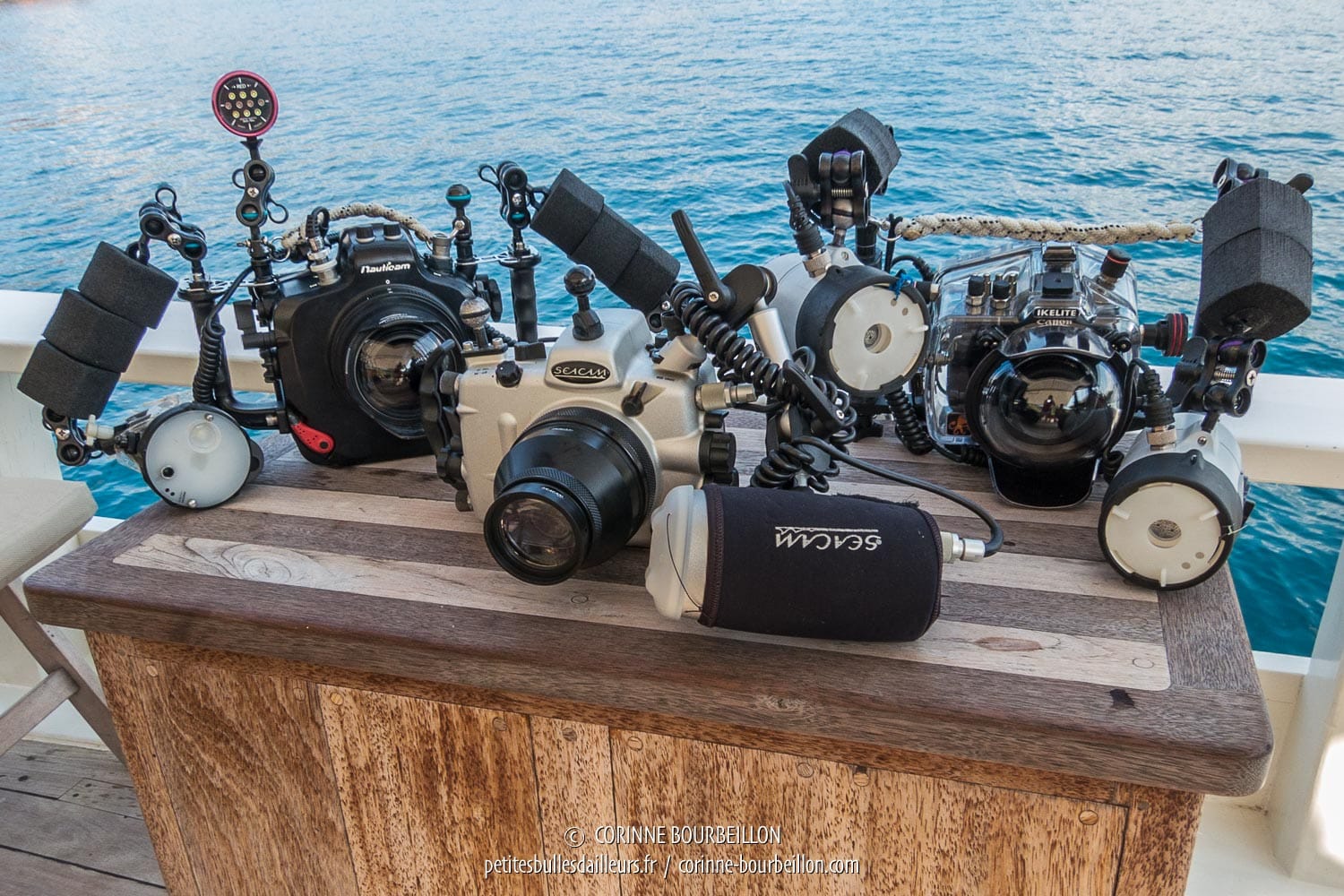
The ultimate luxury for my little person: I have the back double cabin all to myself... A real princess! Vovo had told me when I booked: he already had four other customers that week, two couples. The remaining cabin would therefore be for me, and at no extra cost "single". (Will, the sixth member of the group, was a last-minute addition: he was able to join the cruise by sharing the cabin with Matt, the diving instructor, which is normally reserved for staff).
I don't know if the stars align when I send a booking e-mail to Indonesia, but I'm really lucky on this one, and it's not the first time it's happened to me. Five years earlier, in 2011, on my first dive cruise to Komodo, I did even better: I had the whole boat to myself !!!
On board of Duyung BaruI really appreciate the friendly atmosphere in our little group. Before and after the dives, we chat, we get to know each other and we exchange our respective knowledge...
Matt and Vovo, who are also freediving instructors, organize yoga sessions on deck, to work on relaxation and breath control, and they offer us a morning of initiation to free divingwithout bottles or bubbles.


Will, on his side, gives me advices on the management of the light under water, the position of my flashes, the configuration of my housing. He even offers me a strap, that he has in addition, to transport it more easily, by learning that the one I had ordered and that I should have received before the departure did not arrive in time.
Like Chris, he has a drone, and these two big boys have a lot of fun together with their toys, bringing us spectacular images of Komodo from above. As for me, I am pleased to show to some and others, on the screen of my computer, various small tricks to treat its photos in Lightroom...
To dive in Komodo, a multi-day cruise is in my opinion the best option, preferable to day trips (day trips) from Labuan Bajo (the port of Flores where all the hotels are and from where all the boats leave). The day trips do not give as much freedom, the journey is long, we cannot go to the more distant sites and discover the whole park. For those who still prefer to be based on land, I had spotted during my preparations the Komodo Resort, on Sebayur Island, located halfway between Labuan Bajo and Komodo Island (but it's better to be two, as their "single" supplement is salty). Travel time is cut in half to reach the best-known spots (Karang Makassar "Manta Point", Batu Bolong, Castle Rock, Crystal Rock, The Cauldron, etc.).
To find out which boats were available on my dates, I used the LiveAboard.comI found it very well done for scouting (on the other hand, I never booked through their platform, so I don't know what it's worth, I usually prefer to contact the operators directly). Then, I went to the Duyung Baru to request a reservation online. If you're not comfortable in English (or German) and prefer to communicate in French, Olivier of the site Asiaqua.com can take care of everything (I found out afterwards that it offers the Duyung Baru in his catalog).
Another great thing about having such a small group is that the cruise itinerary is flexible, even "à la carte", depending on what we want to do. Vovo, with his wealth of experience, makes suggestions from day to day.
He must also take into account the tides and currents, which are particularly formidable that week, as we are in a new moon period. Safety first.
Dramas in Komodo. These are not stories. Every year there are divers who drown or disappear in Komodo, swept away by the currents... The latest case, as of the date of publication of this post, is that ofa 40-year-old Singaporean diver, missing in July 2017. Searches at sea did not find her.
In this context, I think our group is really great. There's no grumbling to dampen the mood, and everyone understands why we sometimes have to dive elsewhere than where we originally planned. And no one protests when we have to abandon certain spots, which are too exposed, in favor of more protected areas.
Vovo's choices, who knows the park like the back of his hand, are always judicious and everyone finds their way around, despite the different levels of our little group.


Ultimate Underwater Ballet
The fantastic Manta Point (alias Karang Makassar) is located not far from another fabulous dive site: Batu Bolong, a multicolored coral pinnacle, spectacular, behind which we are sheltered from the current, where swarms of fishes swim around (I will post a series of pictures one day). On the last day, we went back to this site and on our way back... we met again mantas, in full orgy of plankton at the surface!
Yes, more mantas! They are everywhere around the dock!
Our boatman cautiously reduced the speed, then cut the engines. The conditions in this area, at this time of the day, are excellent, there is almost no current. The opportunity is too good. We decided to go back to the water! Snorkeling for the Finns and the Germans. Snorkeling for Matt and Vovo. With the few bars remaining at the bottom of the tanks for Will and me... We immersed ourselves at 5 meters with our photographic tanks, for ultimate images.
You just can't get enough of it. It's impossible not to be jaded, not to marvel again. The emotion is intact. Time stands still. This new, unexpected encounter with the mantas, with no other boats around, is truly magical... 😍





One of my photos published in a National Geographic book
Updated, April 2019. Three years on from these extraordinary encounters in the waters of Komodo, I'm proud to say that one of my images of manta rays swimming to meet Matt - with his arms open in amazement - is one of the photos published in the book. 100 Dives of a Lifetime published by National Geographic Books!


Many underwater photographers from all walks of life, including the famous British Alex Mustard (he is notably the author of the photo of cenote on the cover) helped to illustrate this book. This one is written by Carie Milleran American author based in New Zealand, who completed a dreamlike journey (see her Instagram dedicated to this world tour of diving sites: @thedivetravelers)... 🤗


Beautiful subject, beautiful photos and videos that remind me of my 2007 cruise with mermaid that offers great benefits, but does not have the charm of a phinisi. Manta point my most marked, plu. An hour to admire the mantas. My buddy was a German who told me on every return that he had plunged into bouillabaisse.
Thank you for making us live or relive magical moments.
@ Gerard: thank you, glad to have brought back good memories !!! Yes, the site of Manta Point is really magical... Diving in the bouillabaisse? Funny your German... In English, we say the same, "diving in a fish soup" 😀
Thank you Corinne for making us relive one of the greatest moments of our Komodo cruise three years ago. Great! First dive with mantas for my wife in Karang Makassar, can you imagine? As you describe it. And in addition, we saw a large school of small mobulas, splendid. When in Batu Bolong, rarely observed such a dense reef life. Sumptuous! My GoPro worked perfectly! From time to time, I watch again the videos on the big screen TV, almost the impression to be there! And I just want to go back there!
@Marc: I'm glad to bring back good memories... Yes, starting her life as a diver like this must have been a great moment for your wife !!! As for Batu Bolong, it's always so teeming... For me, it was a delight to go back there! I hope you can do the same one day soon 😉
Pierre Cossart
Thank you for these beautiful images. It reminds me of my first meeting
with Mantas rays in New Caledonia in 1962.
Since, for want of being able to dive again, I look with a Pleasure always renewed your Videos. Thanks again a thousand times. Best regards . Pierre
@Pierre : Thanks for taking the time to leave a note, it's really nice! Glad I could bring back some good memories... 🙂
Hello Corinne,
If you do after Bali, a few days to see the most beautiful backgrounds around Komodo or Komodo (just I do not know where to go and sleep well), doing only snorkeling with children (big but children qd even ), how to go see the rays (who will take us there) safely (safely with the currents)?
thank you,
Flora
@Flore Cormier: hello, the port of embarkation for Komodo is Labuan Bajo, there are several daily flights from Bali to Labuan Bajo. See also my article here :
https://petitesbullesdailleurs.fr/drone-komodo-20161002/
After, everything depends if you want to make day trips from Labuan Bajo (you will have to sleep in Labuan Bajo and the sailing time is a bit long), or if you prefer a cruise of 2-3 days or more to enjoy the park (there are all durations, for all budgets, for all types of visitors, divers, snorkelers, etc. who leave Labuan Bajo).
The difficulty, indeed, is to choose, because there are so many. In order to know better the possibilities (for example where to sleep in Labuan Bajo, or which operators or agencies are reliable), you can start by consulting a travel guide, like Lonely Planet or Routard, I think. After that, you have to take the time to look for information on travel forums...
For safety, I can only objectively recommend people I have already dealt with, like the Duyung Baru I am talking about here. But there are surely many others...
Good preparation! 🙂
Corinne. I always enjoy seeing your pictures and envy your releases (congratulations for your texts). Since I started diving, mantas fascinate me and the site of Sangalaki was for me a reference but unfortunately it is no longer the case -as you have noticed. Also, the one of Karang Makassar attracts me, hence my question: at what period is it the most favorable for mantas and to avoid big currents or big sea? Continue to treat us and thank you. André
@ André: thank you for taking the time to leave a little message, it's nice !
For Karang Makassar, the "Manta Point" of Komodo, I went there each time in July, in very good sea conditions (no wind or waves) and each time they were there. I was told the same thing for the month of August. As for the currents, they are present all year round, according to the tides.
I have read many testimonies of divers reporting to have seen mantas in Komodo, from April-May to October-November. This is out of the rainy season, and it is the period considered as the most favorable to navigate in the park.
But there is no clear answer to your question... Mantas are present all year round in Komodo, it seems. And they would in fact be more numerous during the "rainy season" in the region, roughly between December and April, I have read on various sites. It is then that we would maximize our chances of encounters, but in a water less navigable because of the weather, and more loaded with plankton (that is what attracts them) with therefore a less good visibility.
In short, the best thing for us little human divers is to choose the most pleasant and safest period to navigate. And for the rest, to cross our fingers that nature offers us the happiness of an encounter... 😉
André, to complete the comment of Corinne, then tell you that for our part, we did Komodo in April. And we found the mantas both on Karang Makassar (where we also saw a magnificent mobulas bench) than on Manta Alley (another site on Komodo South / Bay of Langkoi, fantastic mantas + parrots hump + spikes black .... moreover, great memory!)
These creatures are beautiful, I always found them very beautiful. Your article makes me very jealous, lol. By the way, what is the material you use to shoot and make such pretty pictures?
@Emmanuelle : the answer is on this page: https://petitesbullesdailleurs.fr/materiel-photo-et-plongee/
🙂
Hello Corine,
beautiful site and what to say photos! amazing!
I planned to go with my boyfriend at the end of September/beginning of October to Labuan Bajo and would be interested in the cruise with Duyung Baru, but was wondering how many days the cruise would last?
Thank you in advance for your kind reply,
Delphine
@Delphine: hello, I don't remember exactly the duration of this cruise that I did in July 2016, around 6 days I think. For the 2019 cruises, the best is to go directly on the Duyung Baru website which I put the link in the article and to go on their "schedule" page where there is the information, with all the dates and all the durations of the different cruises:
http://duyungbaru.com/schedule/
You can even write to them to ask for more information:
http://duyungbaru.com/contact-us/
Good preparations!
😉