

Travelling and diving in the post-Covid world

 EN
ENIt's difficult to make diving trip plans with the Covid-19 pandemic. In the world before the coronavirus, I was going to dive in the Philippines or in Indonesia... In the world after, I dive in Brittany in green and cold waters.
Diving despite the Covid pandemic
Really strange, this year 2020, whose weeks pass by at the morose rhythm of the "covid" count. Borders are closed, air links are limited... Like many traveler divers, I had to put away my desires for elsewhere. And I fell back on local waters. For me, it's Brittany...
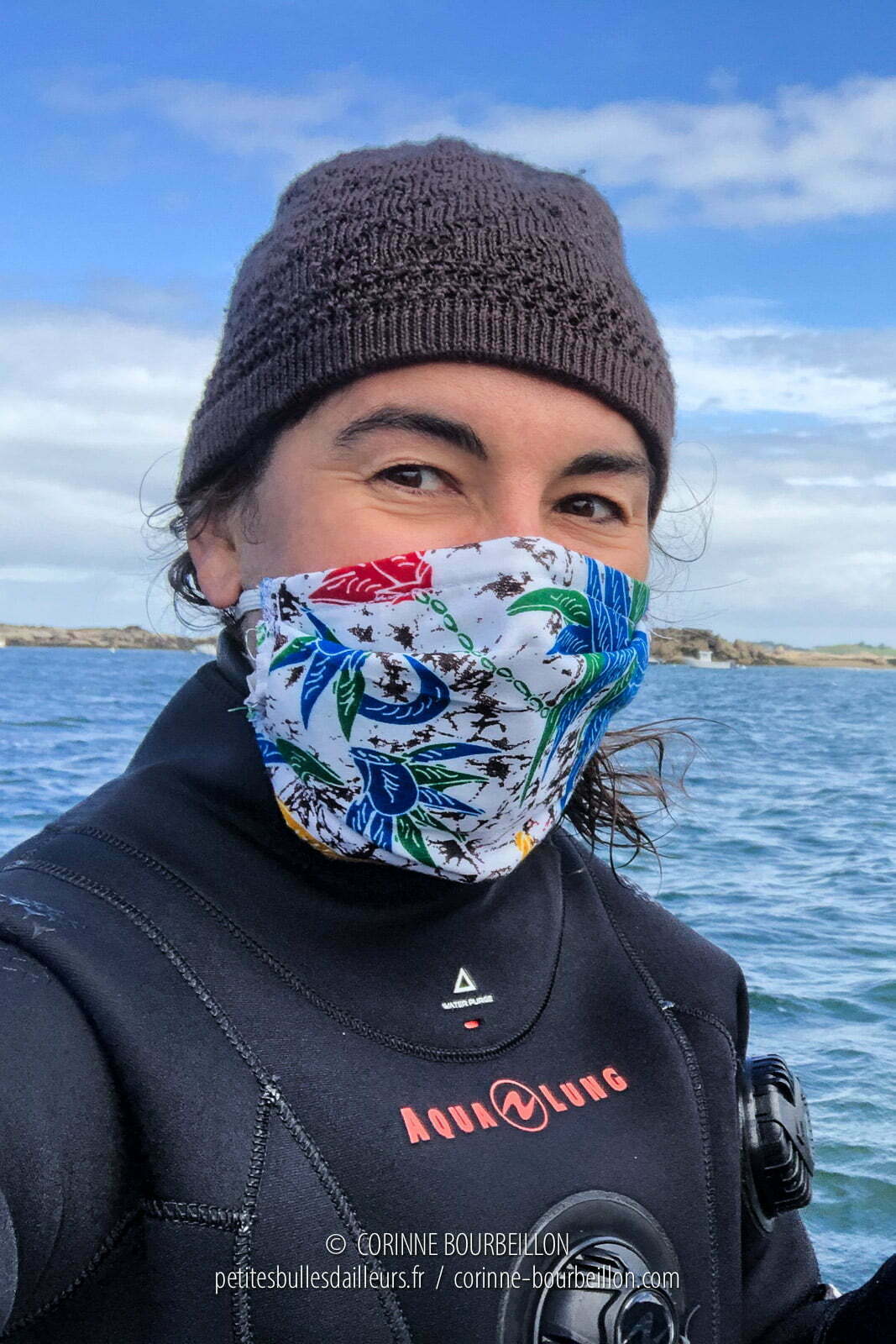
Personal development practitioners call it "getting out of your comfort zone". Me, the very big chiller, who only dived into warm seas during the vacations, reimmersed myself in the cool waters of the English Channel, at the beginning of June 2020, in the early days of deconfinement... 🥶
It was at the Diving Activity Center of Trebeurden (Côtes-d'Armor), during a professional training course to obtain the Hyperbaric aptitude certificate (CAH) Class 1 Mention B (up to 30 meters).
A course that I had planned before the health crisis, to be able to do underwater photography in the future with my journalist's cap in a safe and legal environment. And, incidentally, to learn how to use a dry suit.
Mission accomplished: I'm now officially authorized to work under pressure, and I marvel at having been able to dive into 16°C water without freezing to death and keeping my buttocks dry. Well, almost. A trivial detail of an ill-fitting collar that lets water into the suit... 😂
I would qualify the experience as enriching, even if it was not exactly a pleasure, in any case far from the relaxation that I usually look for in diving...
As this course focused on safety, in addition to the rules associated with professional diving we had to get used to Covid-19 procedures: wearing a protective mask is compulsory at all times, including on the boat, systematic virucide disinfection of the diving mask and regulator as soon as you get out of the water, complete disinfection and rinsing of the equipment on returning to the center... 😷
Of course, it is constraining, but you get used to it. No choice anyway. To dive, in this pandemic context, we must respect these precautions.
On this subject, I refer you to the very complete documentation published by Alain Foret on the French site Plongée Plaisirwith recently updated download sheets. See also the FFESSM and DAN websites, which summarize current Covid recommendations:
→ Plongée Plaisir - Coronavirus and Diving Information
→ FFESSM - Post-confinement recommendations related to the Covid-19 epidemic
→ DAN - Covid-19 and Diving Operations
Green and cold waters
During the course, I was allowed to take with me my camera once during one of our underwater "workcamps". Of course, it's not exactly the same atmosphere as in Indonesian or Philippines waters... 😂
But it's also pretty, the green water - emerald, sorry... It creates a slightly mysterious atmosphere.
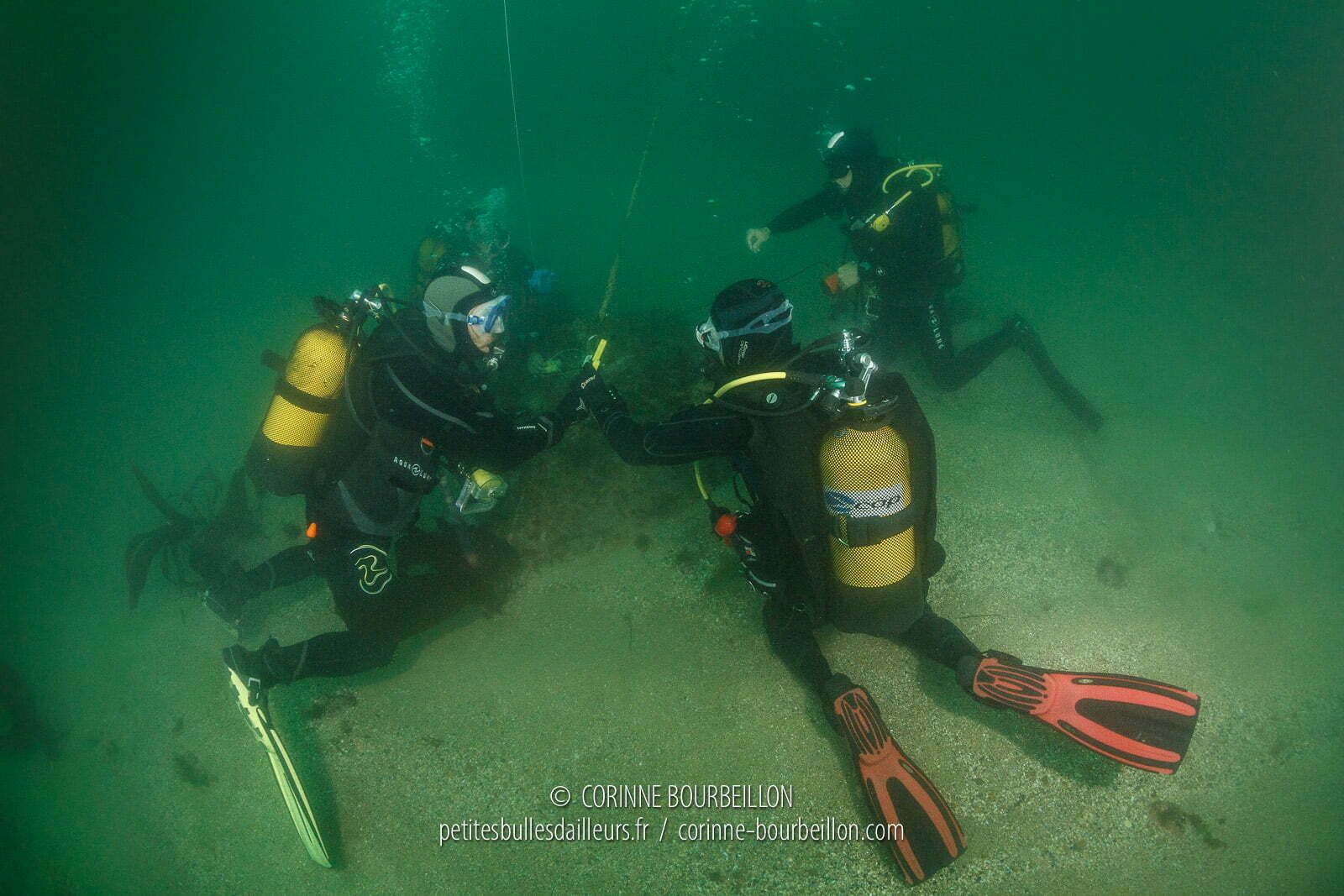

I'm assured there's plenty of underwater photo fun to be had in Brittany's waters. I don't doubt it, and I'm even considering investing in a wet suit in my size. (I don't feel like diving wet in such a cold sea... 🥶) And for a bit of "exoticism" compared to Brittany, there's still the Mediterranean Sea. But a dry suit is a big investment, I still hesitate.
I'm not sure I'll be using it much, given the limited seasonal weather windows in our latitudes... But if I travel less than I used to, I may get a taste for the pleasures of local diving again.
Read more ➜ Diving and photography equipment: my gear
Read more ➜ Diving without travelling (without flying)
Travelling and diving after the Covid?
I've been pretty spoiled so far. After all, I've been blowing bubbles for twenty years in places other than swimming pools or the English Channel... As a result, I've become addicted to distant seas, tropical waters full of fish, and the sites of the fabulous "The Sea". Coral Triangle... 😍
So, after spending a whole summer in France, dry and without any change of scenery for the very first time in years, I think that maybe it's the end of an era.
We're not going to be moving again anytime soon, into the next world. Covid is still there. And it may still be a long time. For Asia in general and Indonesia in particular (my favorite dive destination of all), it probably won't be this year, 2020. 😭
At the beginning of September 2020, not all borders are closed to diving travellers from France, however. Several European and Mediterranean destinations are accessible, as well as French Polynesia, Egypt and Mexico for instance, for more distant destinations. But you still have to prove that you have a clean bill of health, with a recent health survey or PCR test.
What is problematic is the uncertainty of the trip itself: borders can suddenly close because of new clusters, air links can be cancelled overnight, quarantines can suddenly be introduced...
To follow the evolution of the conditions of entry and transit of travelers, country by country, you can consult the regularly updated IATA (International Air Transport Association) click map:
→ IATA - Covid-19 Travel Regulations Map
But I can't complain too much: I'm lucky enough to have been able to go diving in the Philippines late February-early March 2020, when the coronavirus was not yet a barrier to travel. At that time, however, Chinese and Koreans were already unable to travel. This had a huge impact on the tourism sector in the Philippine archipelago, where they represented a large part of the clientele.
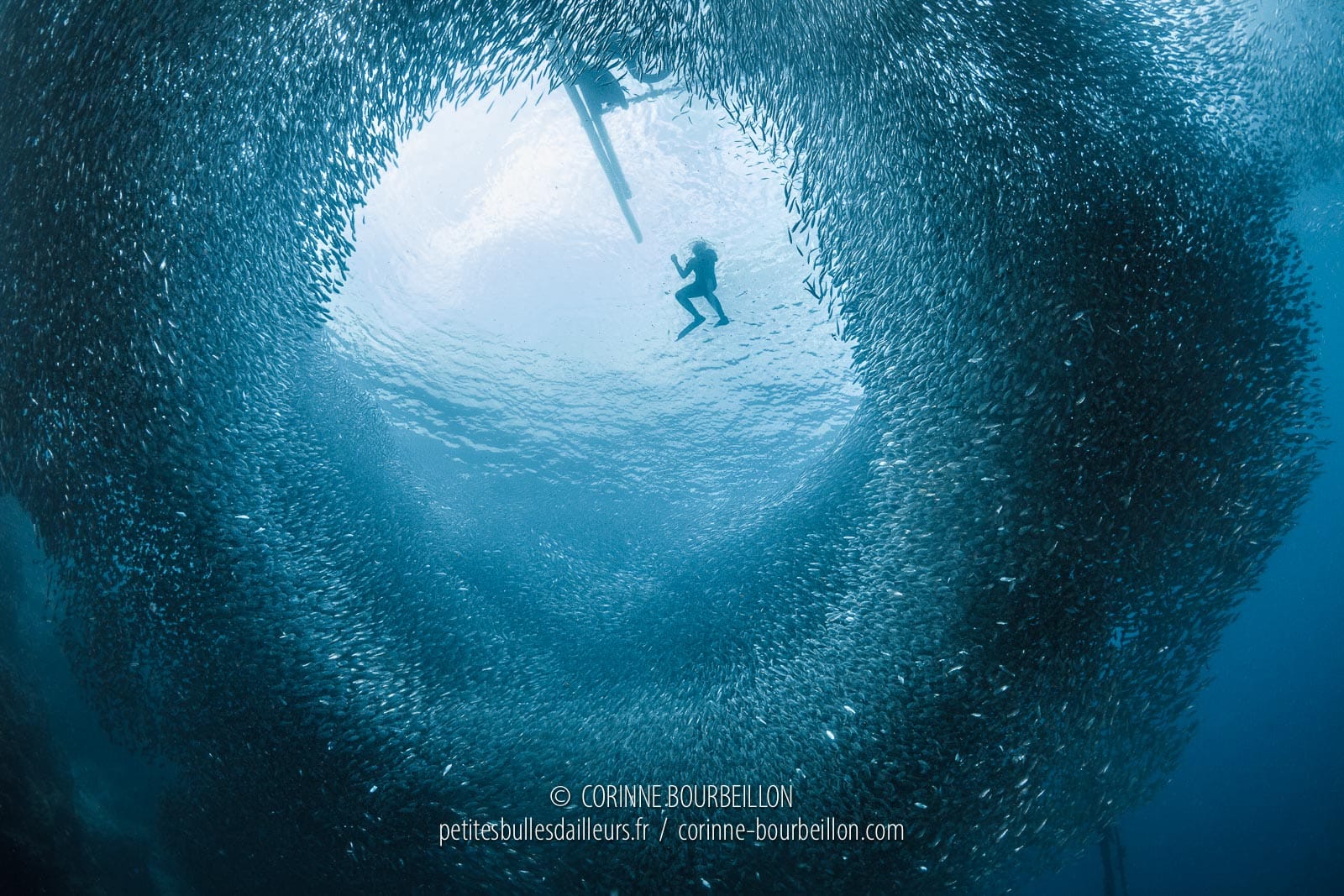
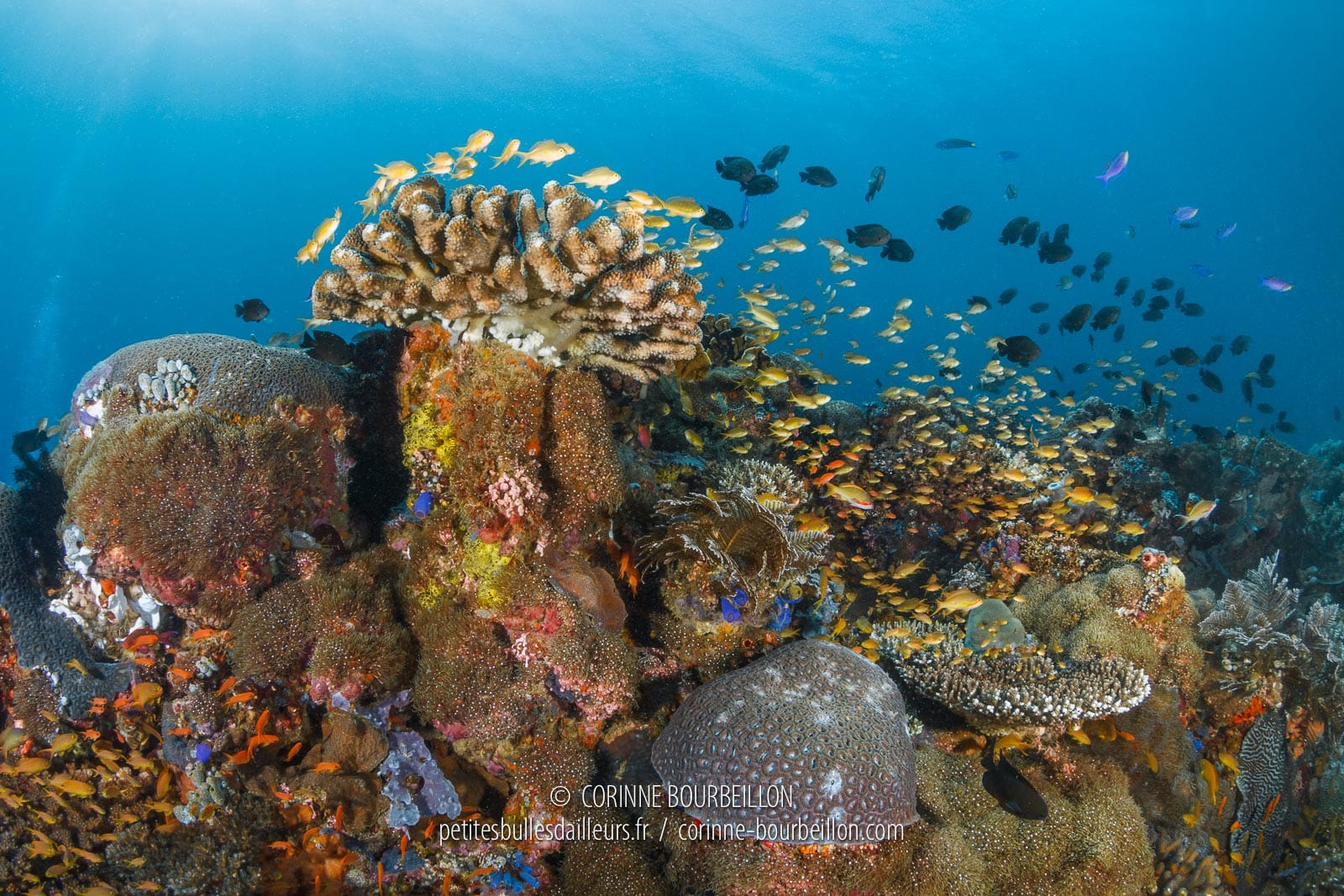
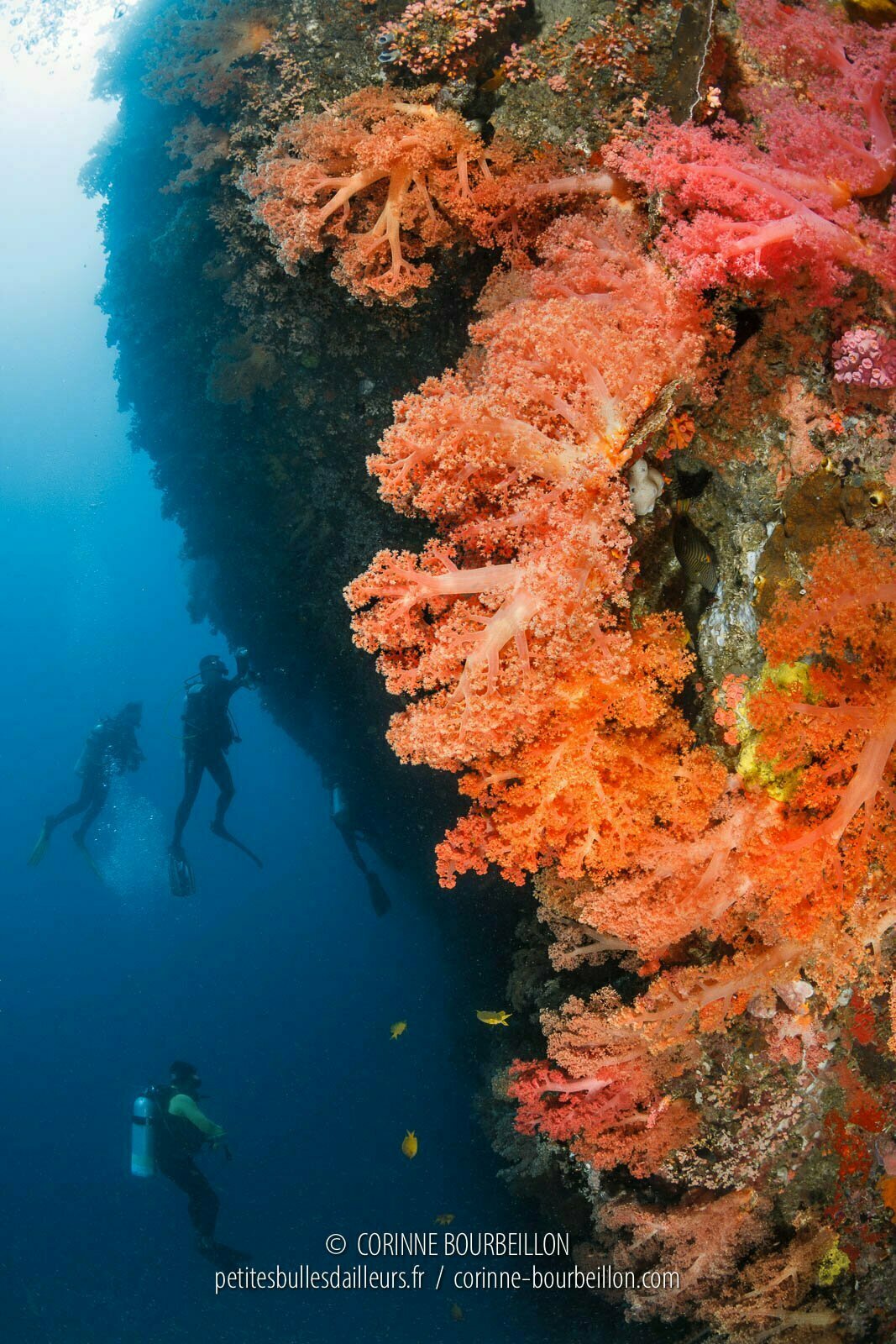
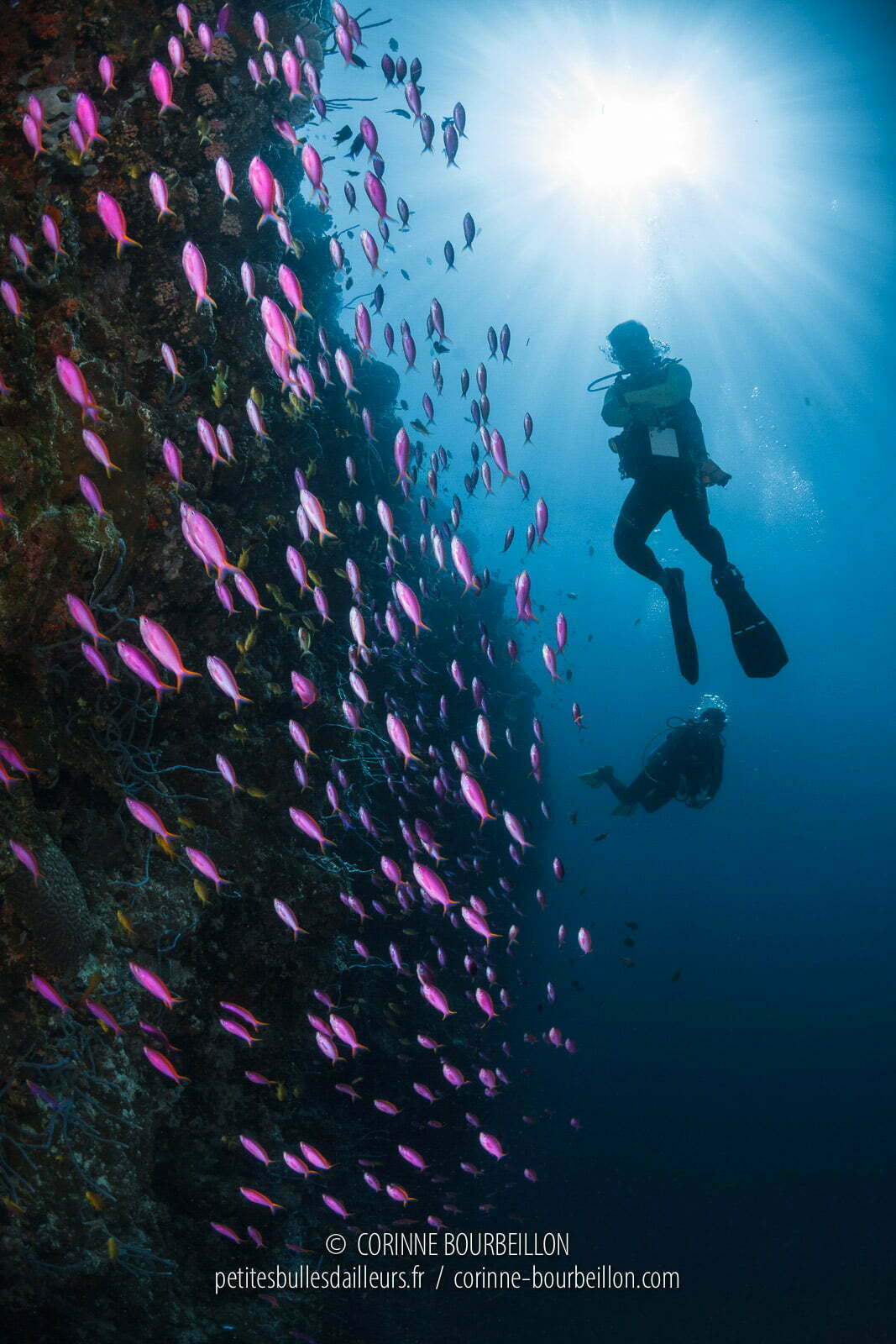
Left: flamboyant "soft corals" (alcyonaria) clinging to the drop-off of Pescador Island, off Moalboal. Right: a cloud of purple anthias along the Pescador drop-off (Cebu, Philippines, March 2020).
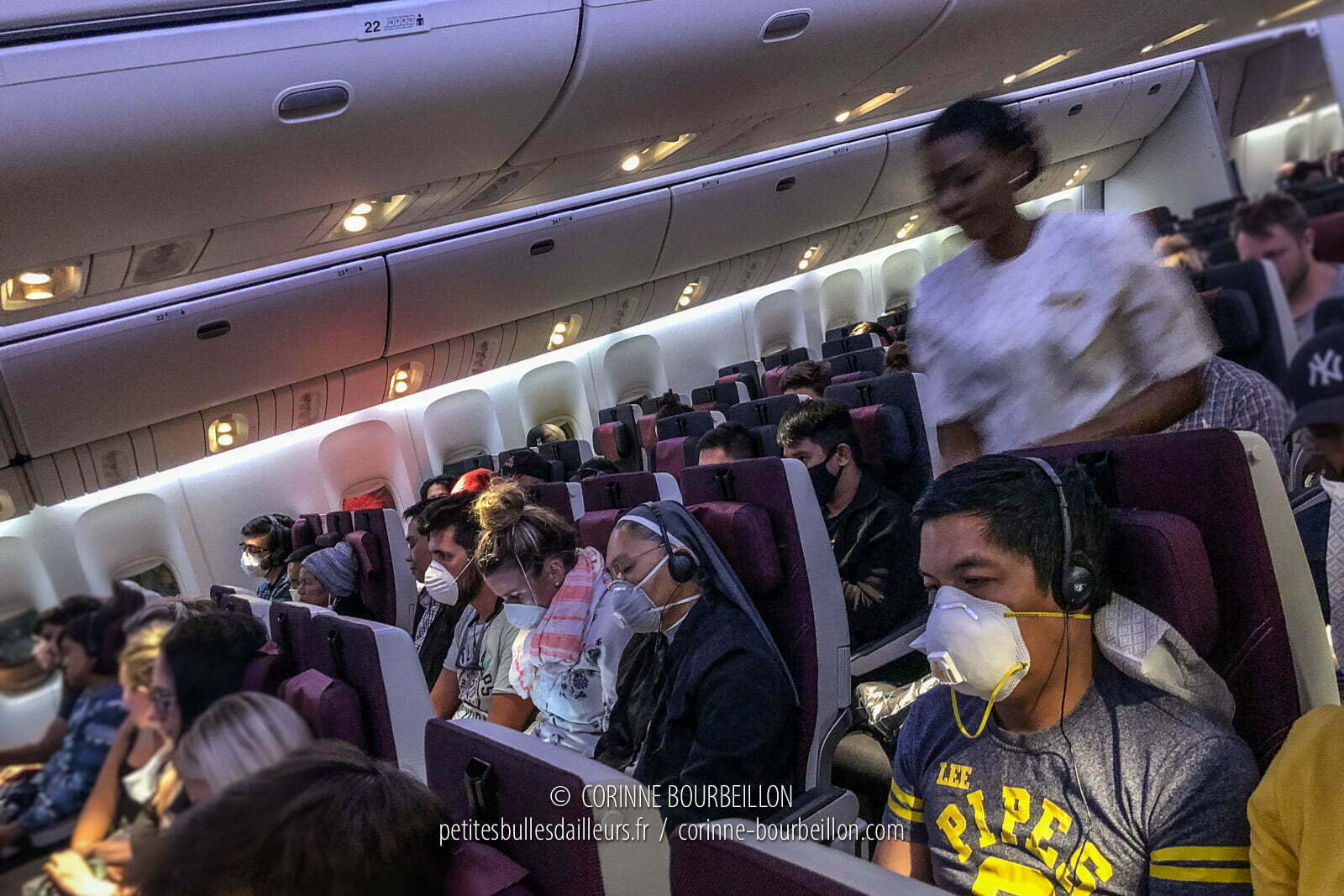
Having already traveled to Asia in the past during the SARS (Severe Acute Respiratory Syndrome)I wasn't that worried about going diving. I wasn't shocked that they were checking my temperature or that people were wearing masks at the airport. The mask is a "normal" accessory in Asia, a habit acquired long ago. We like to wear one whenever we have a cold, so as not to contaminate others, or to protect ourselves from pollution in big cities.
My stay in itself went smoothly, the coronavirus didn't prevent me from diving, and then I returned to France without any worries... Just before the confinement Manila on March 15, 2020, just before the confinement back home. 😅 Plenty of other holidaymakers weren't so lucky, and found themselves stranded abroad, waiting for a repatriation flight.
Today, this Covid pandemic makes me foresee a world where we will not be able to travel or go diving as freely as before.
Containment that's good for the planet?
The almost total paralysis of air traffic and tourism, together with the global slowdown in human activities, has made it possible to delay the day on which the Earth's annual resources are exceeded from 31 July to 22 August. But the impact on global warming is rather derisory: even with two years of containment, we would gain at best only -0.01°C in 2030. However, it is urgent to use all the levers to limit as much as possible this ongoing disaster...
Will the post-confinement recovery plans succeed in changing things? In its plan, France plans to devote 30 billion euros out of 100 to ecology and energy transition. To be continued...
Update, March 2021. On the subject of "Is Covid-19 good for the climate?", here is a link to this interesting video. broadcast by The World March 29, 2021 which shows that the reduction in greenhouse gas emissions remains limited.
I remember well my amazement when we began to understand that this epidemic that appeared in China had become a pandemic. That the overwhelmed health systems, the travel restrictions, the confinements, the quarantines were affecting the entire planet!
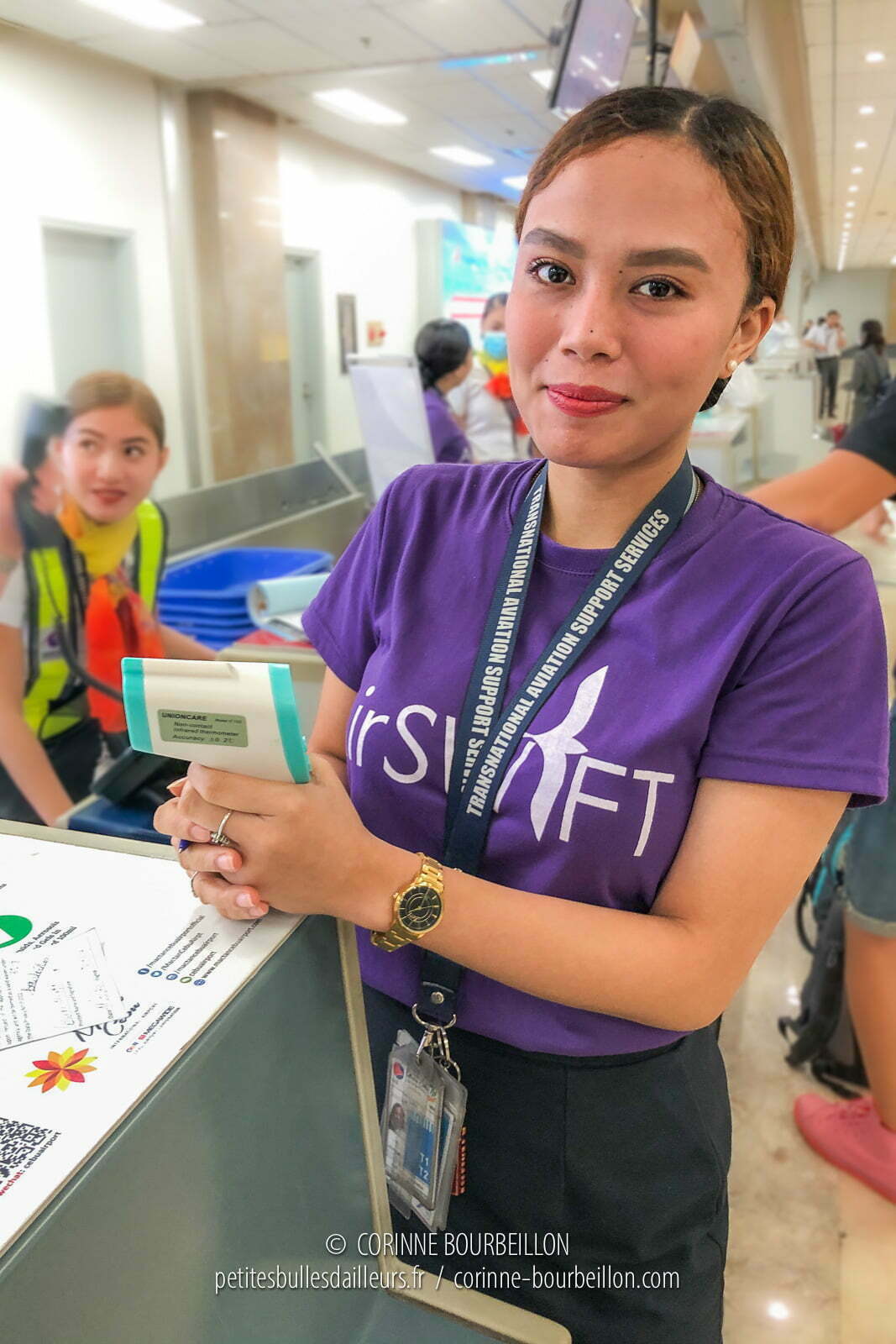
When Covid-19 is over, I imagine that many stringent precautions will still be maintained to prevent potential new outbreaks. In airports, in particular, hygiene measures and systematic sanitary controls will probably remain the norm...
With this forced immobility of almost six months due to the coronavirus, I am starting to miss diving trips.
I am nostalgic for those moments of absolute wonder when I immerse myself with my camera on a reef teeming with life. Of this exhilarating feeling of freedom when I am far from home, at the end of the world. And the inexhaustible pleasure of discovering new horizons, of confronting a culture different from my own...
This strange period gives me a foretaste of what could be a world where, for ecological reasons, we would no longer go to the other end of the planet for vacations.
When you travel to dive and photograph coral reefs, it means tropical, far away destinations. And we feel rather guilty about the huge greenhouse gas emissions associated with long plane journeys... Because of the CO2 in excess in the atmosphere, the ocean is warming and acidifying, corals are bleaching and dying.
On the subject of the environmental impact of tourism, I invite you to listen below to this interesting podcast entitled "Can we be green and go on vacation? », by Lucas Scaltritti. He is particularly interested in "blue tourism" (vacations by the sea), but winter sports are not left out...
So, in view of the climate emergency and the depletion of fossil fuels, wouldn't it be better not to travel far? Forgo the Pacific or Indian Ocean islands, for example, since we can't get there by train? And relearn to appreciate what's close to home? Like the cold green waters of Brittany, for example? I say this without irony.
Read more ➜ Travelling to dive and diving locally
But I still find it hard to imagine a world where we would always stay at home, within the borders of our own or a neighboring country, with "local" escapes as our only horizon...
Like many people, I try to reduce my carbon footprint in my daily life (in food, energy, transportation). But for my diving trips, it's more complicated. For me, underwater photography is a passion, not just a hobby that can be replaced by another one, and I am well aware that I am not really ready to sacrifice that.
So, when it's once again possible to travel more or less freely in the post-Covid world, I hope to be able to leave again. Perhaps less often. But, who knows, maybe much longer ?
🤔


I'm lucky enough to live in the PACA region of France, so this summer I went diving in Marseille's calanques national park. The calanques of Morgiou and Sormiou, to name but a few, with a rental cottage in Callelongue, a tiny fishing port.
DaveyJones: the "local" waters around Marseille certainly offer plenty to enjoy... I'll make a note for the calanques 😉
Hello Corinne,
So that's it, you've moved on to scuba diving, congratulations!
Strangely enough, yes, it is possible to take magnificent photos in cold, dark waters (I invite you to read the article on Laurent Miroult on my blog and you'll see what I mean 😉 ).
Obviously, I'm not entirely objective. I did the first dive of my life in a cold (very cold) quarry in the middle of winter, and I still enjoy these environments.
On the other hand, it's essential to have a drysuit that suits your body shape and a high-performance undersuit.
As for diving after covid, I've been thinking about this subject a lot lately and writing about it (forthcoming). On the other hand, I'm lucky enough to be leaving very soon for a hot (very hot) destination this week... if yesterday's test is negative. I have to admit that between remorse and passion, it's a complicated cognitive conflict. But here it's all about being able to make my 2021 project a reality.
As of 2022 (we'll have to wait a little longer), I've decided to go away less often, but for longer periods.
One day, maybe we'll dive together here or somewhere else?
I'm kissing you.
@ Helen: soon a hot destination? Awesome!!! It's still a lot cooler than quarries and other gravel pits, isn't it? 😉 I'm sending you lots of good vibes for your current and future projects! We don't yet know what 2021 or the following years hold in store for us, but the idea of going away less often but for longer is more than appealing... The worry for most people is fitting the "longer" into the periods of leave granted by an employer... Me, I'd love it if we managed to dive together one day soon, we'd have a lot of fun 😉
Arrrgh... the Pescador drop-off. That's cheating, you were only allowed cold, green photos 😉
As far as more serious subjects are concerned, there are other pleasures to be had besides diving (ie. there's no such thing as diving in life), but discovery and a change of scenery will always be a driving force, to each his own trade-off, but I'd never swap the thrill of discovery for the practice of a habit in the privacy of one's own home.
And then, in your article, you give an almost quantified answer to this dilemma, without taking up some of the lessons. Fortunately, there were still a few airy mouseholes left to satisfy everyone's vices: elsewhere...Georgia for me (the real one, not the orange impostor), I was practically the only imported rat on board.
Anyway, don't expect me to blame you for taking a long look to see if the Pacific is still as blue as ever 😀
@Ludovic : yes, it's cheating, I admit, but I couldn't decently illustrate this article only with green water... 😀 But you're right, there's more to life than diving, there's underwater photography too... 😉
I'd never have thought of Georgia, that's for sure, but it's not exactly a diving destination... In the meantime, I'll keep dreaming of Pacific blue, that "blue that hurts the eyes. Someday I'll be back for more, that's for sure. On and under water. For as long as I can...
Hello Corinne, I'm glad to see your captivating stories again! I think you're brave to go into cold water; this summer I did two dives in a quarry in Quebec and I froze my cheeks and forehead. So the dry suit will not be for me... I was lucky enough to leave for Cozumel in November, but the next trip has an unknown date. As soon as we can travel again. It will be several more months before we can return home.... if no more tiles fall on our heads. We are getting older so our time is precious. I wish you to be able to return to your passion which is diving and photography. I enjoy reading and re-reading your articles.
Hello,
to follow up on your post aprés Covid, and after a cancelled trip mid 2020( paid and not yet reimbursed to this day), we went diving in Bonnaire in november 2021. By way of background, it's an island close to Aruba and Curacao, and not subject to storms and hurricanes. What's more, it's a Dutch commune, but you need a passport and some dollars.
Apart from the diving, there's nothing, well there is: rocks and cacti.
It's very special: all dives are made from the shore and in complete autonomy, with no dive master or other dive leader.
So you have to be careful...but there's only a little current. But no current means few fish.
A road leads around the island, with sites marked on large yellow pebbles....
We took a pack (car + equipment of diving + unlimited bottles).
It's true that diving when you want, without having an imperative time, is royal. you take two bottles per person. you do not hurry, you have time to put your equipment (which is in the pickup) but it is you who cleans it, etc. ... When you're done, you go to the drive and you change your bottles for full (the system is top).
In short, it's all about diving, and you only have to look at the waistline and hair color of the divers.
It's better than nothing these days.
Your comment is a bit cheeky: when you say that it's better than nothing, that there are a lot of white heads and fat people, it's insulting. You may have had the chance to go during the pandemic when many of you were not even able to consider a diving trip, except for the white heads who had a flexibility that the young people did not have.
If you have done the 1000 steps site, you should know that you have to be in good shape to go down and up these stairs to get access to the dive site. There are sites where you can see manta rays and sharks; they are exposed to the wind and the current, so they are not so easy!
Life in Bonaire is simple; unique and worth visiting at least once in a lifetime