

A plane under the sea

 EN
ENIn Raja Ampat, it's not all coral underwater. There's also scrap metal from the Second World War. It fell from the sky!
The wreck of Wai
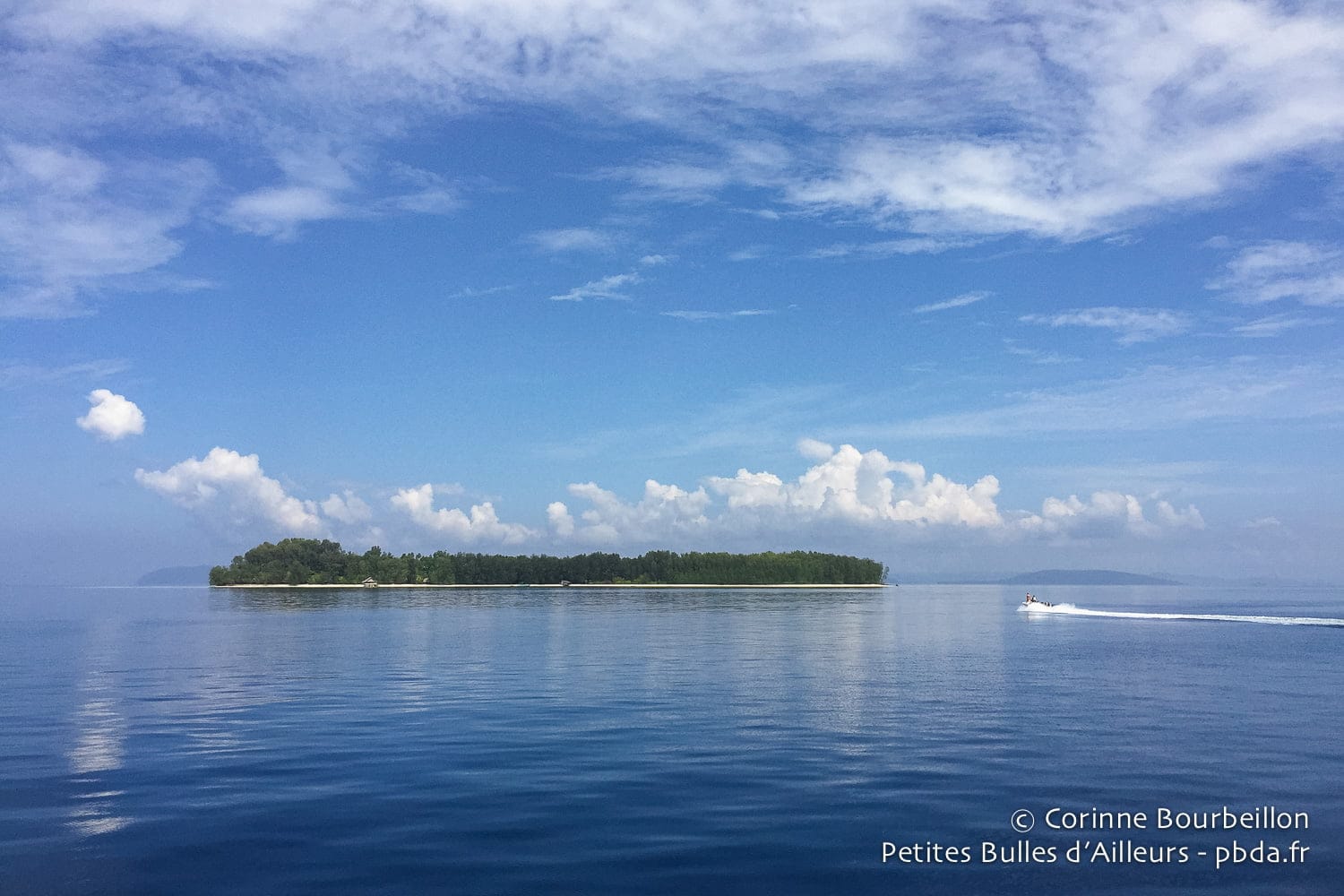
The cruise in Indonesia from Ambon to Sorong, that I made on board the Waow, I was able to enjoy a unique experience: diving on an airplane wreck! The wreck in question is located on the reef of Wai, a small island close to the large island of Batanta, in the northern archipelago of Raja Ampat.

Updated February 2018. The Waow, this magnificent liveaboard dive boat which sailed the waters of the Indonesian archipelago and aboard which I waas lucky enough to embark in 2015, no longer exists... 😢 She caught fire and sank in Cenderawasih Bay during the night of January 31 to February 1, 2018.er February 2018. To find out more, I refer you to the post published on Facebook page and on the Waow. A new vessel is planned for 2026 or 2027.
Until then, all wrecks on which I had the opportunity to dive - famous wrecks like theAmoco Cadiz in Brittany and the Liberty in Bali, and many others less known in the Red Sea, in the Maldives, in Thailand, in Malaysia, in Indonesia, etc. - all, therefore, were boats.
So, on this November 4, 2015, when the day's program is announced, I'm pretty excited. There's something unusual about diving on scrap metal that doesn't belong, for once, to the world of sailors, but to that of aviators! And it's also a bit of a dive into history...
A remnant of the Pacific War
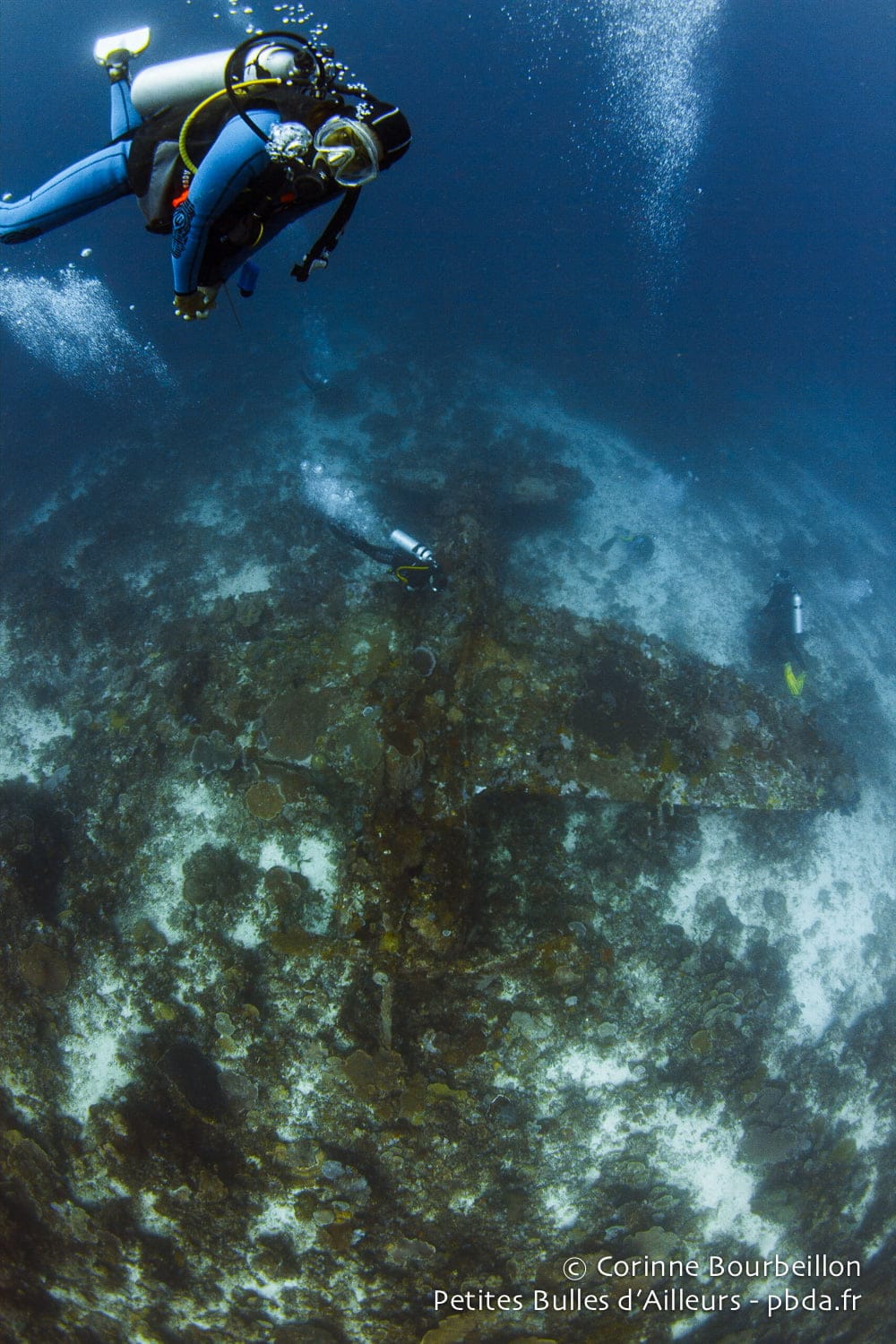
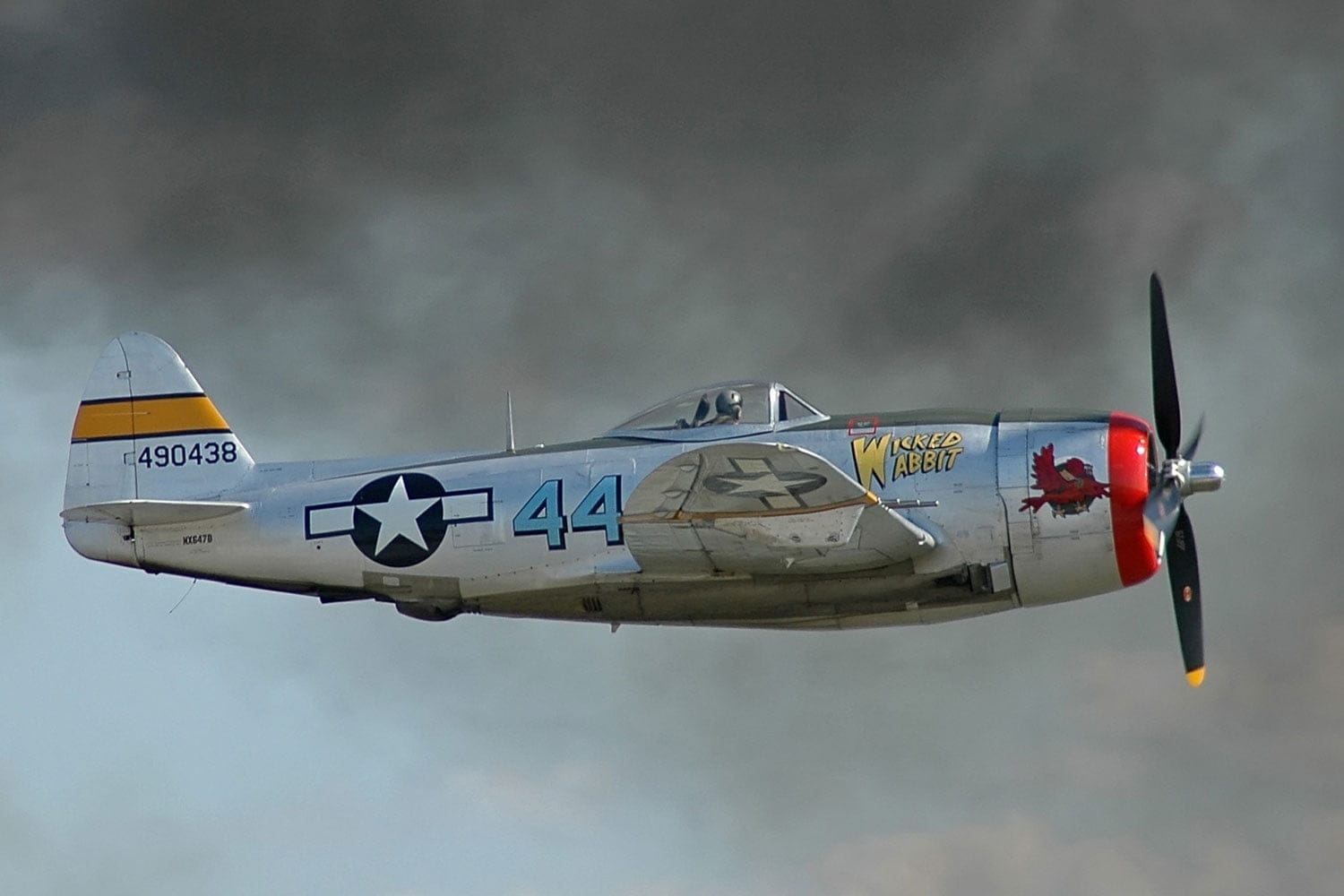
The plane in question is an American P-47D fighter. It crashed into the sea on October 21, 1944, during the Pacific War of World War II.
He was part of a seven-plane squadron that left from the island of Noemfoor for a mission over the island of Seram. But on the way back, surprised by the bad weather and soon out of fuel, the pilots opted for a ditching, thanks to a hole in the clouds. The detail of the story is reported right here and theon the PacificWrecks.com website. The seven men survived and were later recovered by the US Army.
So it's not the only sunken aircraft in the area, but this wreck lies at a depth of between 26 and 33 meters, making it one of the few wrecks in the area easily accessible for recreational diving. And its excellent state of preservation makes it a great subject for photography!
I'm lucky, because this day, visi is rather good and allows me to make some pictures from far, giving a good overview of the plane.
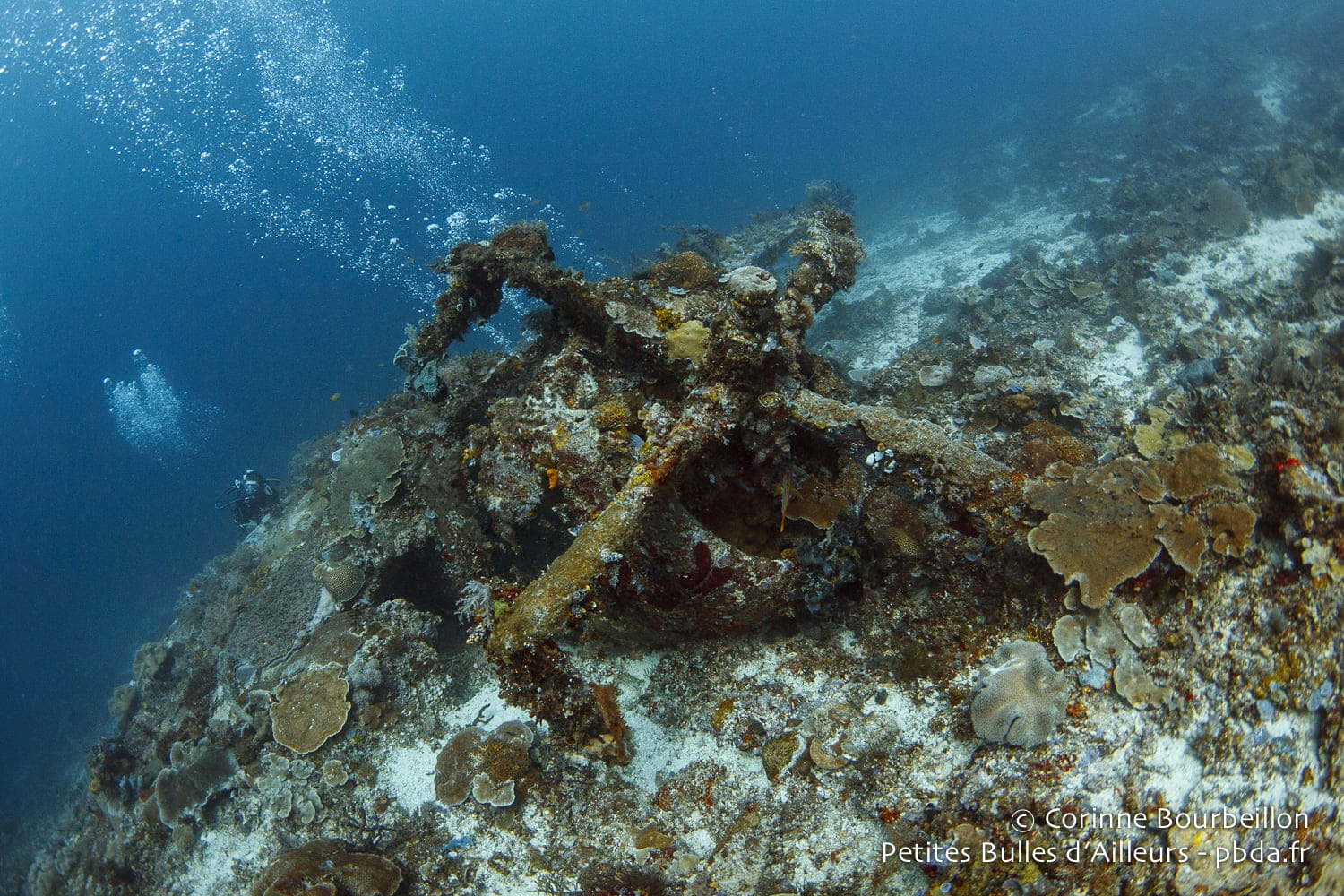
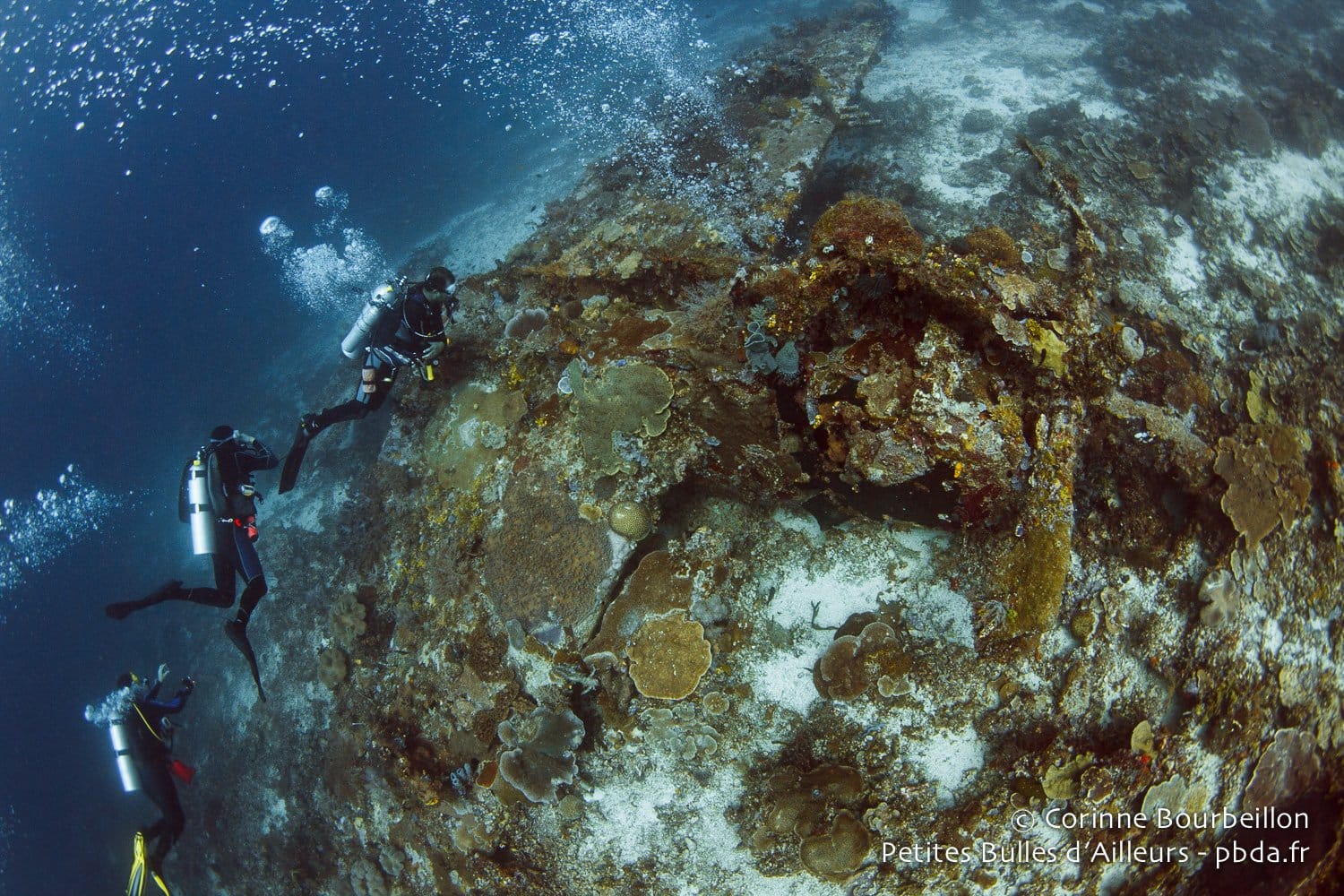
On my return to France, I did a Google search to see what this plane looked like. Judging by this image from Wikipedia, a P-47D in flight looks pretty good:
More than sixty years later, this warplane has become a beautiful artificial reef, pleasing both fish and divers. And you can see from the position of the wings that it's actually lying «on its back» in the sand and coral.
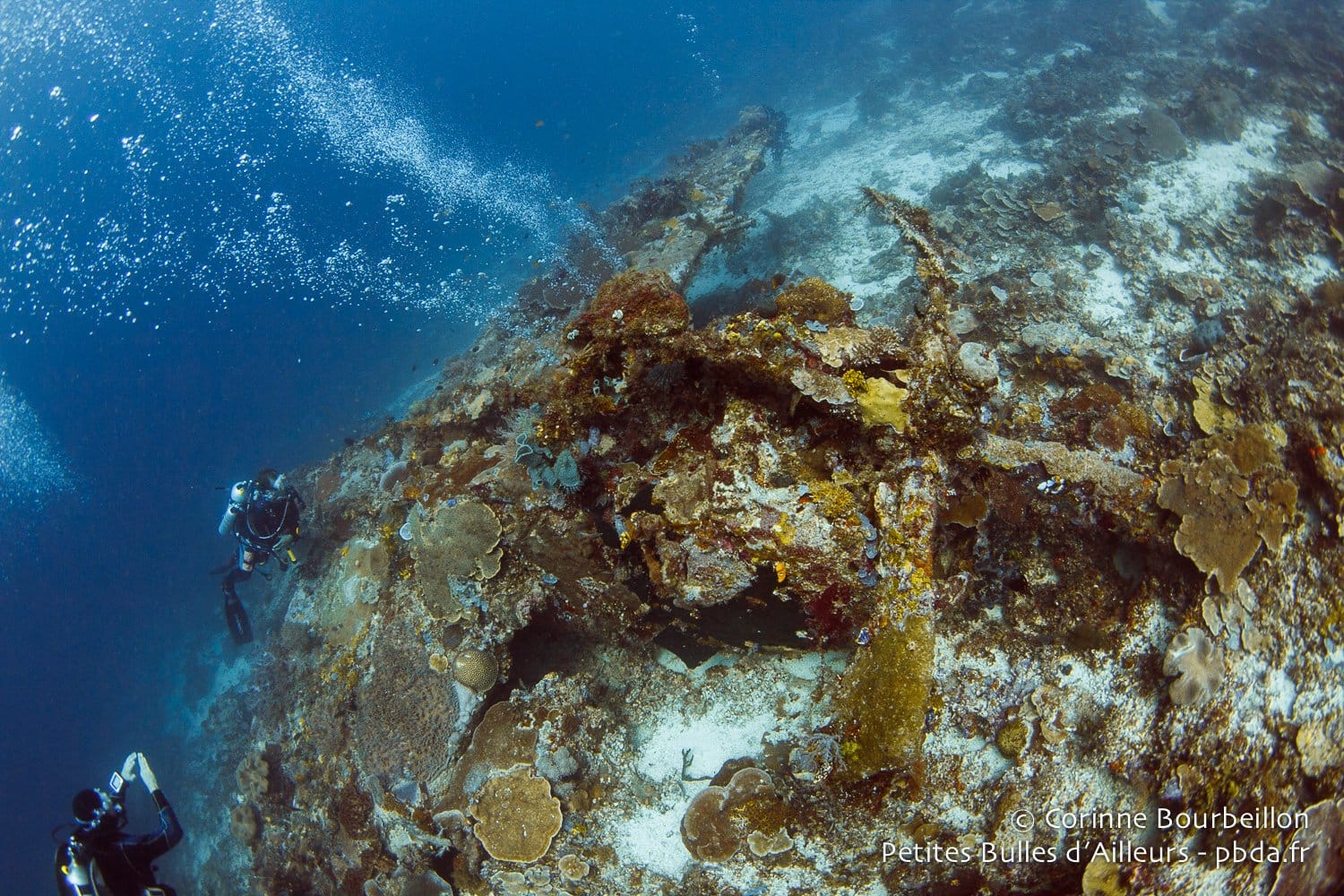
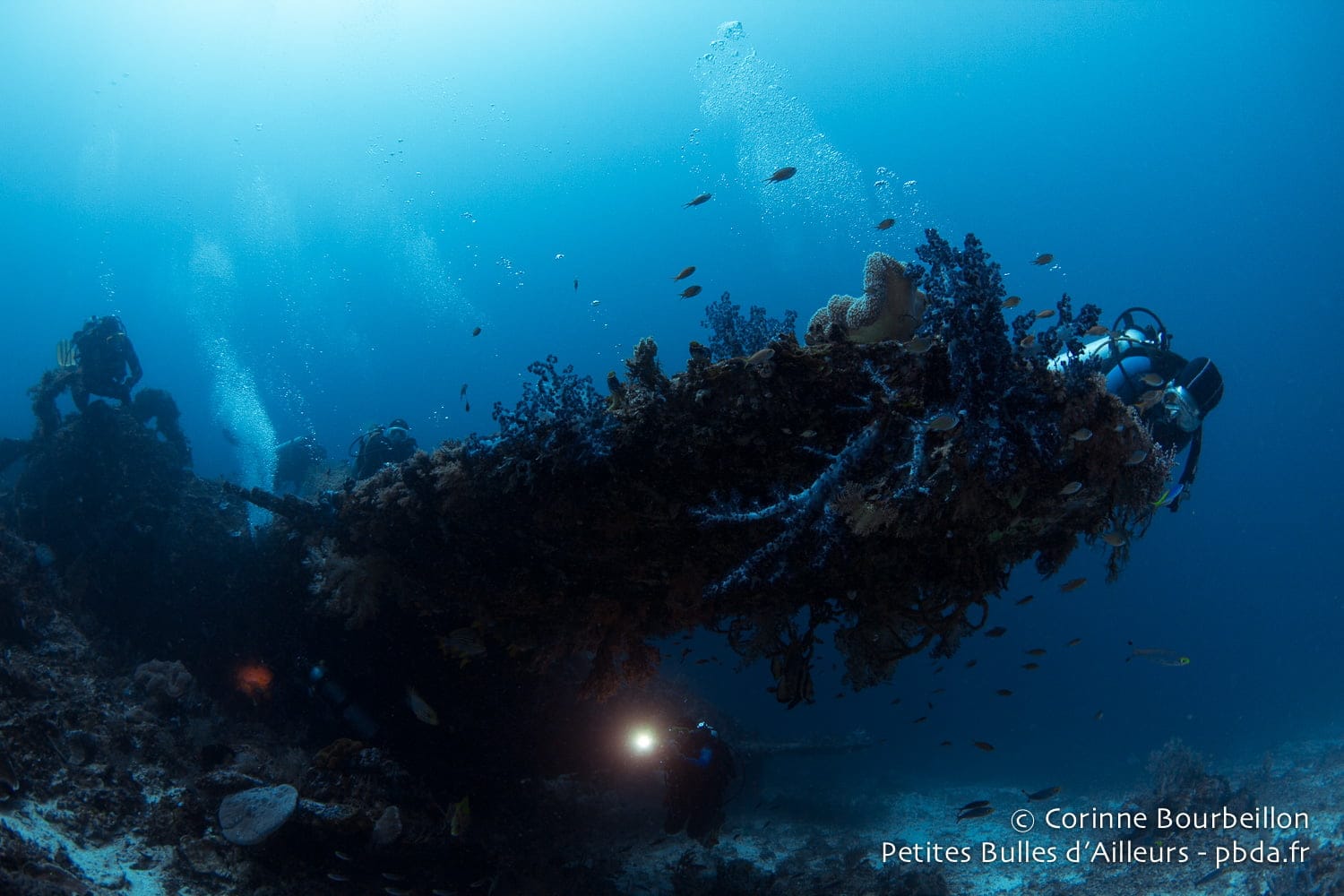
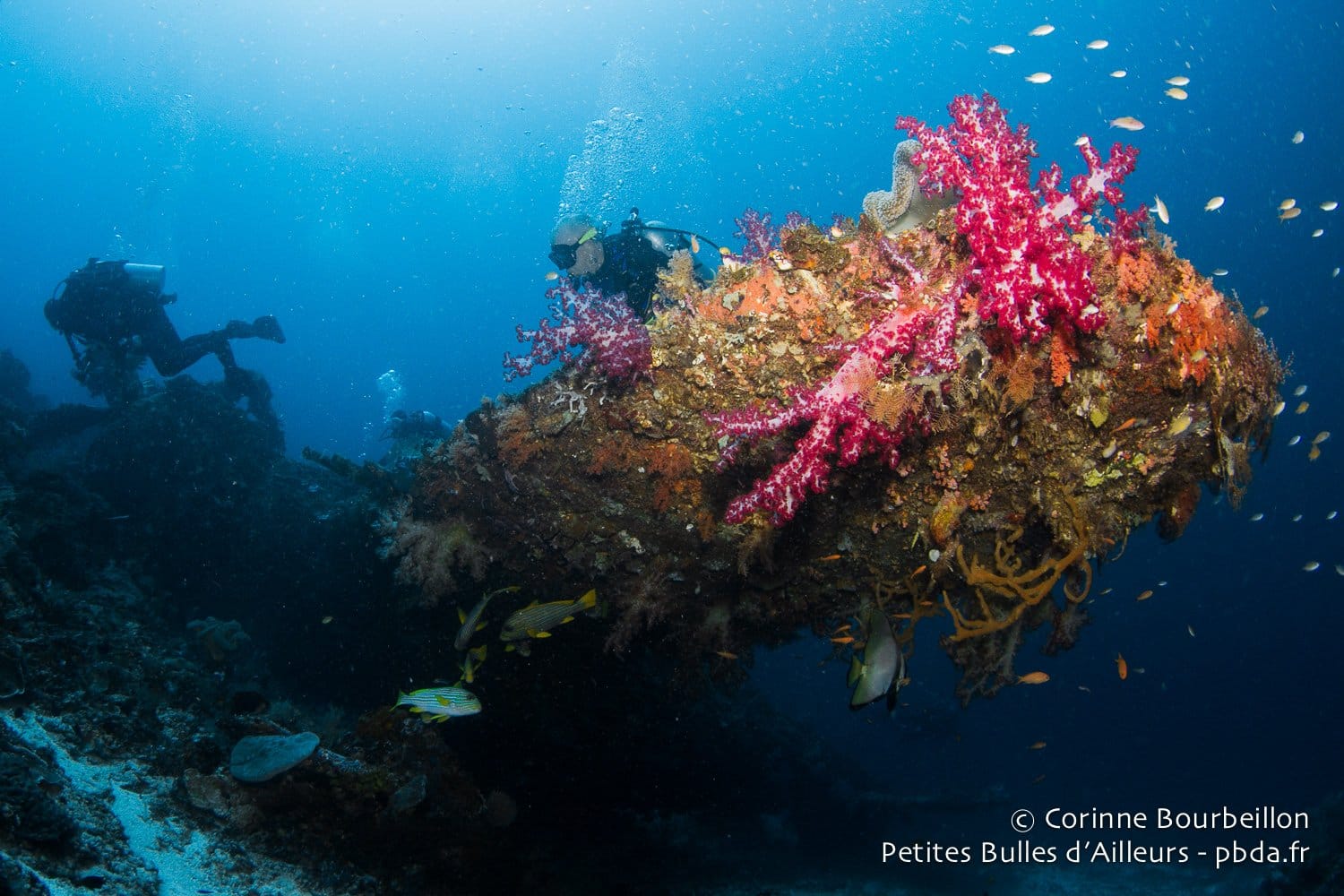
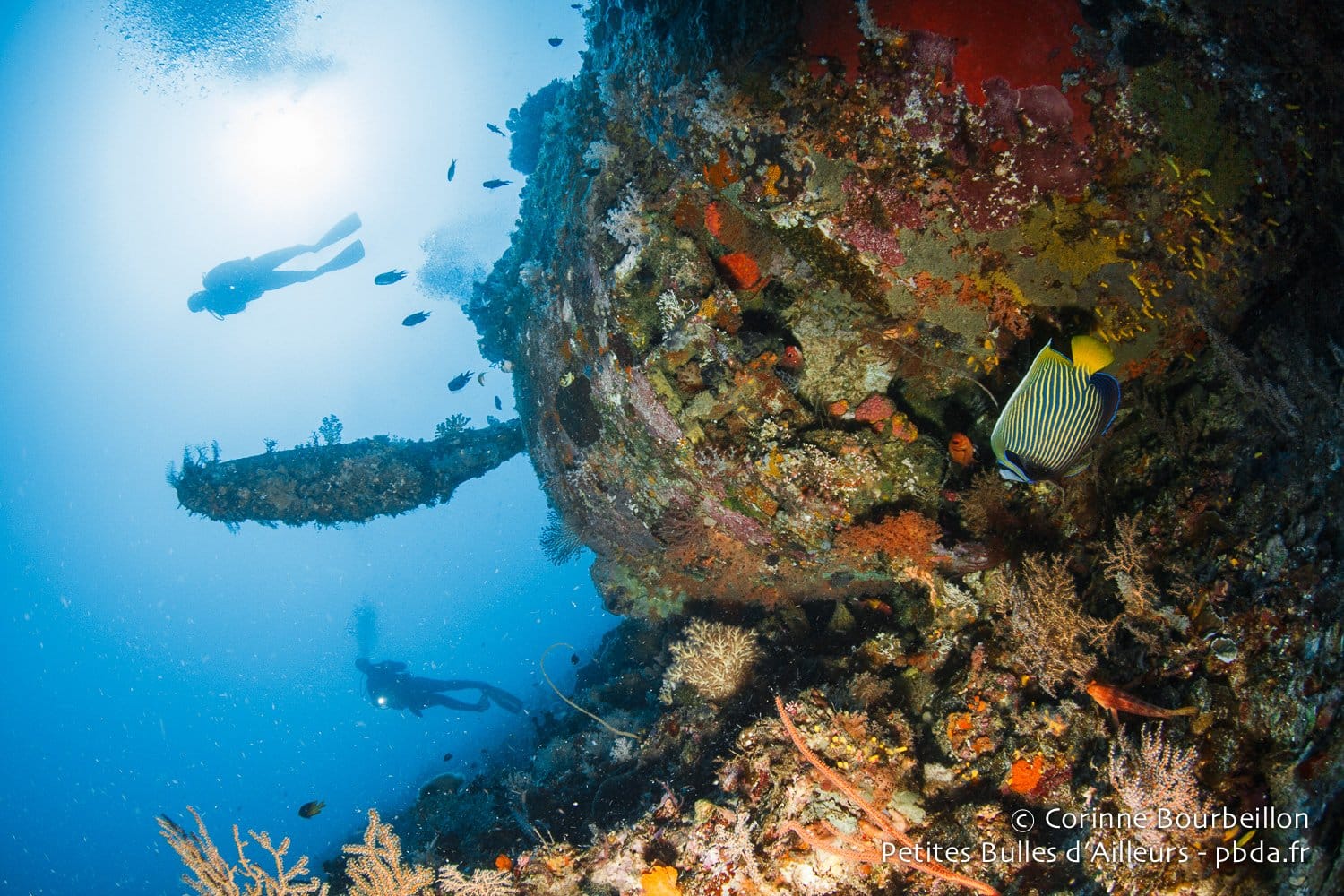
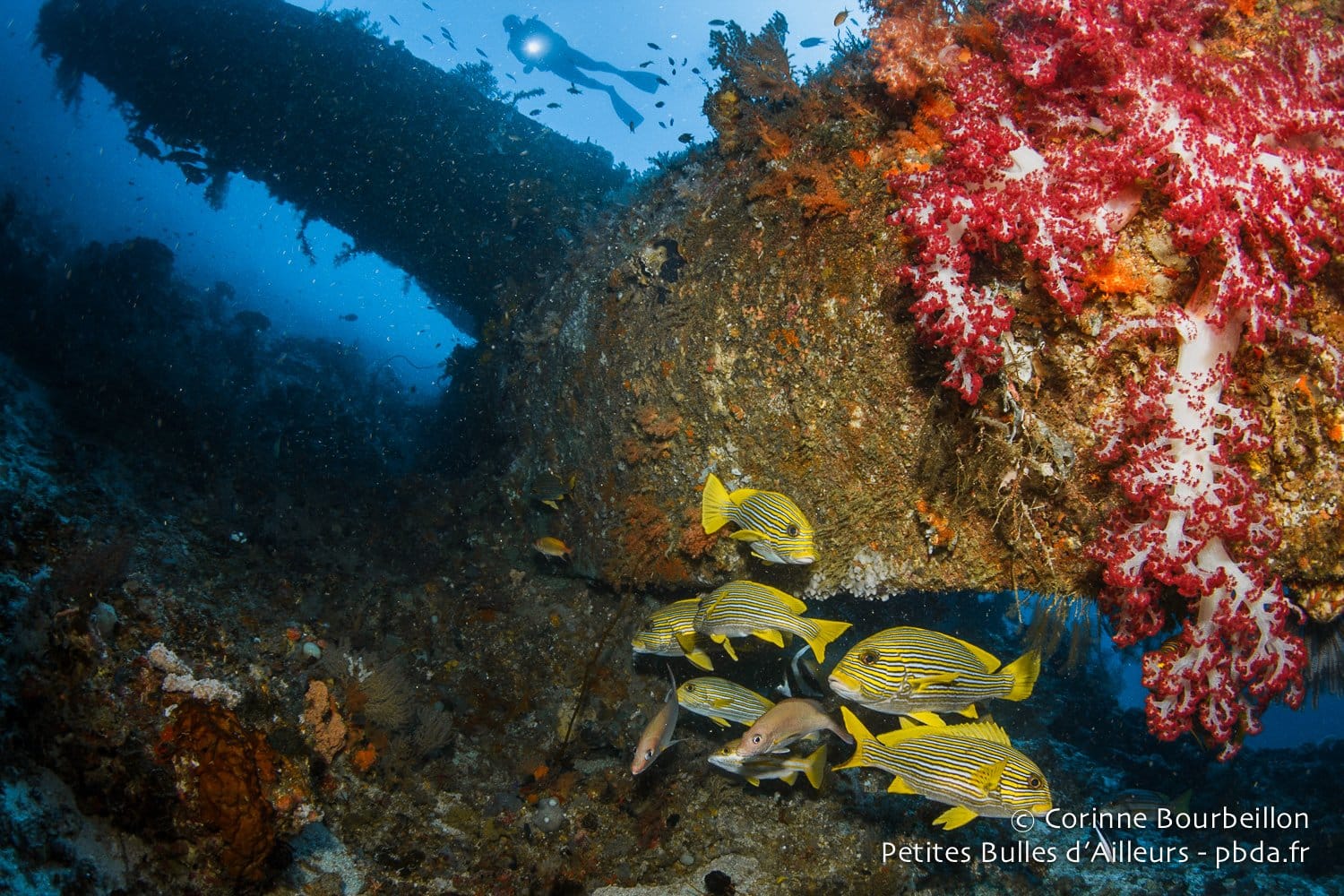
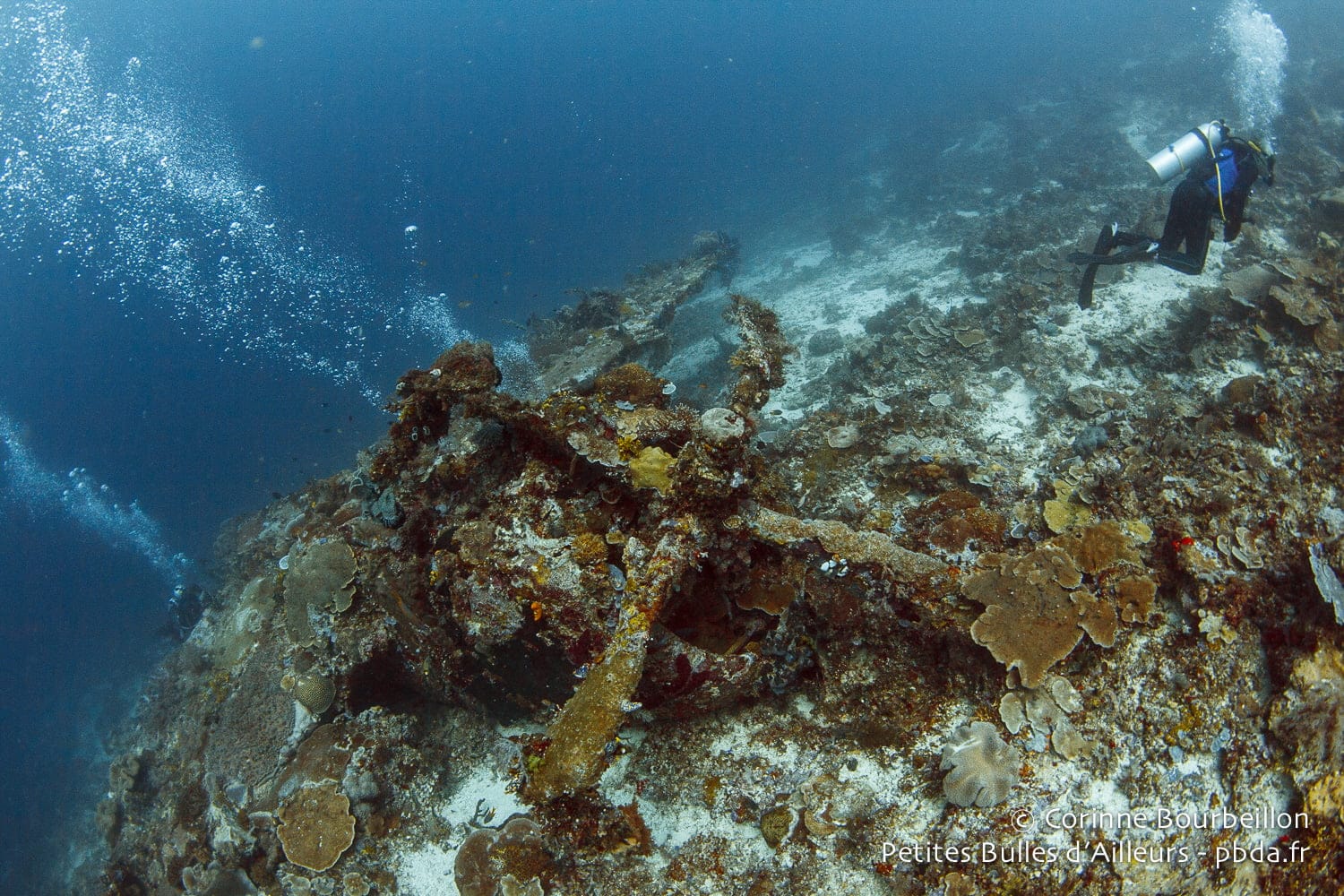
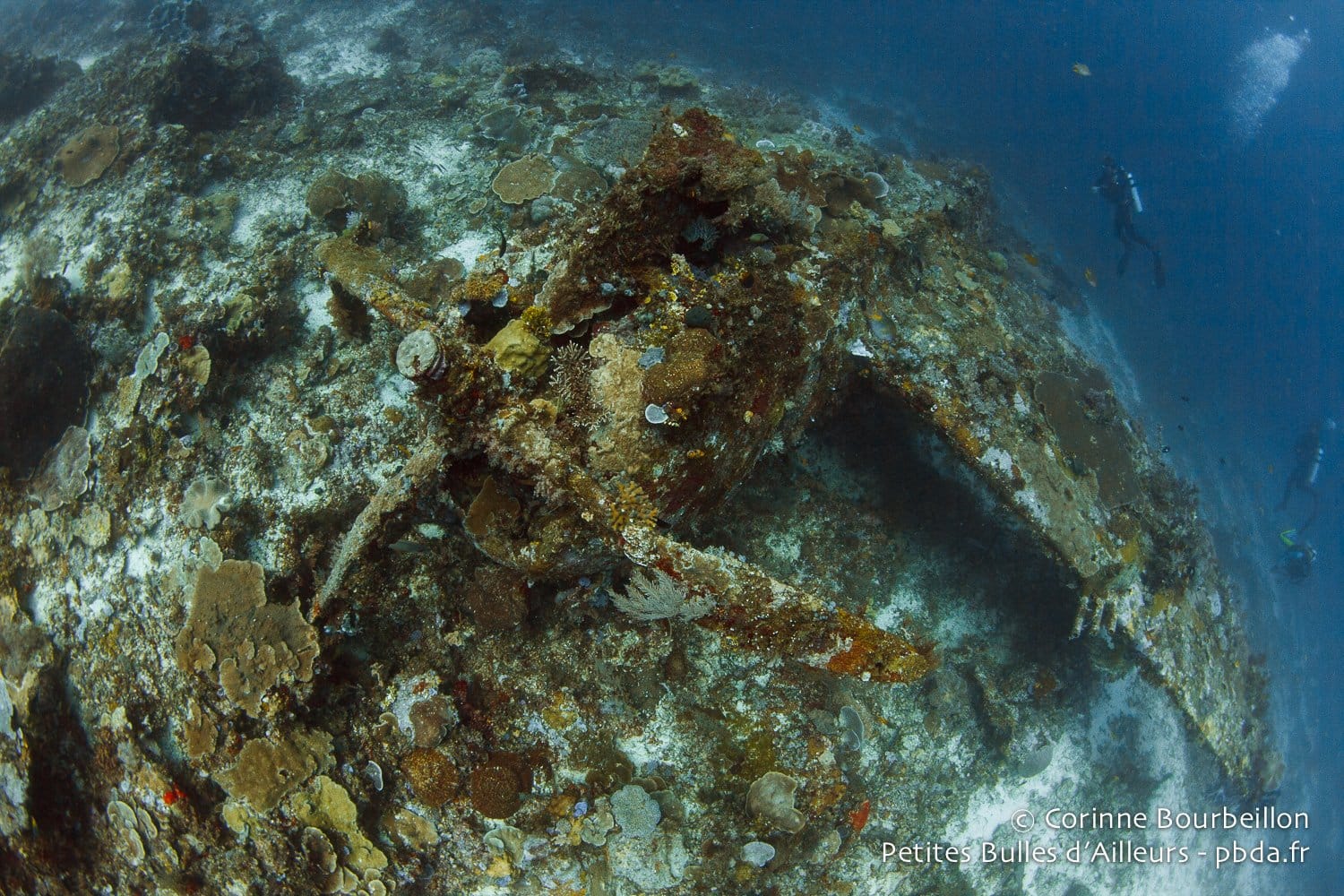
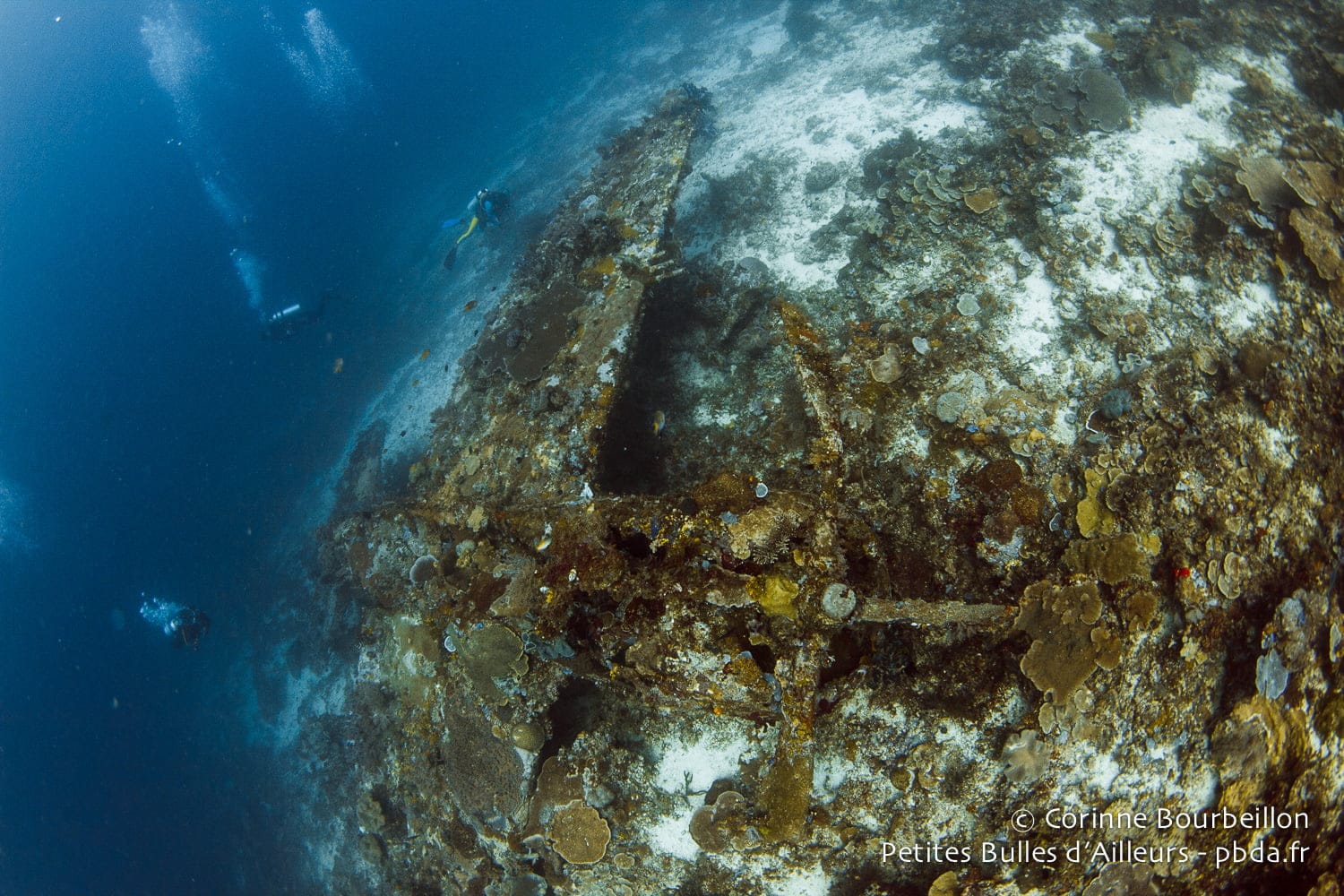
The plane is not very big, about fifteen meters long. It was nicely colonized by soft corals and it attracts fish. We saw an emperor angel fish, some platax and I managed to frighten some shy gaterins which took up residence under the cabin.
I really enjoyed this dive and my only regret is not to have been able to do it at the nitrox (oxygen enriched air), which would have allowed me to stay a little longer at this depth to take more pictures... But a breakdown of the compressor, which occurred during the cruise and could not be repaired at the time, forced us to dive with air.
We finish the dive by going up gradually along the Wai reef, which I find rather monotonous, compared to the profusion of life I am used to in Raja Ampat waters, in the heart of the coral triangle. But the wreck itself is worth the detour for me as an underwater photographer. It's not every day you get the opportunity to admire a Pacific War aircraft underwater.
🙂


As usual super interesting and very pretty!
@Brice: thank you! A dive a bit different from the others... 🙄
Well, I had never heard of a wreck in Raja Ampat. And it's not for lack of having explored the (marvelous) sites ..... 1st.... to discover certainly
@IsaM: I had heard about it, through Max Ammer. He had originally come to the area precisely for that: to find wrecks and relics of the war... But as the wreck is on the Batanta side, I had never had the opportunity to go there.
What a good idea to have done a research on the wreckage, in order to know what it could look like. While reading the story, and looking at the pictures, I was just trying to imagine how it could be, but well, not easy considering the condition of the plane! Well done for the pictures! 🙄
@Didier: Yes, I was intrigued by this plane. I first tried to find out if anyone knew its origin and I was surprised to find, without too much difficulty, documentation on this episode of the Pacific War. I also "googled" the name of the aircraft to see how it looked before, without its coral crust... Pictures are available on Wikipedia !