

Raja Ampat's blue mangroves

 EN
ENIn Indonesia, in the Papuan archipelago of Raja Ampat, coral grows at the foot of the mangrove trees. A unique mixture of terrestrial and underwater life.
Blue water mangrove
We call it blue water mangrove or blue mangrove, "la mangrove bleue" in French. In just a few meters of water, life forms rarely seen side by side mingle: sea coral and tree roots.
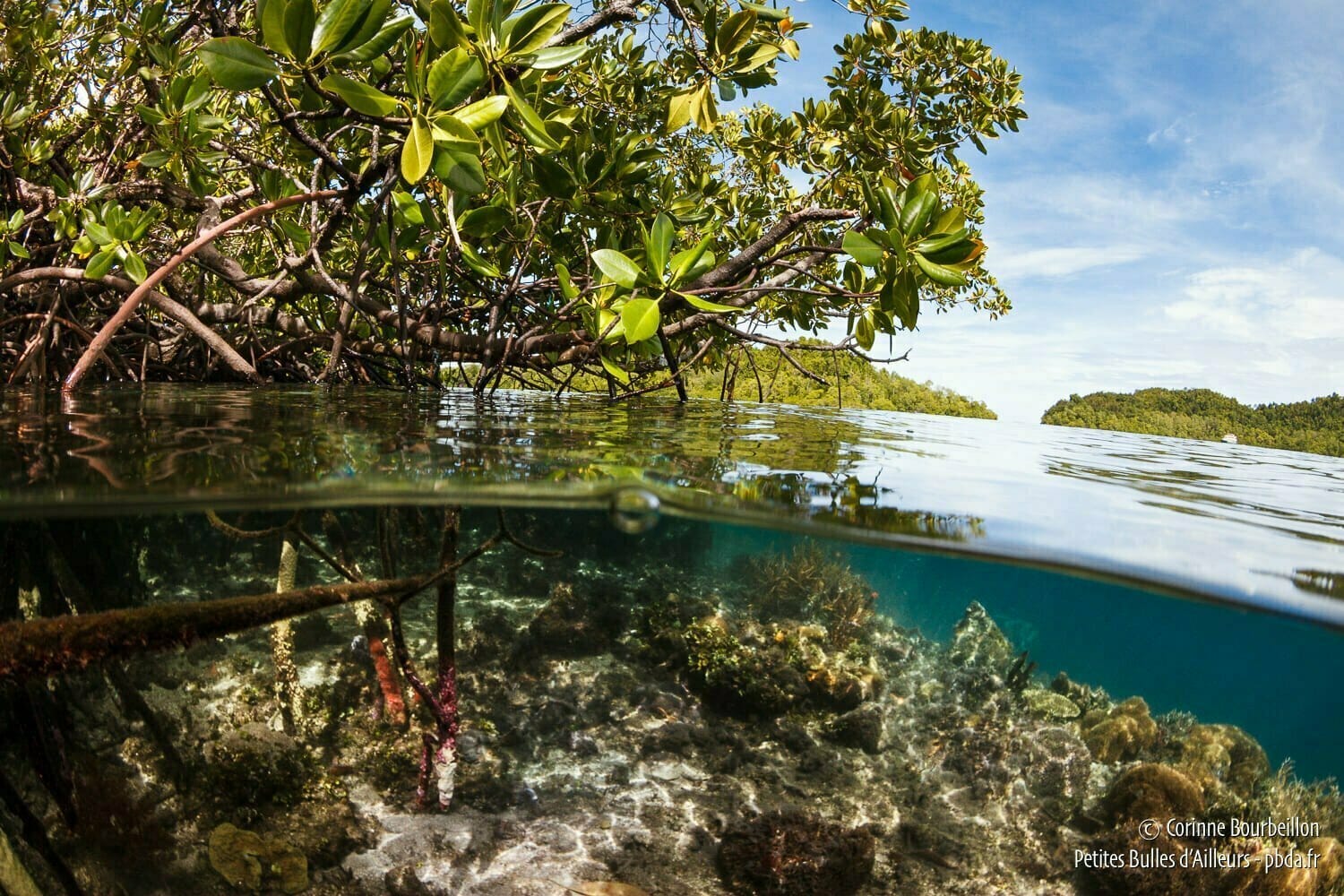
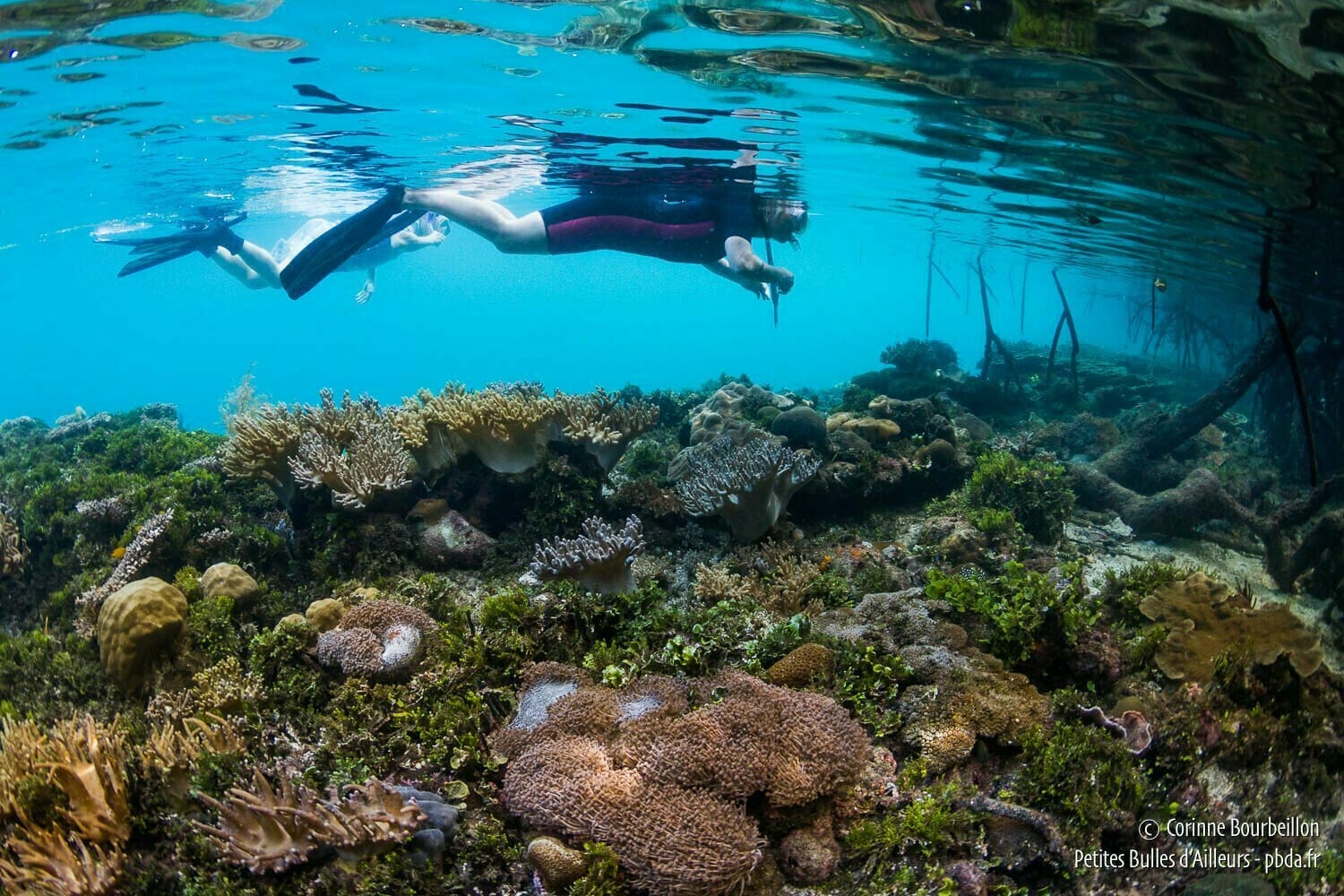
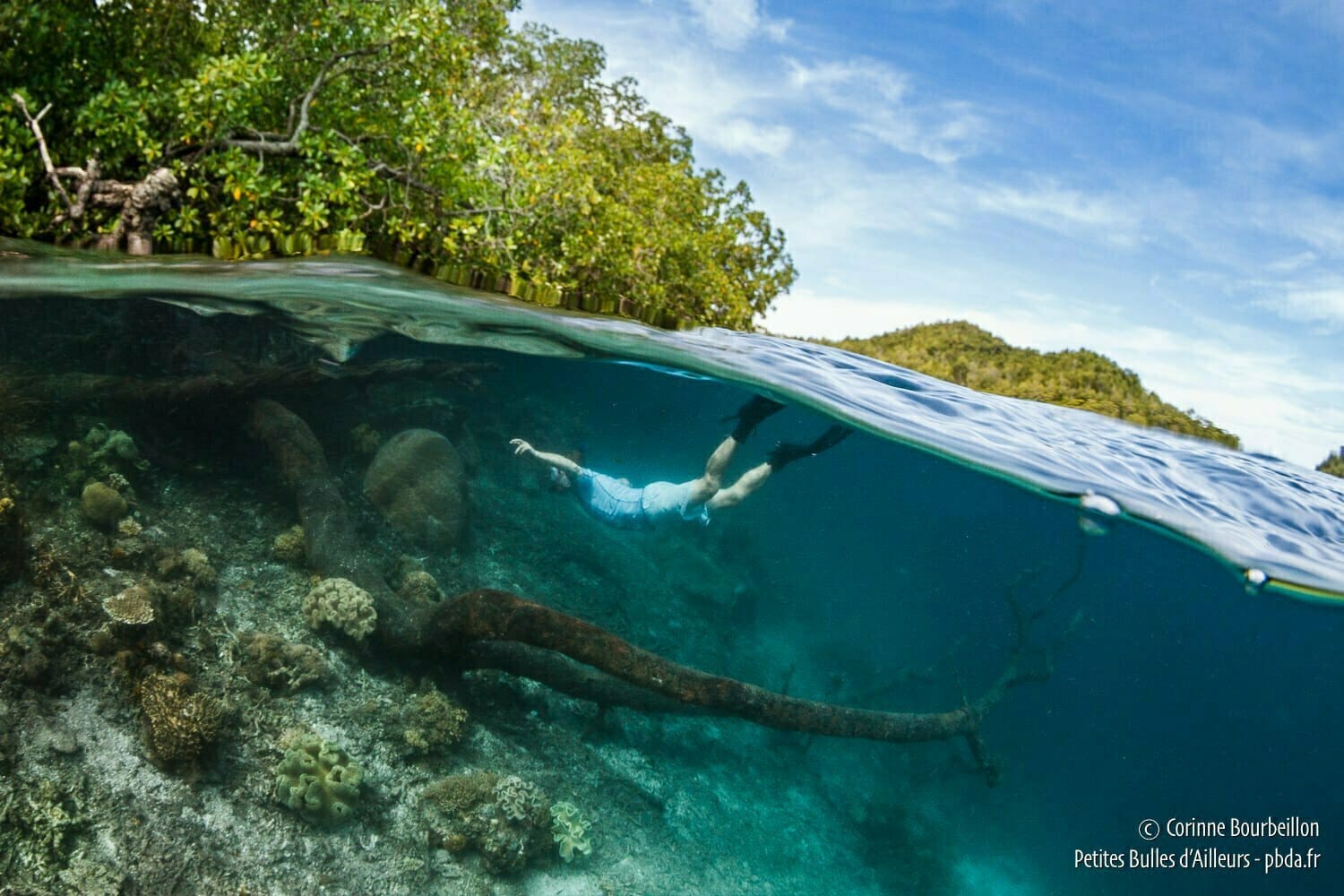
Usually, mangroves develop rather on funds covered with terrestrial sediments, often very muddy, in coastal zones or near the mouth of rivers. The water is generally quite turbid.
But the labyrinths formed by the karst islets of Raja Ampat, in Indonesian Papua, offer a different type of mangrove: the water remains clear and the bottom is sandy, more maritime than terrestrial.
Corals and gorgonians thrive here, right next to the trees!

Diving in Raja Ampat: How to Plan the Trip of a Lifetime
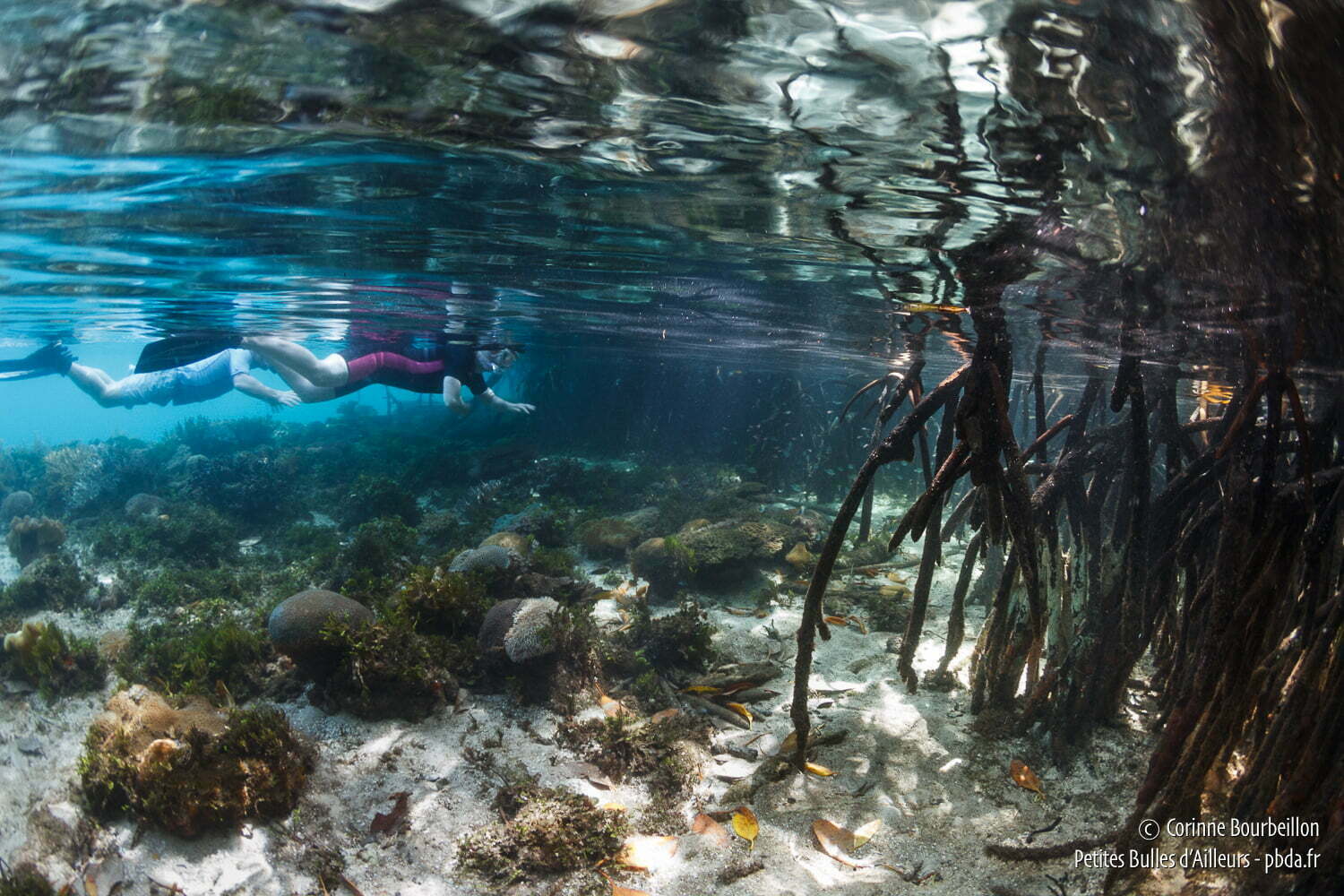
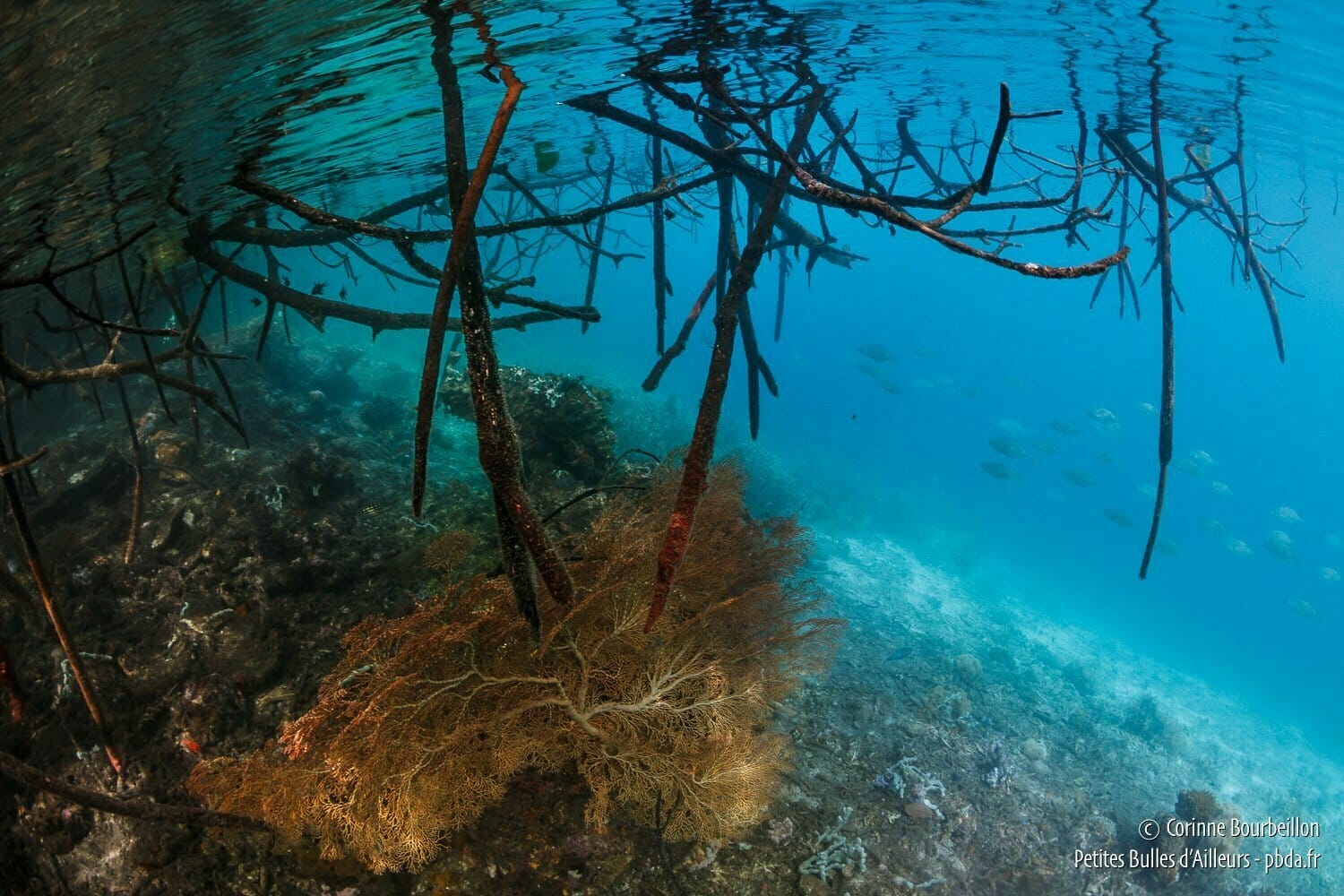
To discover while snorkeling
Underwater, the atmosphere is truly magical! With little current and a shallow depth, it's an enchantment for snorkelers.
When we raise our heads, we realize that we are under the foliage of trees, a kind of mangrove, whose roots plunge under the salt water.
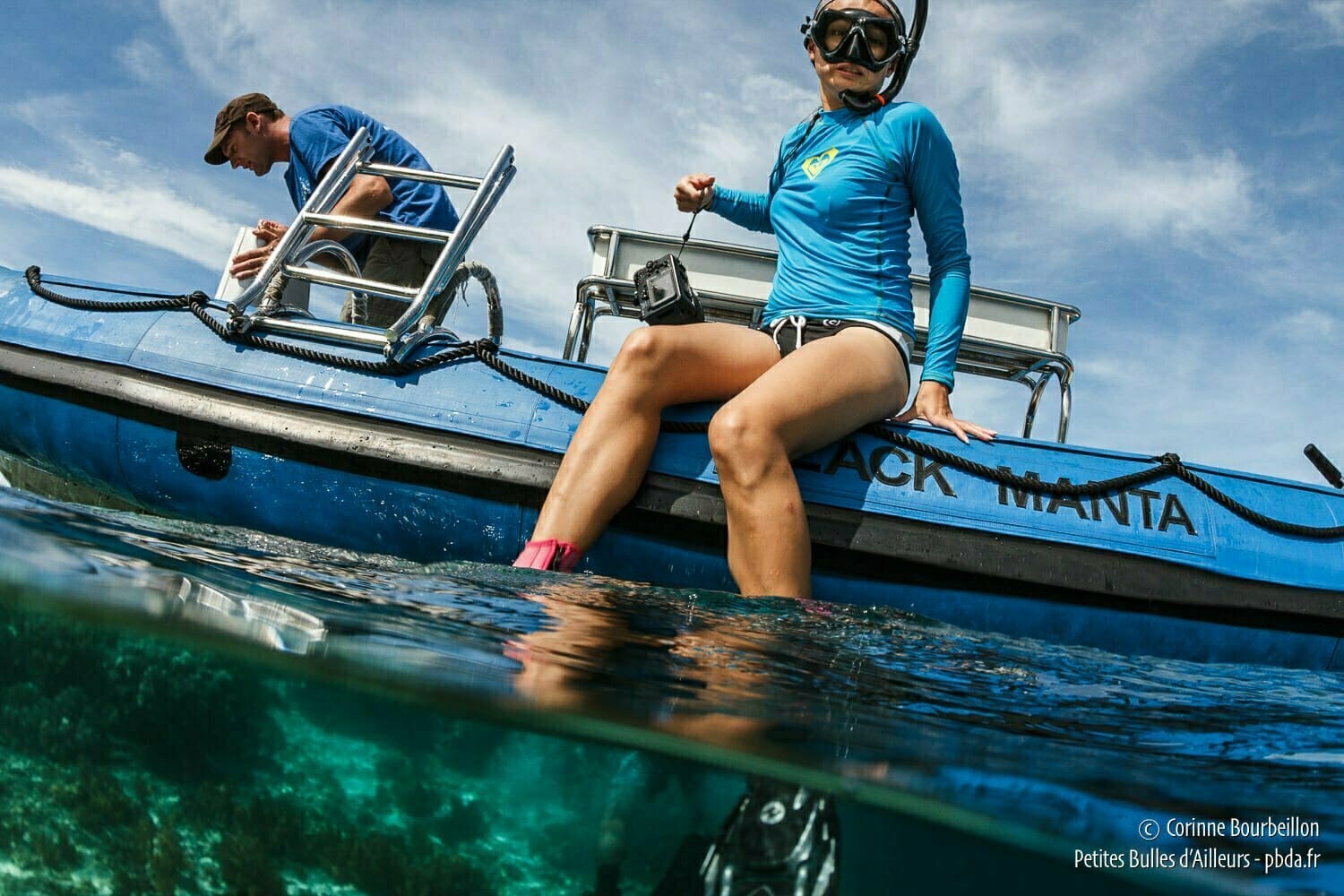
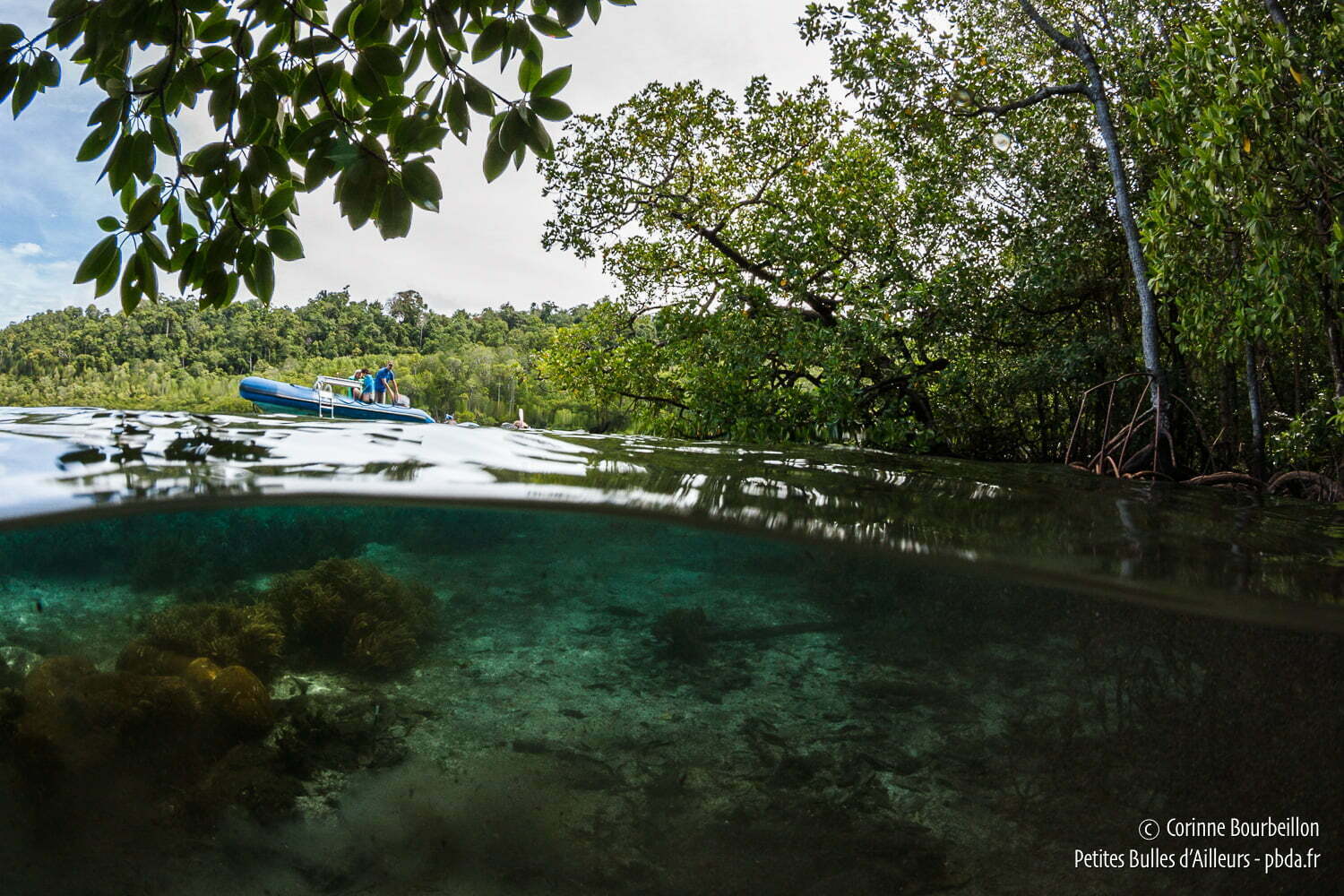
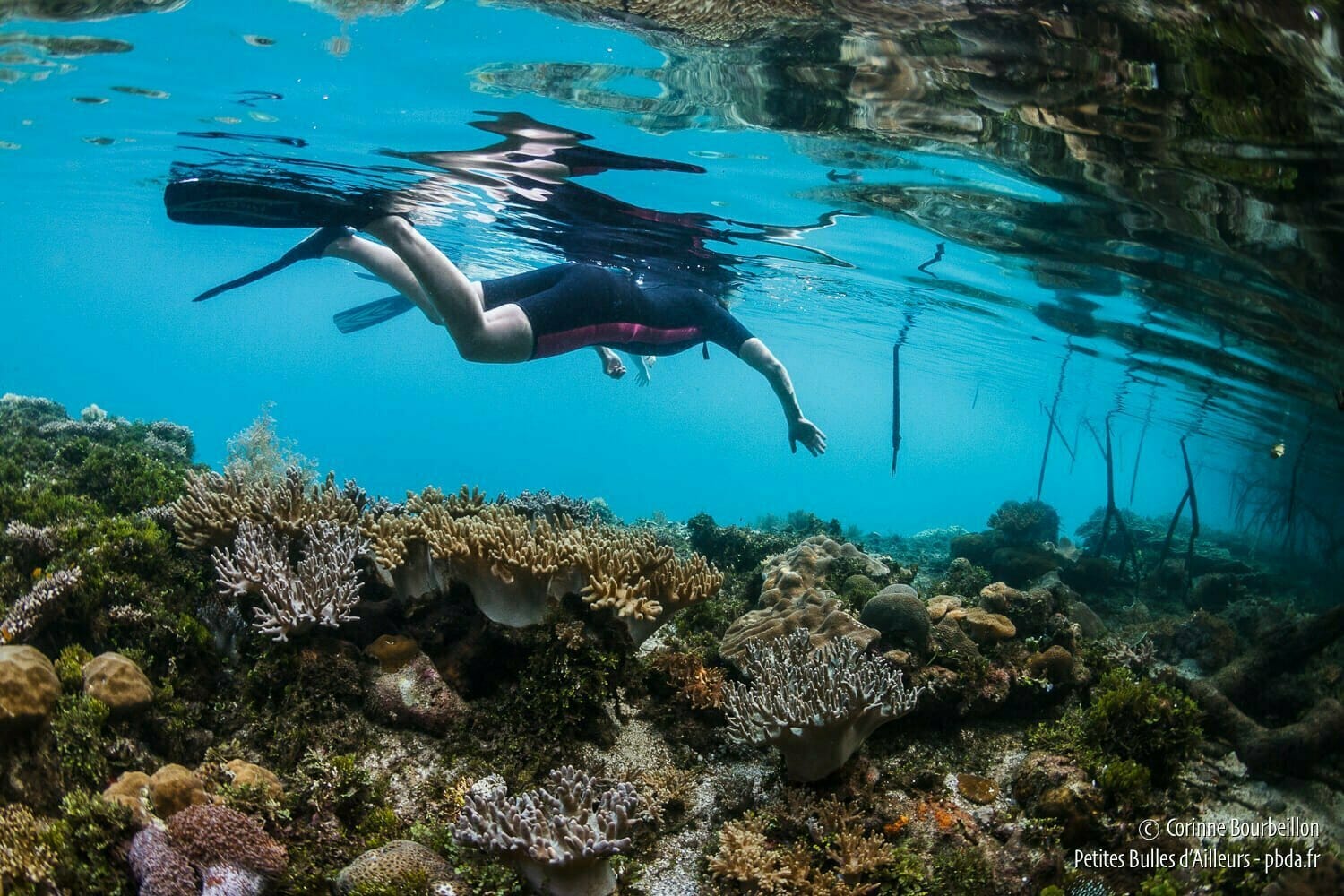
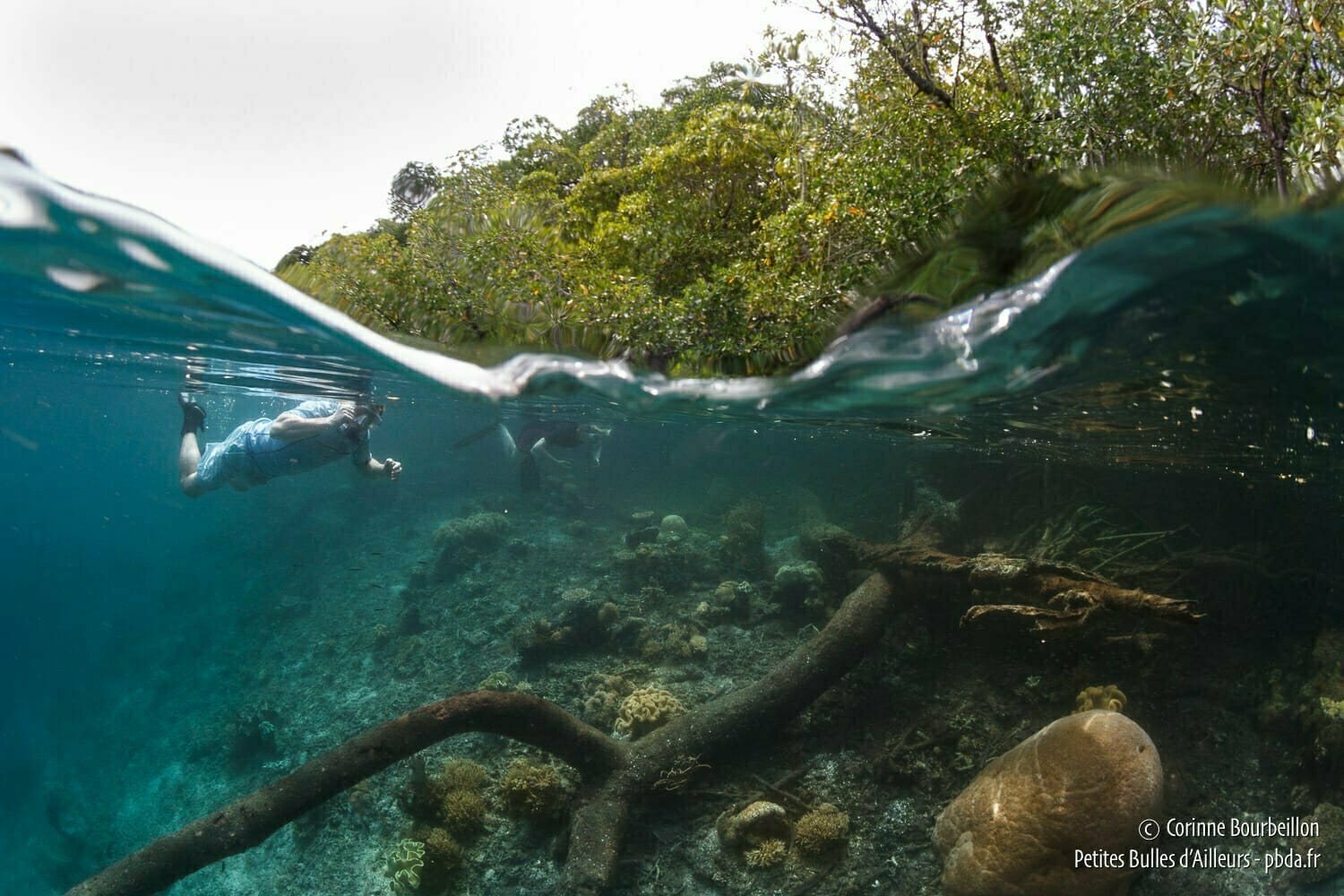
For me, it was the perfect place for "half underwater, half above water" photos. But I have to admit, I had a hard time: I'm not at all good at snorkeling.
I find it easier to photograph while scuba diving, immersed underwater, well weighted and stabilized with weights and BCD (inflatable stabilizing vest). At the surface, you're tossed about by the swell, however slight... It's not always easy to frame and adjust your settings when you release the shutter.
But these few images - taken from Yangeffo (Yanggelo on Google Maps) on the south-western tip of Gam, not far from the Citrus Ridge diving site - still capture the magic of this unique place.
😮
A final word
I've published many articles and videos about the extraordinary Raja Ampat archipelago. But since my very first trip in March 2012, the region has experienced a massive and rapid tourism development, which is a little worrying. The boom in visitor numbers, with the proliferation of guesthouses, resorts and diving cruises, is threatening this hitherto relatively unspoilt natural environment, both underwater and on land.
Think about it when you plan your trip there. Each of our visits inevitably has an impact, but we can try to limit it by adopting responsible behavior that respects the environment and local populations. In the meantime, I invite you to consult the links below on the blog:
➜ Raja Ampat: how to organize the most beautiful of trips
➜ All my dives in Raja Ampat since 2012


We want to dive with you! Thank you for these beautiful images taken on the spot. Yesterday, I saw a fascinating docu' on the life of a "classic" coral reef on TV and I have to admit that we learn a lot every day :-). And that it is beautiful! See you soon, have a good sunday
@Détours du monde : I'm glad to have transported you, Sabrina! I also watched this program last night, it was Planète Bleue, on France 5... The years go by and I am still as fascinated by the beauty of the underwater world. I can't get enough of it!!!
🙄
I love the half air half water photos 🙂 And not too far from the surface 😉
@Marie: 😀 😀 😀 I would have been surprised if it wasn't.
But you know, staying close to the surface is not a guarantee of safety. It can be dangerous, the mangroves... There are sometimes sea crocodiles hanging around!!!
😀 😀 Well, then, I prefer to stay close to the surface in a lagoon, without mangrove or crocodile, with a few stingrays on my feet. It can make nice pictures half air half water, I think.
@TheOtherGirl: I'm willing to try to take some cool half-air/half-water photos with stripes on your feet, but you'll have to be a cooperative model... 😆
Who would have thought it... A mangrove so clear! Wonderful pictures... It's hard to believe that you are not at ease in snorkeling!!! (I can't believe it either)
Congratulations again for everything 8)
@Nouchka : thank you !!!! It's not that I'm "not comfortable snorkeling", it's just that I'm much more comfortable bottle diving. It's more comfortable in terms of stability and much less physically tiring, especially when taking pictures...
🙄
I also like this style of photo, half air half water. It's a nice change. The first and the last one are pretty awesome in terms of geometry (the curve of the water in photo 1).
@Bruno: I made my first "half air half water" pictures in Egypt, in November 2011, because I was just getting my special wide-angle dome (without this dome, which is placed in front of the lens, and which offers much more surface than a flat window, it is almost impossible to make this kind of pictures) :
https://petitesbullesdailleurs.fr/egypte-hamata-plongee-mer-rouge-20111205/
The mangrove, where the water is calm and the bottom is close, lends itself well to this kind of images. But to get a nice "graphic" wave to give a more dynamic side to the picture is not easy, I must say... You have to shoot, shoot, re-shoot, until you get the desired effect.
😉
Hum Hum Egypt november 2011, it tells me something ... really nice your photos, thank you Corinne!
@Coralie: and thank you for your little word, it's nice !!!
🙂
great pictures, really this mangrove doesn't look like the ones I visited, so much clearer and with so many corals it's very nice!
@Laurence: yes, it's really an amazing place... I've never seen that either.
Ah that's good for me! I can't see myself going diving far from the coast, completely surrounded by water, at least not for the first time! 😉
It is quite rare to find a dive site where you are in the middle of the sea without anything around. There must be a shoal somewhere, a reef that is almost at the surface. So, in general, we are close to a coastline, an island, or at least a piece of rock that protrudes from the surface...
Raja Ampat? Like in Koh lanta! 😆
"For me, it was the perfect place for "half air half water" photos. But I admit, I had a hard time: I'm not good at snorkeling at all."
Personally, I found your photos very successful!
@Pascal: yes, a season of the TV game "Koh Lanta" was shot in the Raja Ampat archipelago.
Thanks for the compliment, but for snorkeling, I mean it's not as comfortable as scuba diving, to take pictures... 😉
Thank you for this little moment of escape 🙄 !
Mangroves are magical and are also necessary for other reef ecosystems. Unfortunately they are so threatened all over our planet... Your beautiful pictures are a tribute to their richness.
Gaylord