

Ikat weavers

 EN
ENI'm taking you back to the mainland, to the Indonesian island of Flores. If, like me, you travel across the island, you will meet many people wearing traditional fabrics called ikatThe patterns and colors of these very beautiful textiles differ from one region to another.
The ikat, traditional weaving of Flores
Word ikat means in fact a technique of weaving and dyeing, typical of this region of Indonesia. I refer you to the Wikipedia article dedicated to ikat.
In Flores, it's not just folklore from another age or tourist crafts. Although, of course, the sale to foreign visitors is a significant source of income, especially for the inhabitants of the traditional villages of the beautiful region of Bajawawhere many tourists stop. But in real life, people wear ikat.
I saw it everywhere, in the markets, in the villages. It is mostly the old ladies who wear it.
I also met some men, an ikat around the kidneys. There are lots of ways to tie the ikat and to wrap it around oneself, this one being able to be transformed indifferently into coat, shawl, skirt, sarong or baby carrier...
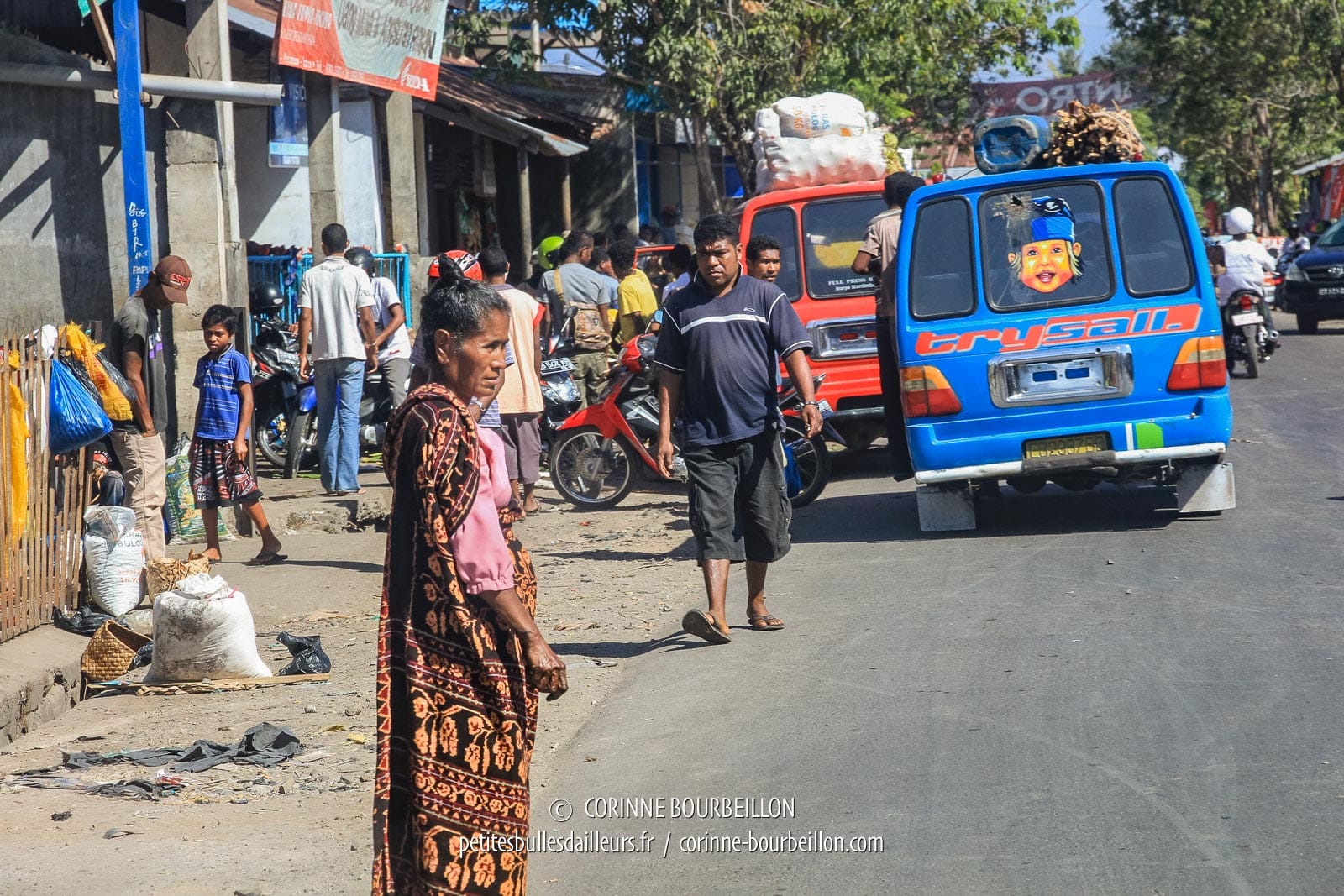
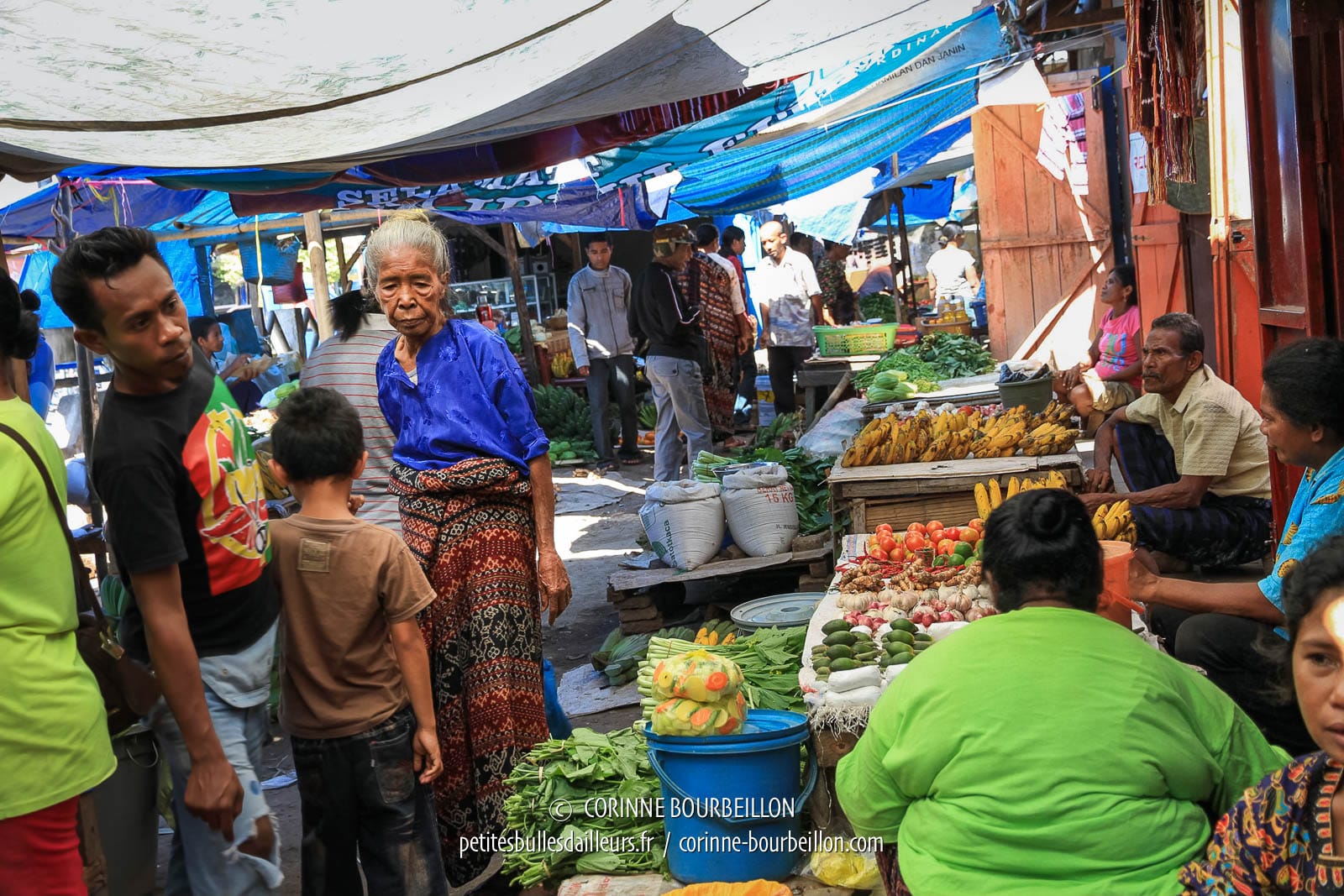
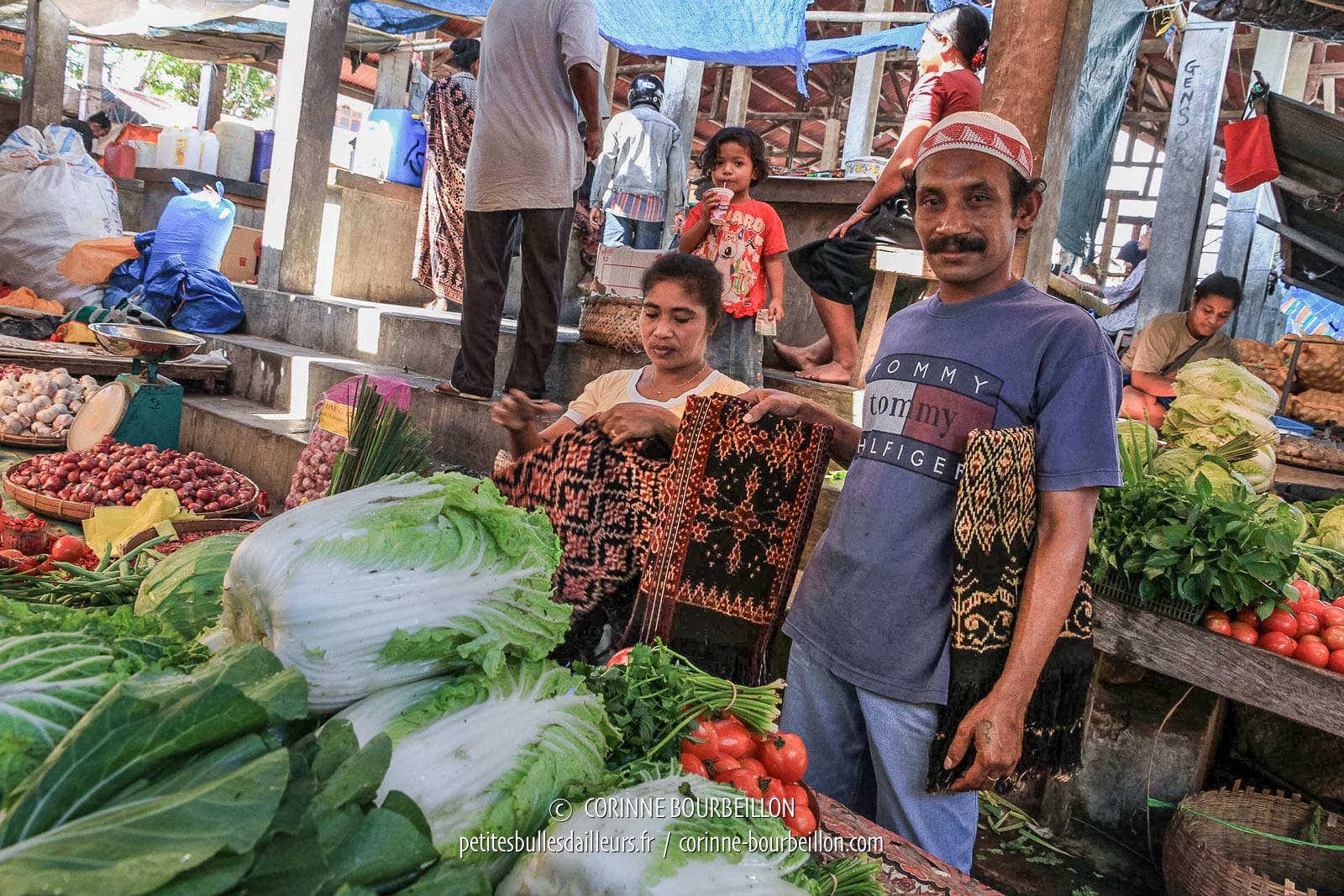
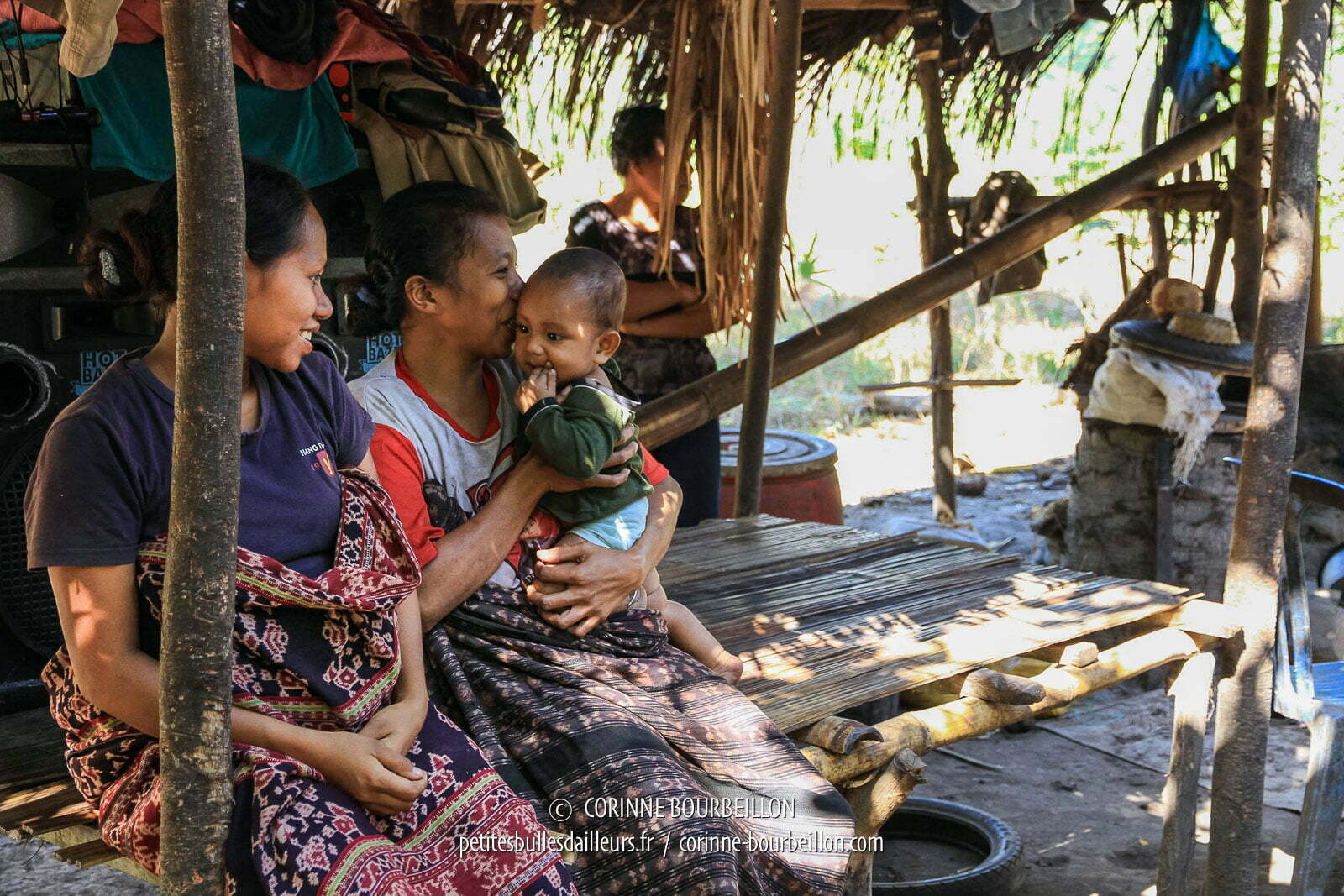
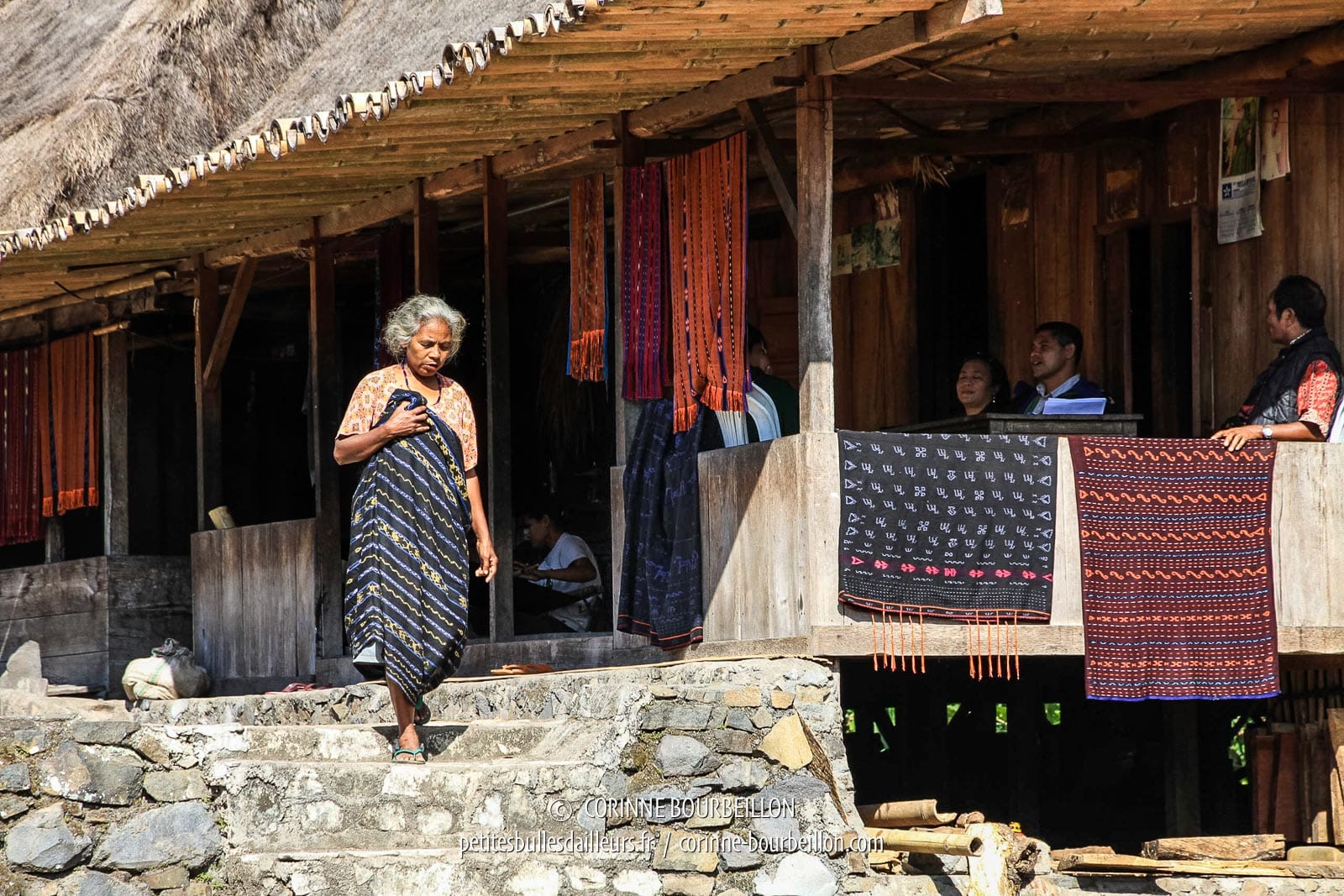
It is an expensive fabric, up to 1 million rupees (about 80 €) for the most beautiful pieces. Compared to the standard of living on the island, this is a lot of money. In the past, the dimensions, colors and designs of an ikat also reflected the social status of the person wearing it.
An ikat, it takes a lot of time to make, from several weeks to several months, because it is necessary to dye each weft thread in specific places, to form the future patterns, before the actual weaving. The most beautiful ikats are reserved for important occasions, ceremonies and family reunions.
Weaving ikat, a woman's craft
Misir, my driver-guide, who made me discover Flores from east to west, stopped at one point at the home of a family of his acquaintance, so that I could observe a weaver in action.
Nice people. The old lady very willingly agreed that I take her picture, with big smiles, while kindly lecturing the children intimidated by my presence.
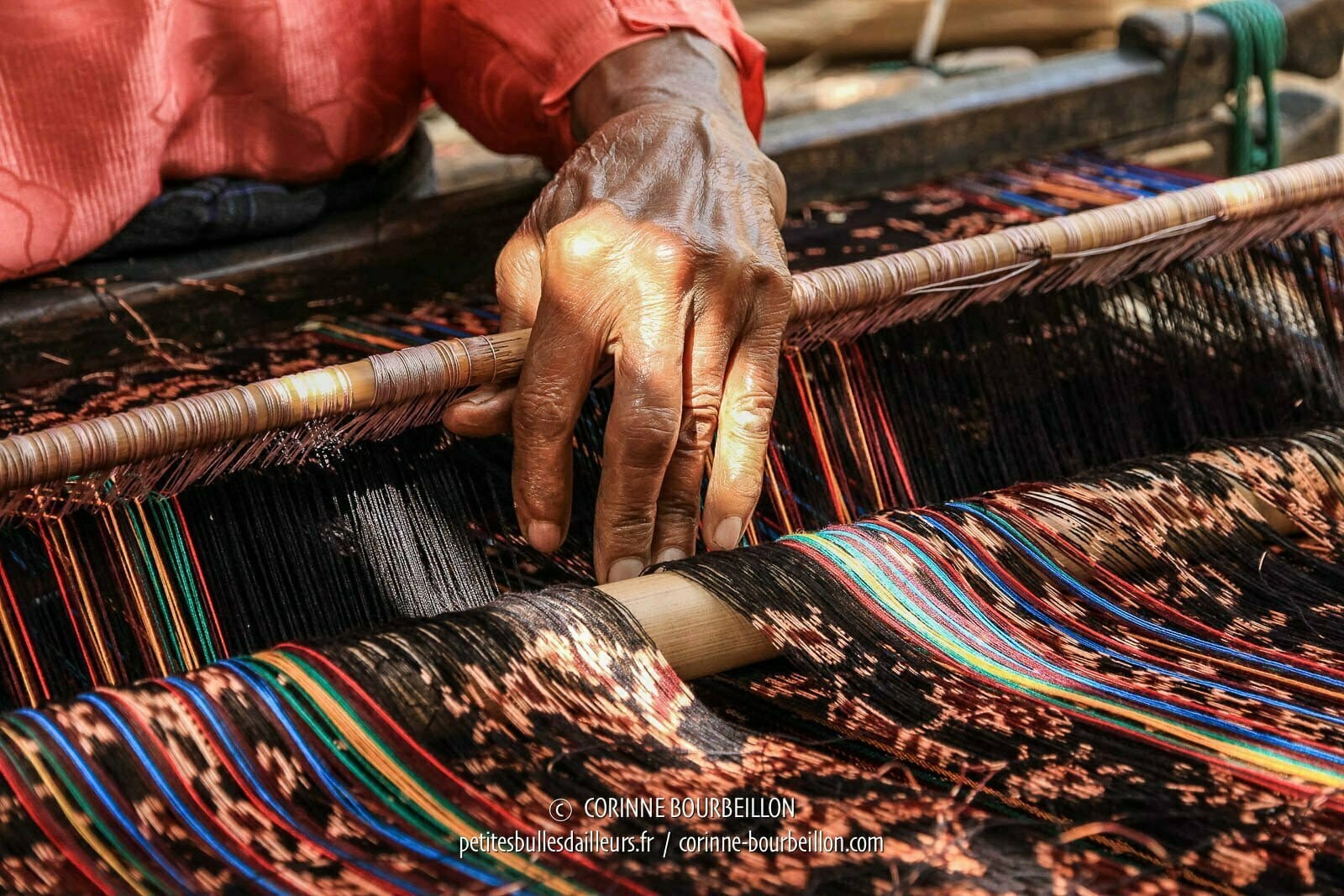
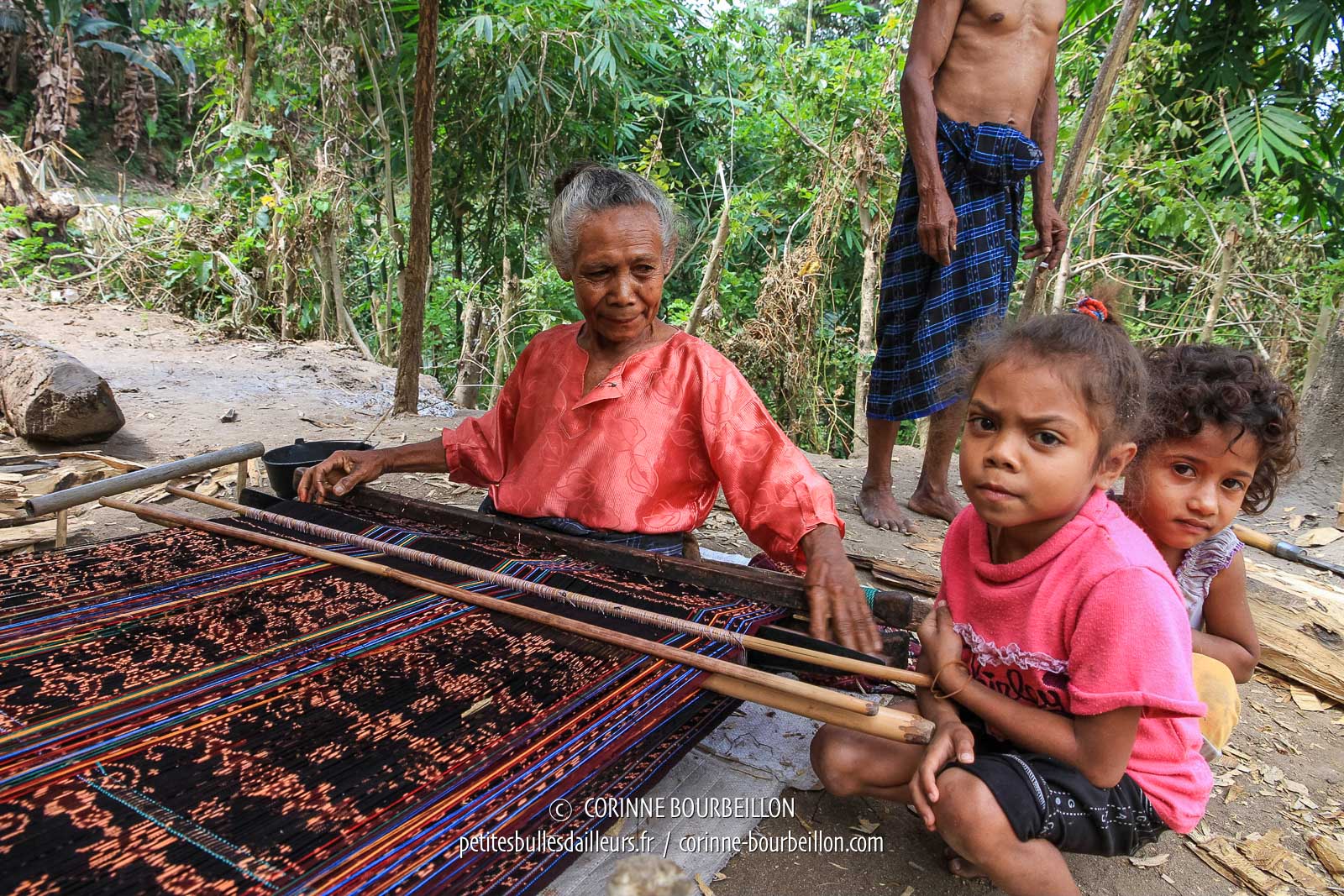
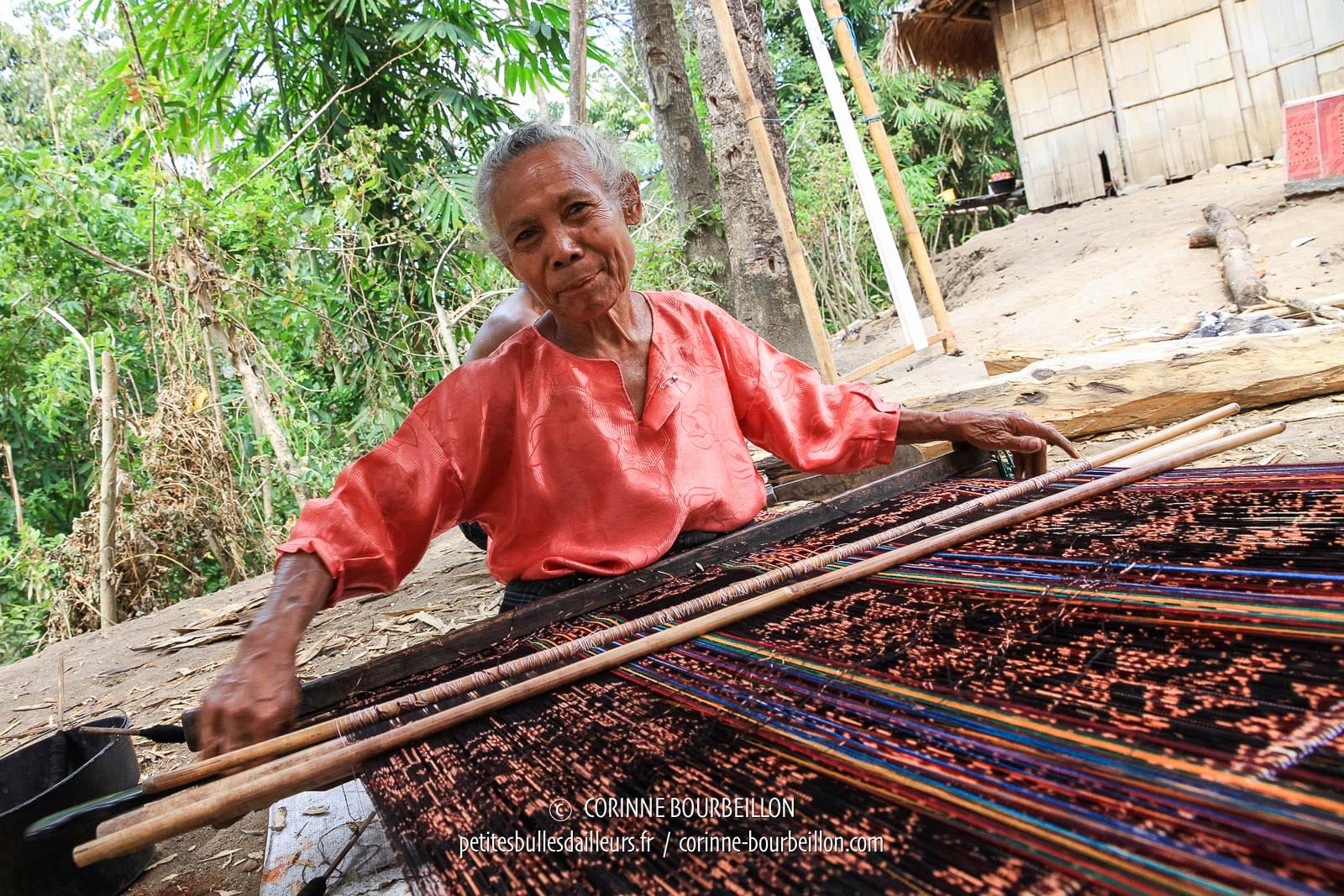

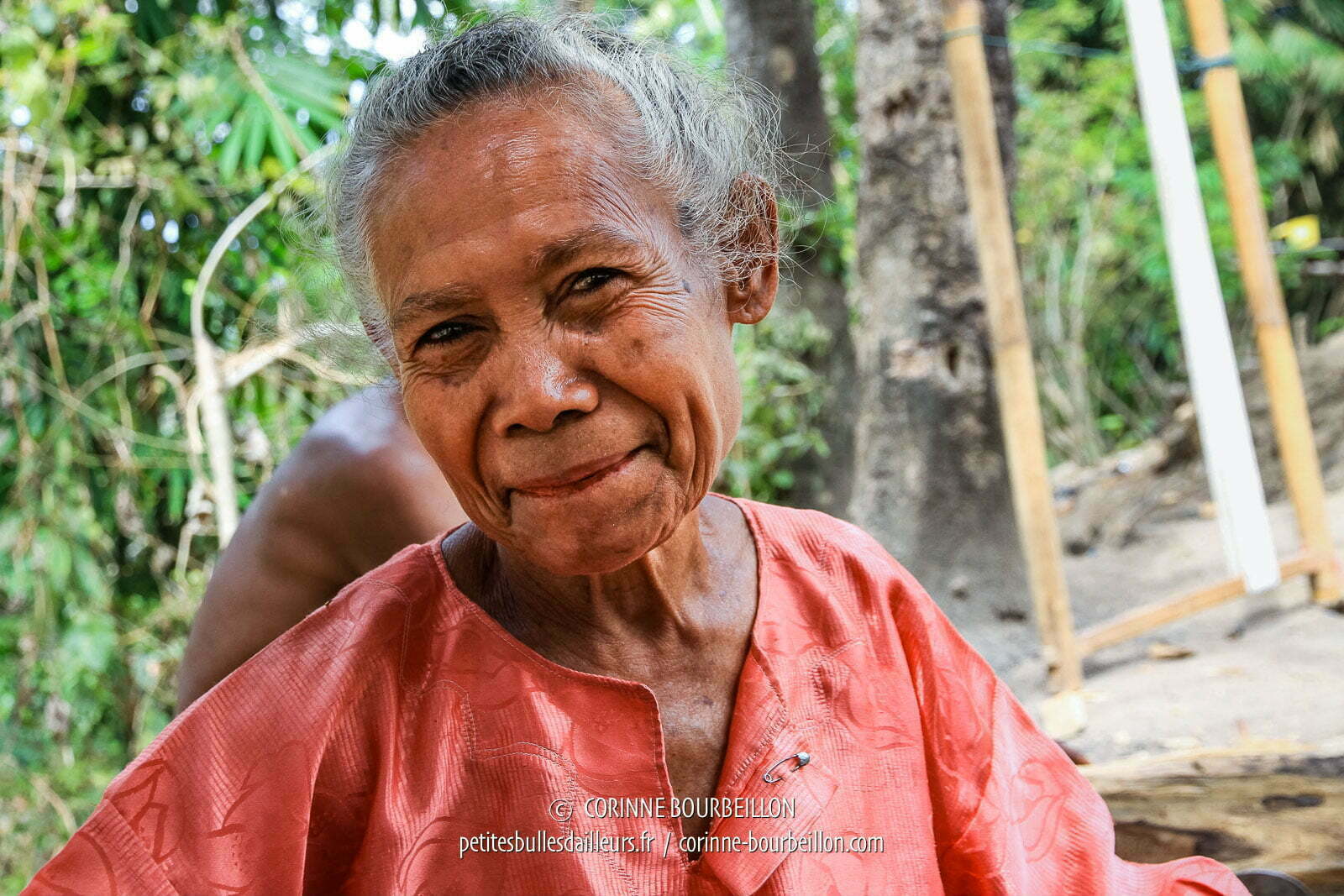
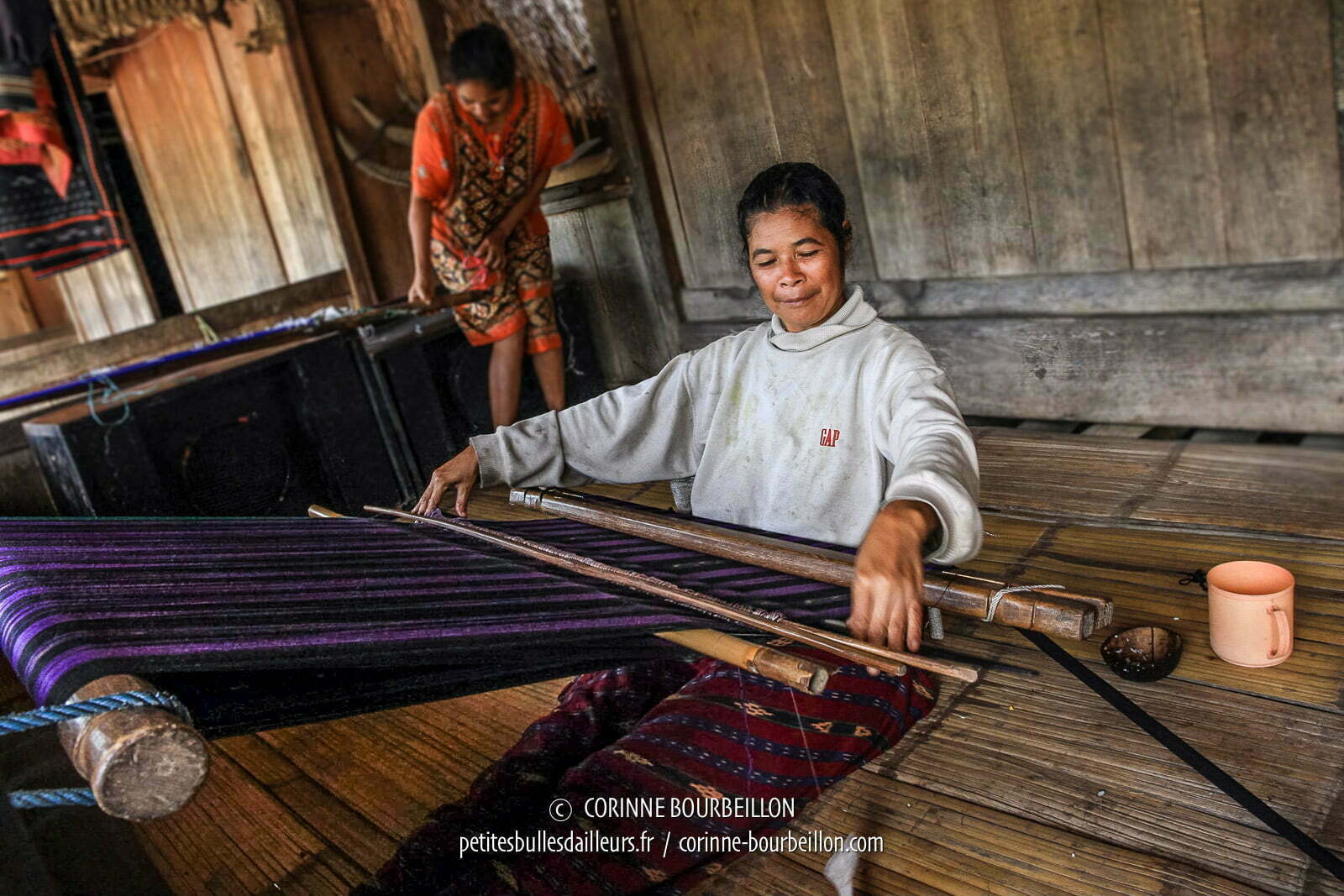
Weaving ikat is "obviously" a woman's work. It takes one to several weeks to weave a large canvas. In the traditional villages visited by tourists, women make smaller ones, like table runners, for decoration, which they can sell more easily as souvenirs.
I watched for a long time the peaceful and patient work of this old lady, sitting on the dusty floor, literally tied to her loom by a wooden strap and fabric on her back.
I am not particularly fond of traditional handicrafts and it's been a long time since I brought back "souvenirs" from my trips to Indonesia. But this work is really something I admire. It seems to me incredibly complex: you have to color the threads in the right place, in advance, and then not make mistakes when laying out the weft, to reconstitute sometimes very elaborate designs...
I regretted a little to be already too much encumbered, as far as luggage is concerned, by my diving bardas and my photo equipment. Otherwise, for once, I would have been tempted to bring back one of these splendid fabrics, which really remain, in my mind, the symbol of Flores and the Small Sunda Islands.
😉


You are right to admire these women...
Very nice story supported by beautiful pictures.
Bravo;)
Beautiful ❗ What patience! But also what a result ❗ I admit I would have had a hard time not cracking up to take such a "souvenir" home 😀
Besides the beauty of this splendid piece of fabric, what seduces me is the conditions of its realization; the ikat or the apology of the slowness!
@Alex: Thank you!!! 😀
@Laurence: Yes, I almost cracked up anyway... 🙂
@Ysbilia: In Indonesia, the weather is also often very elastic... 😉
I went there a few years ago and it is really that they are beautiful fabrics. I have some at home and it is very resistant.
We noticed that it is useful for them above all as you say it. In the evening in the mountains they are literally sausaged in it!
@Julian: Yes, these are fabrics made to last. Not just decorative.
@Bruno: It is the same in Sulawesi, especially in the mountains of Toraja Country. They all have some kind of sarongs, which are like a tube of fabric, and which is used for everything. I bought several of them during my first trip there, because I found it so practical, for everything, especially when traveling: it can be used as a towel, a blanket, a shawl, a pareo, a protection against the sun, a bag, a scarf, etc.
I acquired the classic Bali. Indeed they always have a different Sarong depending on the region. Very practical indeed sometimes in a towel, sometimes in a blanket and so on! 8)
Beautiful article. Do you know if we can find these fabrics in France?