

Do you know coral wine?

 EN
ENBefore disembarking at Rangiroa to dive, in october 2012I didn't even know they produced... wine ! It seems incredible, but yes, we grow vines in the middle of the Pacific, in the Tuamotu archipelago in Polynesia.
Vines between ocean and lagoon
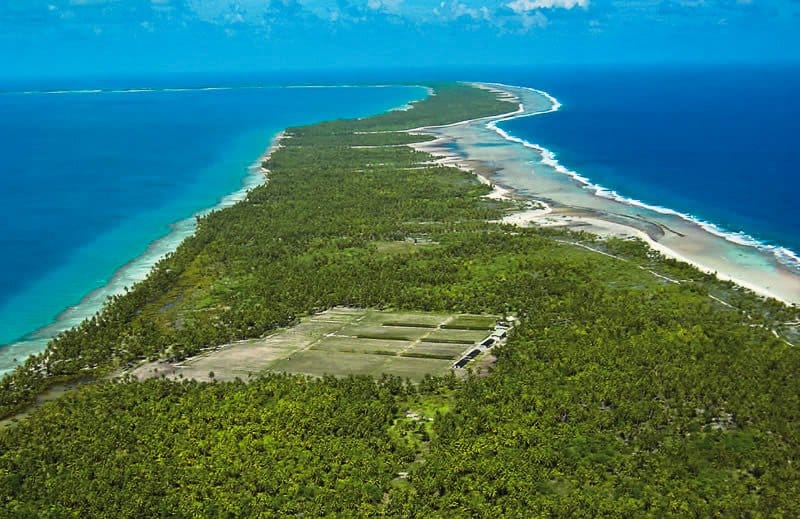
It happens on a motu (coral islet) of the immense atoll of Rangiroa. Between the lagoon and the ocean, the rows of vines of the "Vin de Tahiti - Domaine Dominique Auroy" stretch out.
The coral soil is enriched by natural compost (crushed algae and shoots). Papaya and tiare protect the vineyard from the spray.
At the rate of two harvests a year, these vines give three whites (closed reef, white coral and white fluffy) and a rosé (pink nacarat).
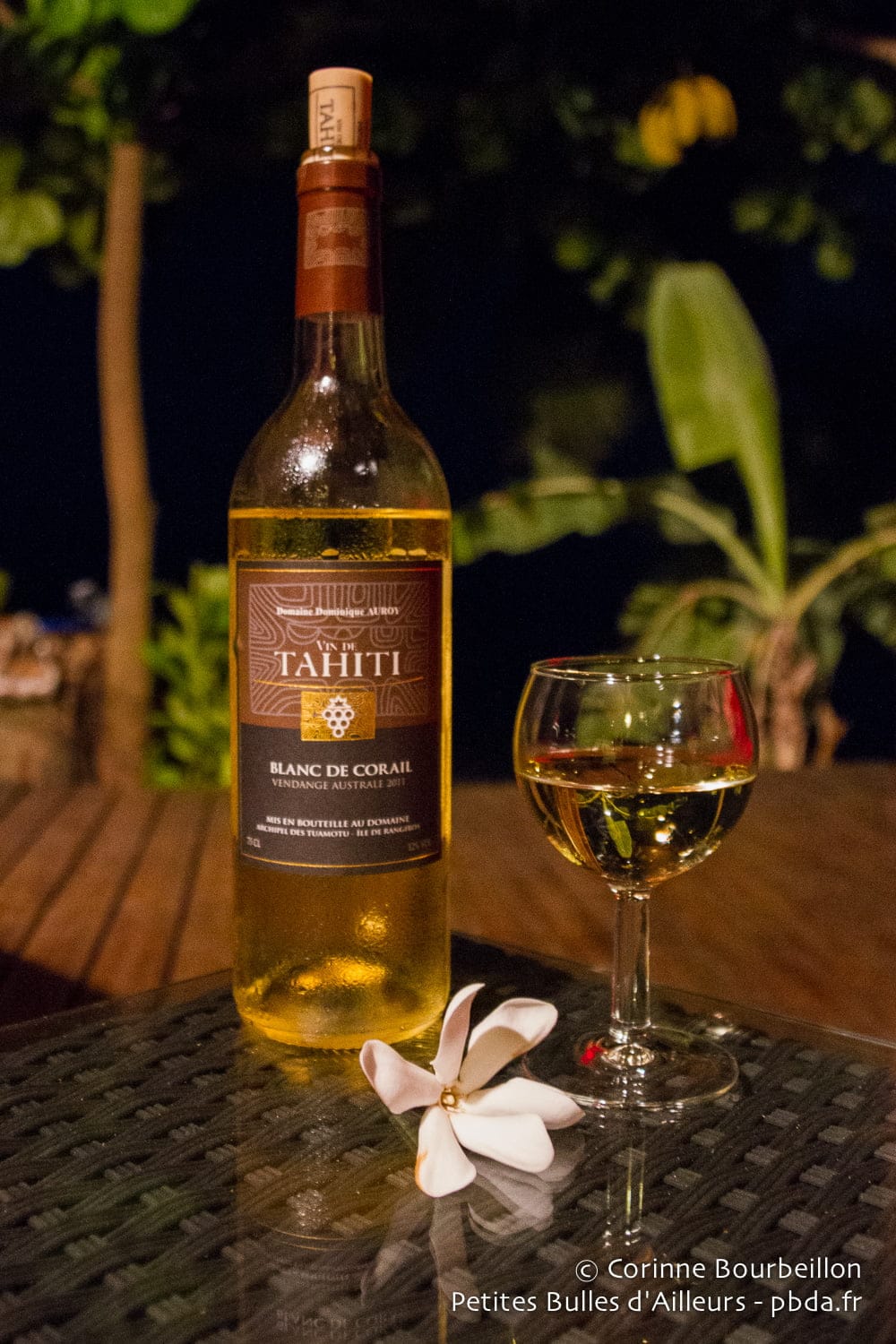
During my 2012 trip, I unfortunately did not have time to visit the vineyard, but I tasted the coral white (2011 southern vintage), at cocktail hour, facing the lagoon of Moorea.
It is a soft wine with a beautiful golden color, I remember the fruity and mineral notes. "A blend of Italia and Hamburg muscatel grapes", specifies the website of the domain (www.vindetahiti.com).
I am not a specialist by any means, but I found it very good! I guess I enjoyed it even more because I was under the coconut trees, in an enchanting setting. I obviously recommend tasting it (in moderation) in these ideal conditions... 😉
A crazy bet
I researched this amazing vineyard project. It was conceived in the 1990s by businessman Dominique Auroy. "I think I made wine as a provocation at first." he writes in his book Tahitian wine. Passion then caught up with him, he says.


At the beginning, he envisaged planting in several Pacific islands. But it will take a lot of persistence, acclimatization tests, grape variety selection and irrigation work before the first harvest, in the early 2000s. The 6-hectare estate is now able to produce up to 35,000 bottles per year (for more information, I invite you to read the article on the October 2015 harvest, in The Dispatch of Tahiti).
Why did you choose Rangiroa? Because, among other things, "from its limestone and coral soil, which gives a taste of gunflint close to some sancerres", explains Sébastien Thépenier, wine oenologist for a dozen years, quoted by The Express in July 2014. An almost ideal terroir, compared to the other archipelagos: "Not as dry as the Marquesas, not as wet as Tahiti, and not as isolated as the Australs."
(Source of the images of the vineyard : www.vindetahiti.com)


I will test this soon ...
@Robin: All right, that's enough now... 😆
I must say that I was pleasantly surprised: this wine is really nice, much better than what one could imagine at first sight (a marketing operation, even a gag). Bravo Mr. Auroy!
Obviously, it is not the most favorable quality-price ratio in the world (3000 CFP, i.e. 25€, for a mid-range wine), but we can imagine that it was complicated to get there, so we gladly forgive this little extra 10€ per bottle. 8)
That's what I'm talking about... I didn't know that at all! 🙂
Congratulations for your blog that I just discovered and put in favorites, I did not know the coral wine to test urgently!
Well done for these exciting articles